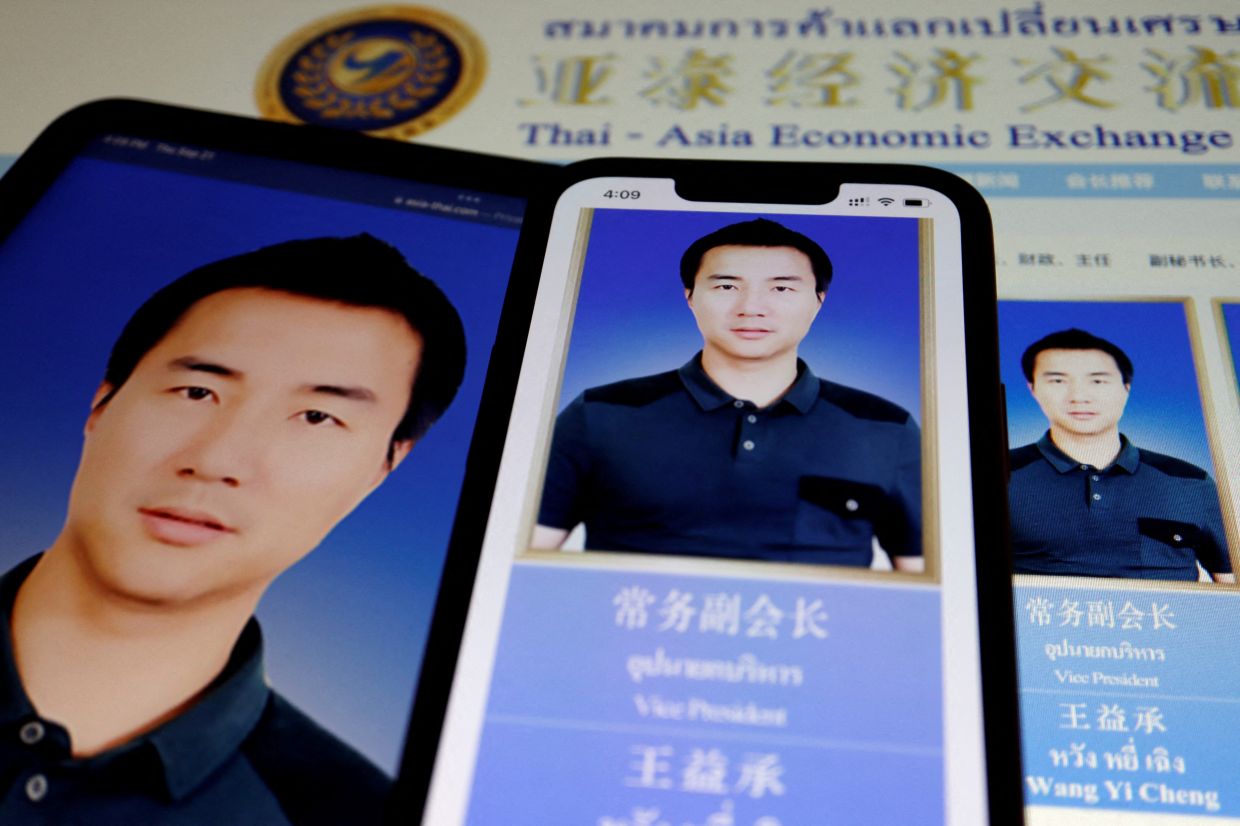
Thai law enforcement has moved against a prominent Chinese businessman suspected of operating a transnational cryptocurrency fraud network, marking an escalation in the kingdom's crackdown on organised crime groups exploiting digital assets for money laundering. Wang Yicheng, whose activities were documented in a 2023 Reuters investigation into cross-border investment scams, now faces theft charges and violations under Thailand's Computer Crimes Act. Police Major Woranan Srilam of Thailand's Department of Special Investigation confirmed on Tuesday (June 23) that Wang was formally charged in November, though he is believed to have already left the country. Thai authorities are coordinating with international law enforcement partners to track his whereabouts, signalling the scope and seriousness of the investigation.
The case against Wang centres on his alleged role in a sophisticated scheme that leveraged illegal cryptocurrency mining to obscure the origins of illicit funds derived from online scams and gambling operations. The DSI uncovered evidence that the network consumed approximately US$28 million worth of electricity through unauthorised mining activities, placing it among the most significant such cases prosecuted in Southeast Asia in recent years. Investigators identified Wang as a key figure within a broader conspiracy involving multiple Chinese and Myanmar nationals, four of whom remain unnamed in the official statement. This networked approach to money laundering represents a troubling evolution in transnational organised crime, wherein digital currencies serve as both the mechanism for extracting value from victims and the medium through which criminal proceeds are obscured from detection.
The investigation traces its roots to a comprehensive Reuters report published in 2023 that first exposed Wang's financial connections to suspected scam operations. According to blockchain analysis firms TRM Labs and others, a cryptocurrency wallet bearing Wang's name received at least US$9.1 million between 2021 and 2022 from accounts linked to "pig-butchering" schemes—a predatory fraud category in which perpetrators cultivate romantic or professional relationships with unsuspecting targets before steering them toward fraudulent cryptocurrency investment platforms. One documented victim, a 71-year-old California resident, lost his entire life savings of US$2.7 million after being deceived by someone posing as a young woman in online communications. The American victim's case exemplifies the devastating personal consequences inflicted by these transnational operations, which target vulnerable individuals across multiple continents.
The scope of the illicit network extended beyond cryptocurrency speculation into coordination with brick-and-mortar criminal infrastructure. According to blockchain analysis firms, some of the scams documented in the Reuters investigation originated from KK Park, an industrial compound straddling the Myanmar-Thailand border region. These physical installations, often staffed partially with human trafficking victims coerced into labour, have become epicentres of transnational fraud operations generating billions of dollars annually according to United Nations assessments. The marriage of physical command-and-control centres with decentralised digital payment systems presents unprecedented challenges for regional law enforcement seeking to disrupt these networks.
U.S. federal authorities have independently pursued Wang as a suspect in digital-asset fraud cases, demonstrating the genuinely transnational nature of his alleged operations. In June 2023, the U.S. Department of Justice seized approximately US$500,000 in cryptocurrency from an account in Wang's name after tracing funds stolen from a Massachusetts victim to that address. This parallel American investigation underscores how victims in different countries can be harmed by the same criminal infrastructure, and how cryptocurrency's borderless nature permits criminals to target geographically dispersed targets. The Department of Justice declined to comment further on the warrant, maintaining standard prosecutorial discretion regarding ongoing matters.
Wang's professional profile before facing criminal allegations presented a veneer of legitimacy within Thai-Chinese commercial circles. He served as vice president of the Thai-Asia Economic Exchange Trade Association, an organisation established to strengthen business relationships between Thailand and China and that counted senior Thai police officials among its purported advisers and friends. This positioning granted Wang access to elite networks and potential protective connections within Thai institutions—relationships that may have facilitated his earlier operational freedom. The association subsequently severed its ties with Wang following the 2023 Reuters revelations, announcing that background checks had revealed no prior criminal record and asserting that his personal affairs bore no relation to the organisation's activities. These retrospective explanations, however, raise uncomfortable questions about due diligence practises within ostensibly formal business associations that interface with government officials.
The equipment dimension of Wang's alleged operations reveals the complicity of legitimate technology suppliers in facilitating illegal activity. Bitmain, a major bitcoin mining hardware manufacturer, told Reuters in 2023 that Wang was a close partner and regular customer to whom it had supplied equipment through standard commercial channels. Bitmain characterised these transactions as entirely lawful, implying that the manufacturer bore no responsibility for downstream applications of its products. This argument, while legally defensible, highlights the regulatory gaps that permit dual-use technology to fuel criminal enterprises. Neither Bitmain nor the Thai-Asia Economic Exchange Trade Association responded to Reuters requests for comment regarding the latest arrest warrant, suggesting they may be attempting to distance themselves from ongoing legal proceedings.
Thailand's intensified enforcement activity against Wang occurs within a broader regional pattern of crackdowns targeting Chinese-operated scam syndicates. Southeast Asian governments, particularly Thailand, have recognised that these networks represent an existential threat to financial system integrity and public trust. Thailand's Department of Special Investigation characterised cryptocurrency mining as a particularly insidious money laundering methodology, enabling transnational organised crime groups to simultaneously generate operational income, obscure criminal proceeds, and advance technology-dependent crime networks. This multifunctional utility makes illegal mining networks extraordinarily difficult to dismantle through conventional law enforcement approaches.
The investigation's revelation that someone—whether Wang himself or an impostor using his identity—received millions of dollars from scam-linked wallets introduces a complicating factor in establishing individual culpability. Reuters investigators acknowledged their inability to definitively determine whether Wang personally controlled the accounts or whether bad actors had fraudulently appropriated his identity to conduct transactions. This forensic ambiguity, though genuine, might also provide cover for individuals with plausible deniability claims. Cryptocurrency's pseudonymous architecture enables such claims, rendering prosecution considerably more challenging than traditional financial crimes where paper trails definitively establish ownership and control.
For Malaysia and other Southeast Asian economies, the Wang case carries significant implications regarding financial crime prevention and regional security cooperation. The revelation that scam networks operate across multiple borders and jurisdictions underscores the inadequacy of unilateral enforcement responses. Malaysian authorities, who have themselves confronted sophisticated cryptocurrency fraud schemes, may benefit from closer intelligence sharing with Thai counterparts and establishment of formal protocols for joint investigation of transnational cases. The successful identification and pursuit of Wang, assuming international cooperation yields his apprehension, would demonstrate the viability of coordinated Southeast Asian action against digital-era organised crime.
The case also illuminates vulnerabilities in legitimacy verification systems that protect professional associations and business networks from infiltration by organised crime. The Thai-Asia Economic Exchange Trade Association's subsequent explanations regarding vetting procedures raise broader questions about whether Southeast Asian business organisations maintain sufficiently robust due diligence frameworks. Enhanced background investigation standards, particularly for roles involving fiduciary responsibilities or government interface, could significantly raise the operational costs for criminals seeking to establish protective business covers. Equally important, government agencies should establish firmer boundaries between official roles and private advisory relationships to prevent the blurring that appears to have characterised some participants' engagement with the trade association.
Wang's apparent flight from Thailand adds another dimension to the investigation, suggesting awareness of imminent legal exposure. The fact that he remains at large despite formal charges and international coordination efforts indicates either sophisticated concealment capabilities or sanctuary within jurisdictions reluctant to enforce Thai warrants. Should Wang successfully evade capture, the case would underscore the continuing vulnerability of international law enforcement to fugitive suspects with sufficient resources and transnational mobility. Conversely, should coordinated efforts ultimately secure his apprehension, the outcome would signal genuine capacity for Southeast Asian nations to pursue major organised crime figures across borders and hold them accountable in court.

