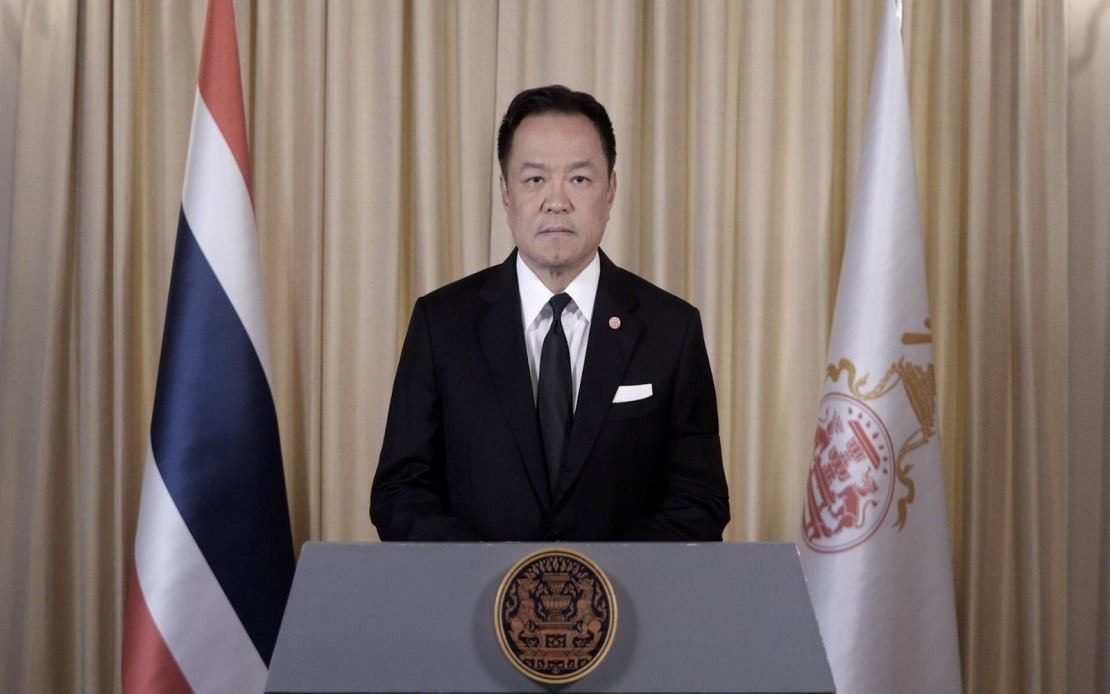
Thailand stands to benefit considerably from any resolution to tensions between the United States and Iran, according to Prime Minister Anutin Charnvirakul, who expressed optimism on Monday that a ceasefire agreement would provide relief to the broader Asian economy and help ease global supply chain disruptions. Speaking at Government House in Bangkok, the Thai leader welcomed reports of a breakthrough in negotiations, noting that geopolitical crises in West Asia carry significant downstream effects for countries dependent on international trade and energy imports throughout the region.
Anutin emphasised that Thailand has developed sufficient institutional capacity to weather external economic shocks and navigate periods of heightened global uncertainty. The government's approach prioritises long-term strategic planning over reactive policymaking, he explained, positioning the kingdom as a relatively stable economy despite the volatile international environment. This preparedness is particularly relevant for Southeast Asia, where smaller economies often face asymmetric exposure to global crises originating in distant regions.
US President Donald Trump announced on Sunday that an agreement with Iran had been reached and disclosed that he was authorising the reopening of the Strait of Hormuz as well as lifting the American naval blockade. These developments carry substantial implications for global shipping routes and energy security, especially for energy-importing nations throughout Asia that have grown accustomed to elevated tensions in one of the world's most strategically important waterways. Any relaxation of these restrictions could have immediate effects on fuel costs and shipping premiums across the region.
Deputy Prime Minister and Finance Minister Ekniti Nitithanprapas elaborated on the economic implications, arguing that a resolution to the conflict would serve as a stabilising force for both Thailand and the global economy more broadly. The primary benefit would manifest through moderating energy prices, which have remained elevated partly due to geopolitical risk premiums embedded in oil and gas markets. For Thailand, which imports substantial quantities of crude oil and natural gas to fuel its manufacturing sector and power generation infrastructure, lower energy costs would translate directly into reduced production expenses and potentially improved competitiveness.
Ekniti indicated that the government intends to maintain close scrutiny of inflationary trends and the cascading effects of elevated input costs on households and enterprises, particularly small and medium-sized businesses that operate with limited pricing power. The finance ministry appears cautiously optimistic that improved conditions in global markets could generate economic headroom for Thailand to exceed its current growth projections. This optimism reflects recognition that external demand and commodity prices significantly influence Thailand's export performance and overall macroeconomic trajectory.
Thailand's reliance on imported energy sources represents a structural vulnerability that shapes economic policymaking across multiple domains. The country imports the vast majority of its oil and natural gas from suppliers in the Middle East and other distant regions, making it perpetually exposed to disruptions or price shocks emanating from geopolitical disturbances in those areas. Any reduction in these costs would provide meaningful relief, particularly to energy-intensive sectors such as petrochemicals, steel production, and cement manufacturing that form important components of the Thai economy.
Despite the potential for lower fossil fuel prices resulting from improved geopolitical circumstances, Ekniti stressed that Thailand would persist with its 200-billion-baht energy transition programme. This apparent contradiction reflects a sophisticated understanding of energy security that extends beyond immediate cost considerations. The commitment to renewable energy development, energy efficiency improvements, and domestic energy infrastructure resilience reflects recognition that long-term economic stability requires diversifying away from imported hydrocarbons regardless of short-term price movements.
The Thai government's position aligns with broader regional trends across Southeast Asia, where policymakers increasingly view energy independence and renewable energy deployment as strategic imperatives rather than mere cost-optimisation exercises. The energy transition programme represents an investment in medium-term competitiveness and energy security that transcends the immediate price signals in global markets. By advancing this agenda even as import costs potentially decline, Thailand signals commitment to structural economic transformation.
For Malaysia and other Southeast Asian economies similarly dependent on imported energy, the Thai government's perspective offers instructive lessons about balancing short-term economic adjustments with long-term strategic positioning. Any moderation in global energy prices would provide temporary relief to manufacturing sectors and consumers, but underlying structural dependencies on imported fuels would persist unless accompanied by deliberate policy action. Thailand's continued investment in energy transition despite potential price declines reflects recognition of this reality.
The geopolitical dimension of energy security carries particular weight in Southeast Asia, where regional tensions and great power competition increasingly influence access to resources and shipping routes. A resolution to US-Iran tensions would reduce one significant source of global uncertainty, potentially lowering risk premiums embedded in commodity prices and providing temporary economic relief. However, Thai and regional policymakers appear cognisant that sustainable economic development requires reducing structural vulnerabilities to external shocks rather than relying solely on benign external circumstances.
Thailand's measured optimism about the potential ceasefire reflects appropriate diplomatic caution combined with economic pragmatism. While welcoming improvements in the global security environment, the government continues advancing diversification strategies and long-term structural reforms. This balanced approach acknowledges that while geopolitical developments matter significantly for economic outcomes, they remain ultimately unpredictable and therefore cannot serve as the foundation for comprehensive economic strategy.
The implications for Malaysia and the broader Southeast Asian region extend beyond immediate energy price considerations to encompass broader patterns of regional economic interdependence and strategic planning. Countries throughout the region should view Thai policymakers' emphasis on long-term preparedness and strategic planning rather than reactive policy adjustment as a valuable model. The ability to benefit from improved global conditions while simultaneously advancing structural reforms and diversification initiatives represents sound economic governance in an inherently uncertain international environment.