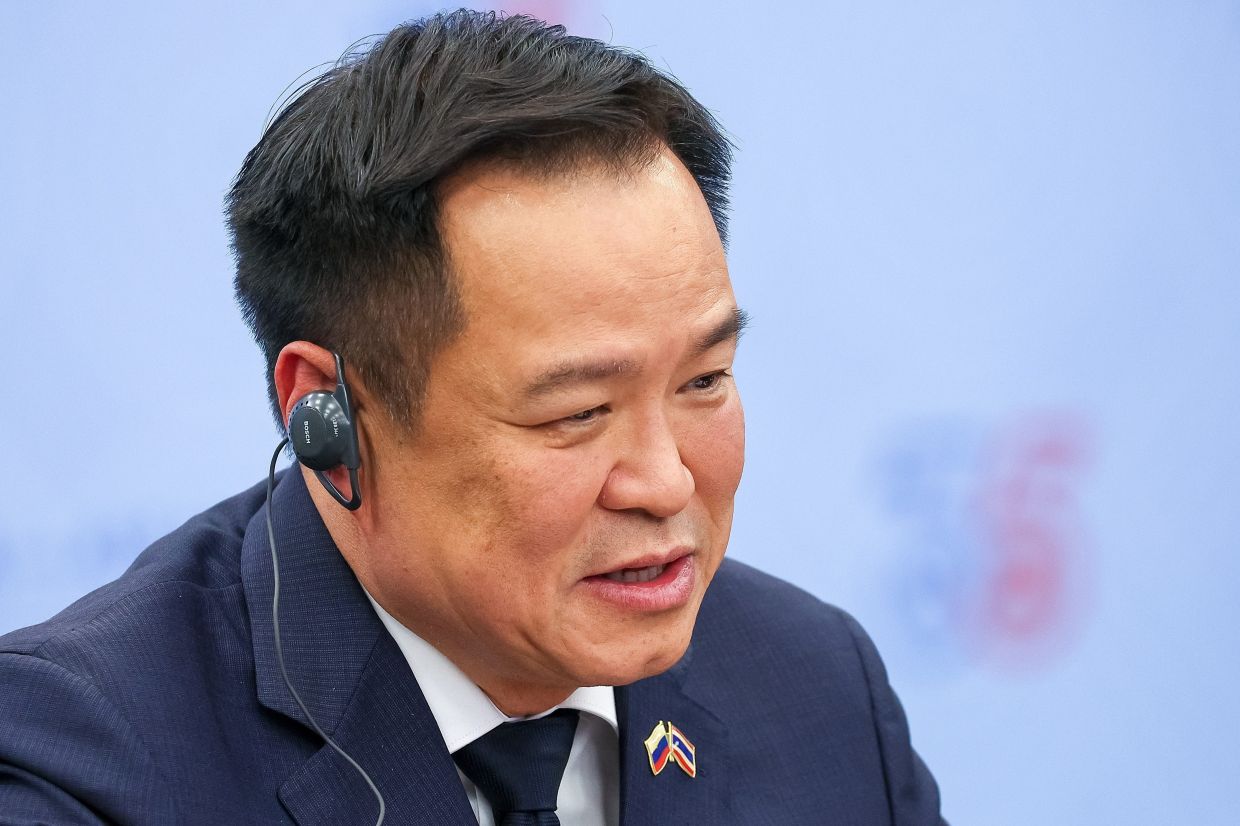
Thailand's 32nd Prime Minister Anutin Charnvirakul crosses a significant threshold on June 27, marking 100 days since his swearing-in on March 20 following his re-election victory. The milestone captures a pivotal moment in his premiership as political observers weigh his performance against mounting expectations for deeper economic transformation. Though Anutin has earned qualified approval for maintaining political stability and managing an acute energy crisis, his government has shown limited appetite for tackling the structural challenges that constrain Thailand's development trajectory, including anaemic growth, soaring household debt, and an ageing population.
Anutin's ascent to the premiership has been unconventional by recent Thai standards. He first assumed office in September 2025 following the collapse of the Paetongtarn Shinawatra government, then consolidated power by winning a fresh electoral mandate in February 2026. His Bhumjaithai Party capitalised on nationalist sentiment and a hardline stance on border disputes to secure the largest share of seats in parliament. This rapid consolidation of power, combined with the electoral endorsement, provided Anutin with a stronger foundation than many of his predecessors operating in Thailand's fractious political environment.
The immediate crisis facing Anutin tested his crisis management capabilities early. When US-Israel military operations against Iran on February 28 disrupted Middle Eastern oil exports, Thailand experienced the cascading consequences of its energy vulnerability. Petrol stations struggled to maintain adequate supplies as panic buying overwhelmed distribution networks, whilst crude prices surged above US$100 a barrel for extended periods. The disruptions to shipping through the Strait of Hormuz exposed the fragility of Southeast Asia's energy security architecture, with regional economies left hostage to geopolitical tensions thousands of kilometres away.
The government responded with pragmatic interventions that stabilised the immediate situation. Officials tapped Thailand's Oil Fuel Fund to subsidise retail fuel prices, shielding consumers and critical sectors from the full impact of international commodity shocks. Simultaneously, authorities implemented support mechanisms for farmers and industrial operators facing elevated borrowing costs, whilst ordering coal-fired power plants to operate at full capacity. The administration also pursued supply diversification, negotiating increased energy imports from the United States, Malaysia, and Brunei to reduce dependence on any single source. These measures proved sufficient to prevent the energy crisis from metastasising into broader economic or political instability, distinguishing Anutin's response from less coordinated government reactions in earlier Thai administrations.
Domestic political considerations shaped Anutin's approach to border security with Cambodia, an issue that propelled his party to electoral victory. His government maintained a militarised posture in managing longstanding territorial disputes, continuing the military's prominent role in border protection operations. More significantly, Anutin delivered on campaign promises by unilaterally terminating the 2001 bilateral maritime boundary agreement with Cambodia, an action that carried considerable domestic political capital amongst Thai voters but escalated tensions between the neighbours. The dispute now proceeds through United Nations arbitration channels, reflecting a hardline approach that resonates with Anutin's electoral base but complicates regional diplomatic architecture.
Beyond security and energy management, Anutin capitalised on popular expectations through the "Thais Help Thais Plus" subsidy programme, launched on June 1. The initiative extends 40 per cent price subsidies for approved purchases to approximately 30 million adult citizens previously excluded from state welfare or earlier assistance schemes. With 176 billion baht (US$5.27 billion) allocated to the programme, it represents tangible delivery on electoral promises and provides immediate relief to household budgets. Yet observers recognise this as a demand-side stimulus measure offering temporary palliative effects rather than addressing underlying productive capacity or structural growth constraints. The subsidy succeeds in boosting short-term consumption and generating political goodwill, but performs no meaningful work on Thailand's sluggish productivity growth or competitiveness challenges.
Thailand's economic trajectory presents a starkly different picture from the recovery narratives dominating regional discourse. Over the past five years, the kingdom has failed to achieve annual growth exceeding three per cent, reflecting persistent structural headwinds. The International Monetary Fund projects just 1.5 per cent expansion for the current year, positioning Thailand as Southeast Asia's slowest-growing economy. This contrasts sharply with Vietnam's anticipated 7.1 per cent growth, Cambodia's four per cent, and even Myanmar's projected three per cent expansion despite ongoing internal conflict. Such disparities highlight how Thailand's political instability and policy inconsistency have eroded its competitive position within a dynamic regional economy.
Anutin's administration has articulated aspirational goals centred on digital technology, artificial intelligence, and clean energy as future growth engines, yet lacks a credible implementation roadmap translating rhetoric into action. Analysts observe that government energies concentrate on routine administration and quotidian management rather than catalysing meaningful economic innovation or structural reform. This operational posture reflects the conservative mindset of a government prioritising stability over transformation, a calculus understandable given Thailand's recent history of political turbulence but potentially insufficient for addressing long-term competitiveness erosion. Without sustained policy focus on productivity enhancement, skills development, and technological capacity, Thailand risks permanent diminishment within the regional economic hierarchy.
The constitutional reform question further reveals the government's reform reluctance. In a referendum held alongside the February general election, nearly 60 per cent of voters, equivalent to approximately 20 million citizens, expressed support for revising the 2017 Constitution, which many regard as fundamentally undemocratic given its origins under military stewardship. The charter was drafted during Prayut Chan-o-cha's premiership following the 2014 coup and remained in force through 2023, embedding military preferences into democratic structures. Despite this unmistakable popular mandate, constitutional reform has languished without substantive progress. Political analysts interpret this inaction as a deliberate strategic choice rather than mere administrative oversight, suggesting Anutin's government lacks fundamental commitment to democratisation despite electoral rhetoric endorsing change.
Questions surrounding cabinet composition further illuminate the administration's conservative orientation. Personnel selections have invited scrutiny regarding whether ministerial appointments reflect reformist intent or merely redistribute patronage amongst coalition partners. The pattern of appointments suggests institutional continuity rather than personnel restructuring that might signal transformative ambitions. Combined with the absence of early structural commitments or policy declarations announcing comprehensive reform agendas, the evidence points toward a government content with managing the status quo rather than prosecuting deeper institutional change.
Thailand's chronic governance challenge remains its inability to sustain policy continuity across political cycles. Two decades of military interventions and short-lived governments have prevented the accumulation of institutional knowledge necessary for coherent long-term planning. Structural problems—including demographic ageing, household debt burdens, and inadequate human capital development—have festered whilst successive administrations focused on immediate political survival rather than generational challenges. Anutin's hundred days suggest he has arrested immediate instability but not catalysed the comprehensive transformation Thailand requires for sustained prosperity within a competitive regional environment.
The assessment at this early milestone presents a government excelling at crisis management but silent on systemic change. For Thai citizens and regional observers, the critical question remains whether Anutin's administration represents merely the latest iteration of political holding patterns, or whether subsequent months will yield evidence of serious engagement with structural reform. The stability he has achieved, whilst welcome after years of turbulence, may prove insufficient foundation for addressing the fundamental economic and institutional challenges constraining Thailand's future.

