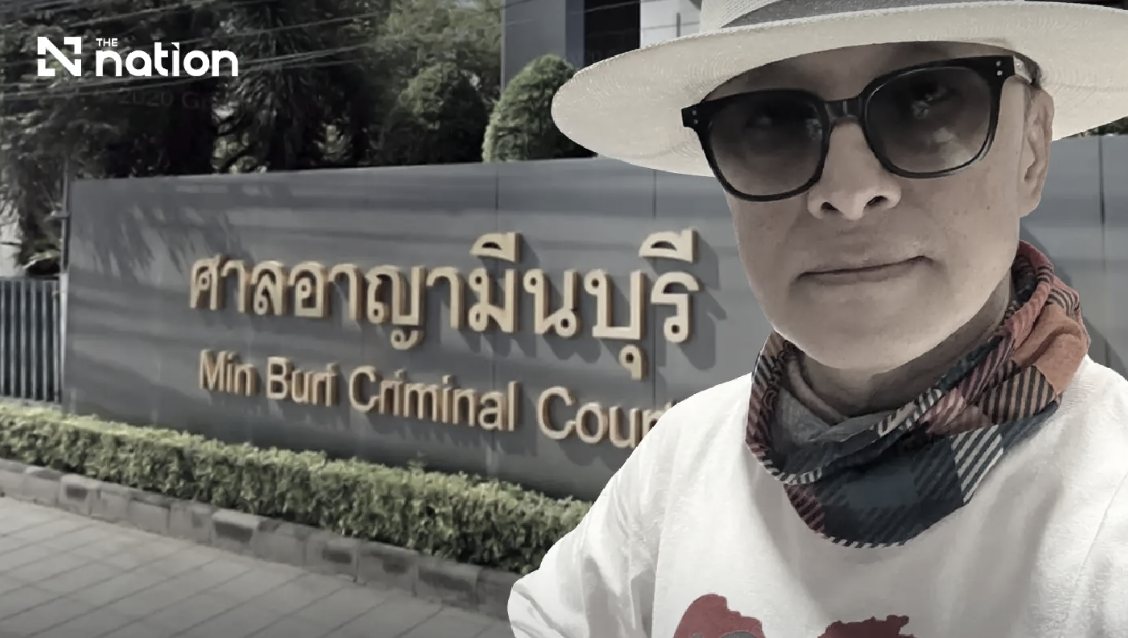
A Thai court has handed down a two-year prison sentence to Manasawin Nantasen, the celebrated Thai singer known professionally as Tik Shiro, for causing the deaths of two people in a fatal drink-driving incident on a Bangkok bridge in October 2024. The 64-year-old performer, who rose to stardom during the late 1980s and 1990s through his distinctive visual style and energetic stage presence, was convicted of drunk driving resulting in loss of life after the criminal court in Bangkok delivered its ruling on Wednesday, June 24.
Manasawin gained enduring recognition throughout his career for adopting an aesthetic strikingly similar to that of global superstar Michael Jackson, complete with signature fedora hats, leather jackets, and polished dance choreography that captured audiences across Thailand and Southeast Asia. His ability to replicate Jackson's iconic look and movement style made him a household name during the peak years of his career, earning him the unofficial title of Thailand's answer to the King of Pop. Despite the passage of decades since his initial rise to prominence, Nantasen remained a recognizable public figure in Thai entertainment and popular culture.
The incident that led to his conviction occurred when Nantasen was operating his vehicle across a bridge in the Thai capital. His car struck a stationary motorcycle, resulting in catastrophic consequences for the vehicle's occupants. The collision claimed the life of a 28-year-old woman who had been positioned on the motorcycle at the moment of impact. Her brother, who was 21 years old, was forcefully knocked from the motorcycle and fell from the bridge as a result of the force of the collision, sustaining severe injuries that proved ultimately unsurvivable despite medical intervention.
Following the initial trauma, the injured brother was transported to hospital where he received treatment for his critical injuries. However, his condition proved too severe for medical personnel to reverse, and he succumbed to his wounds while under hospital care. The sequence of events thus resulted in two fatalities stemming from the single incident, transforming what might have been classified as a driving accident into a tragedy of significant proportions within Thai society.
The immediate aftermath of the crash drew widespread attention when footage emerged showing Nantasen kneeling at the accident scene in a posture of apparent grief and distress. This video circulated extensively across Thai social media and news outlets, generating substantial public discussion at a moment when questions about accountability for prominent figures remained contentious in Thailand. The image of the famous entertainer visibly displaying emotional anguish at the scene proved particularly resonant with Thai audiences, who have grown increasingly cynical about whether wealth and celebrity status insulate privileged individuals from legal consequences.
During the judicial proceedings, the court acknowledged several mitigating circumstances in Nantasen's favour. He had surrendered to authorities and cooperated with the investigation by providing testimony that the judge determined was beneficial to establishing facts about the incident. Additionally, the entertainer demonstrated remorse through his attendance at the victims' funeral services and by making substantial monetary compensation payments to the bereaved families, factors which the court considered when determining the appropriate sentence. However, the judge imposed an additional penalty by revoking Nantasen's driver's licence permanently, effectively removing his legal ability to operate motor vehicles.
The timing of Nantasen's sentencing coincided with another high-profile case involving a Thai celebrity. On the same day, rock musician Sek Loso was released from prison after completing a sentence of just over one year for charges related to drug possession and unlawful firearm ownership. The convergence of these two celebrity cases thrust issues of celebrity justice back into public discourse, highlighting the tension between Thailand's formal legal system and widespread public perception regarding equal application of the law.
Thailand has long grappled with perceptions that influential and wealthy individuals receive preferential treatment within its justice system. This perception is bolstered by several high-profile cases that have generated significant public scepticism. The most notorious example remains the 2012 incident involving Vorayuth Yoovidhya, heir to the Red Bull fortune, who allegedly drove his Ferrari into a Bangkok police officer in an affluent neighbourhood, killing him instantaneously. Despite an investigation being conducted into the incident, Yoovidhya was never formally charged with any criminal offence, a decision that provoked considerable public outcry and deepened distrust in the justice system's impartiality.
Another significant case that shaped Thai public opinion involved the son of former Pheu Thai Member of Parliament Chalerm Yubamrung, who allegedly discharged a firearm fatally at another person in a crowded Bangkok nightclub during 2001 following a dispute between the parties. The case proceeded through the courts but ultimately resulted in acquittal, with judicial reasoning centred on insufficient or unreliable evidence presented by prosecutors. The acquittal reinforced broader suspicions among Thai citizens that political connections and family wealth could substantially influence judicial outcomes.
These recurring examples of seemingly light or dismissed prosecutions affecting prominent figures have fostered a corrosive cynicism within Thai society regarding the neutrality and effectiveness of legal institutions. The Nantasen case, by contrast, resulted in a custodial sentence and was therefore perceived by some observers as representing a more equitable application of criminal law. However, the relative brevity of the two-year sentence compared to the gravity of the offence—causing two deaths through reckless conduct—left room for continued debate about whether the punishment adequately reflected the severity of the crime and whether a non-celebrity defendant might have received a lengthier sentence.

