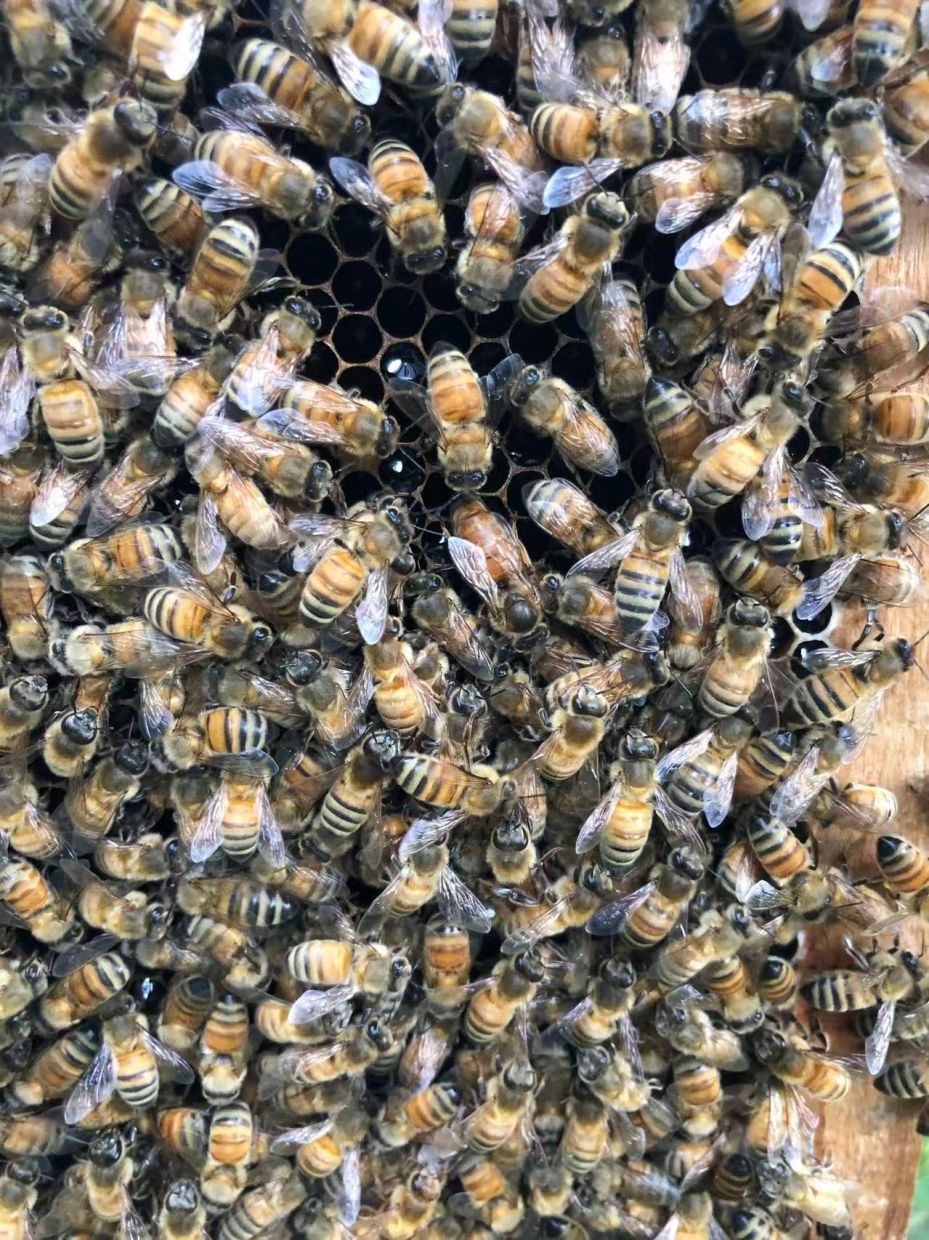
Scientists have overturned a century-old assumption about how honeybee colonies produce their queens. While researchers have long believed that a special nutrient-rich diet called royal jelly was the sole determining factor, new research from the Institute of Apicultural Research at the Chinese Academy of Agricultural Sciences demonstrates that the physical structure and chemistry of the chamber itself matters just as much. The findings, published in the journal Nature, suggest that developing queens require both superior nutrition and a specially engineered living environment—what lead researcher Kai Wang describes as a "royal palace" to match their royal diet.
Understanding how a single bee becomes queen from among thousands of ordinary female larvae has long fascinated apiculturists and biologists alike. All honeybees begin life as fertilised eggs laid by the colony's mother, with no genetic difference marking them for exceptional roles. The transformation into a queen—the sole reproductive female responsible for perpetuating the entire colony—has historically been attributed entirely to the enhanced diet worker bees provide. This theory of nutritional determinism has persisted so thoroughly that few researchers questioned whether other factors might be equally important.
The western honeybee colony's architectural distinction between different cell types provides the key to understanding this puzzle. Worker bees construct the bulk of their honeycomb using wax they secrete themselves, fashioning it into uniform hexagonal chambers that serve dual purposes—some for storing food, others for raising the next generation of workers and drones. But when colonies must produce a new queen, whether because of swarming or to replace a dying monarch, the workers build distinctly different structures. These distinctive chambers resemble peanut shells suspended downward from the main comb and have long been recognized by beekeepers as indicators of reproductive activity. Yet their true significance remained largely unappreciated, treated more as curious byproducts than as the sophisticated biological systems they actually represent.
The Chinese research team's investigations revealed that the queen cells represent far more than passive vessels. Through detailed analysis, they determined that the wax composing these cells possesses measurably different physical and chemical characteristics compared to standard worker cells. The wax is noticeably softer, melts at substantially higher temperatures, and releases distinct chemical compounds that create a different chemical environment. These properties appear to create ideal conditions for larval development along a royal trajectory. Wang explains that the softer walls may allow the developing larva additional space for growth and expansion, while the unique chemical signature appears to serve as a form of chemical communication—essentially odorous hormonal signals that guide the larva's developmental pathway toward queenship.
The practical implications of this discovery emerged clearly when researchers conducted experiments with larvae. Even when provided with royal jelly nutrition, larvae reared in ordinary worker-cell wax demonstrated markedly inferior queen development and suffered significantly higher mortality rates than those housed in proper royal chambers. This striking finding indicates that the physical and chemical environment of the cell is not merely supplementary but genuinely essential. Without the proper smell and tactile environment of royal wax, even premium nutrition proves insufficient to sustain queen development. The larvae essentially need both—the nutritional bounty and the proper palatial surroundings—to successfully transform.
What makes this discovery particularly remarkable is the extraordinary effort young worker bees expend to create these specialized chambers. The research documented that bees constructing queen cells deliberately elevate their thoracic temperatures to over 39 degrees Celsius—comparable to running a fever—in order to properly manipulate and mold the wax to its required consistency and composition. These temporary construction workers become what Wang describes as "living furnaces," generating sufficient body heat to process the wax into its unique physical form. This metabolic effort represents a substantial investment, yet these dedicated builders are not permanent specialists. They are ordinary, flexible young workers temporarily shifting their gene expression to undertake this specialized task, demonstrating remarkable biological plasticity.
The construction crews undertaking this heating work showcase honeybee society's fundamental organizational principle. Despite the intense specialization required for their temporary role, these builders simultaneously perform standard colony maintenance—sharing food with nestmates, inspecting other cells, and conducting routine hive duties. Wang characterizes them as "the ultimate multitaskers," exemplifying how honeybee colonies achieve sophisticated outcomes through flexible collaboration rather than rigid caste systems. This flexibility means that any young worker bee retains the latent capacity to perform this demanding role should colony circumstances require it, making the system remarkably resilient and adaptive.
The implications extend well beyond academic curiosity about insect biology. For beekeeping operations worldwide, queen production represents a fundamental concern, as healthy colonies depend entirely upon healthy queens capable of producing sufficient worker populations. In the United States and other regions, beekeepers have reported substantial colony losses in recent years, reflecting both environmental pressures and management challenges. Understanding the natural mechanisms by which colonies produce high-quality queens could provide pathways toward breeding programs that generate more resilient, productive stock. As global agriculture depends on managed honeybees for pollinating more than 80 major commercial crops, improving queen production translates directly into agricultural resilience and food security.
Boris Baer, a professor of pollinator health at the University of California, Riverside and co-leader of the research initiative, emphasizes that better comprehension of natural queen production mechanisms offers practical value for beekeeping sustainability. The current trajectory of colony losses cannot be indefinitely sustained, particularly given agriculture's heavy reliance on honeybee populations for crop pollination. Research revealing the biological principles underlying successful queen development potentially provides the scientific foundation for improving breeding practices and colony health management.
The broader scientific implications may extend considerably beyond honeybees themselves. Wang suggests that similar architectural sophistication likely exists in other social insects that construct elaborate communal structures. Termite colonies, with their imposing and environmentally regulated mounds, may employ comparable strategies for directing larval development. Wasps' papery nests and the intricate wax structures built by stingless bee species could embody parallel mechanisms through which colony architecture influences individual development. The fundamental principle—that social insects consciously engineer their physical environment to control biological outcomes—represents a paradigm shift in understanding superorganisms.
The research ultimately challenges a deceptively simple view of queen development and demonstrates the sophisticated collective intelligence embedded in honeybee behavior. That a single larva transforms into a colony's future mother depends not on destiny written in her genetic code, but rather on deliberate collective decisions and architectural interventions by thousands of her sisters. The parallel to Wang's concluding observation proves apt: while nutritional advantage matters significantly, the right environment—the right home—truly determines developmental destiny. In this framing, the honeybee colony emerges as a unified organism making coordinated investments to create perfection, manufacturing queens through an intricate ballet of nutrition, chemistry, and engineering.

