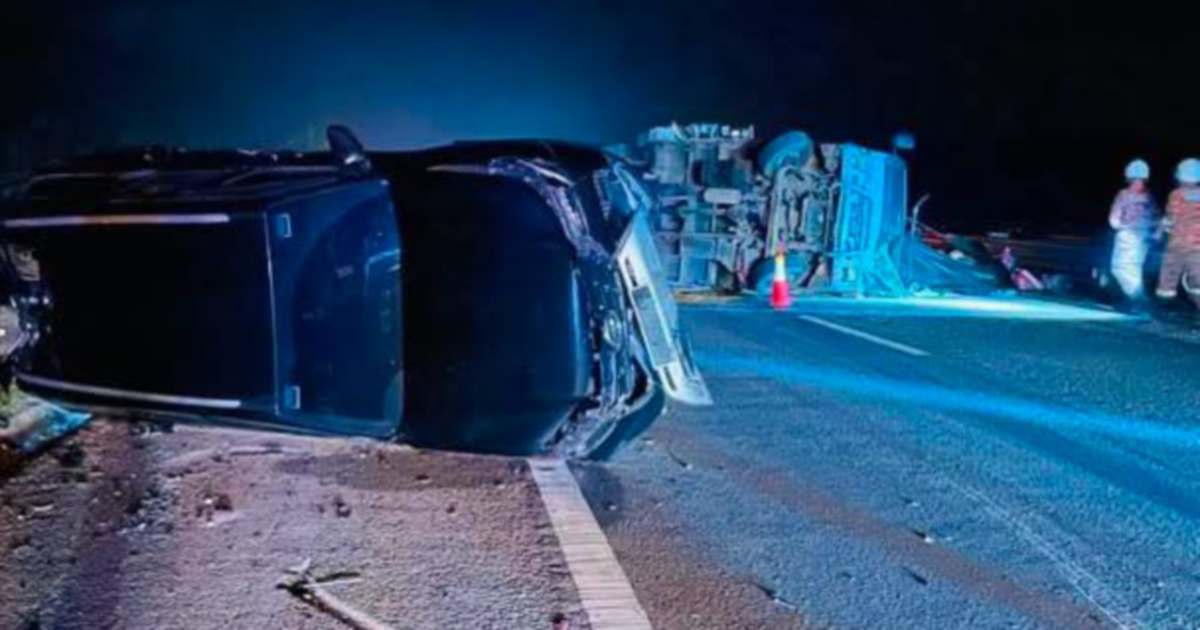
A three-vehicle collision on the East Coast Expressway left seven people injured early today, including three media personnel attached to the office of Deputy Prime Minister Datuk Seri Dr Ahmad Zahid Hamidi. The incident occurred at the 144-kilometre marker of the expressway in the Maran area, drawing emergency response teams to the busy toll road that connects Malaysia's east and west coasts.
The accident underscores the persistent traffic safety challenges on one of the nation's key transportation arteries, which carries significant volumes of commercial and private vehicle traffic daily. The East Coast Expressway, which links Pahang, Terengganu, and Kelantan to the Klang Valley, has become a critical economic corridor for the region, making incidents of this nature a concern for both public safety and the functioning of government operations.
Those injured in the crash were transported to nearby medical facilities for treatment. The media officers, who form part of the communications infrastructure supporting Malaysia's second-highest government office, escaped what might have been more serious harm in the collision. Their presence on the expressway during the early morning hours suggests official travel related to government duties or public engagements.
The involvement of ministerial staff in traffic accidents raises broader questions about vehicle safety protocols and road conditions during low-light travel periods. Early morning journeys on expressways, particularly those traversing less densely populated areas such as the Maran stretch, present additional challenges for drivers and passengers alike. The circumstances surrounding the accident remain under investigation by traffic authorities.
Maran, located in Pahang state, sits along a critical section of the East Coast Expressway that has historically experienced variable traffic conditions depending on weather and time of day. The region's geographic location makes it a frequent waypoint for senior government officials and their delegations travelling between the Klang Valley and east coast states, particularly when attending official functions or conducting state visits.
The expressway network has been subject to ongoing maintenance and safety improvement efforts by the authorities responsible for its operation. However, multi-vehicle collisions continue to occur despite such measures, often resulting from a combination of factors including driver fatigue, speed, weather conditions, and visibility constraints. The involvement of three vehicles in today's incident suggests a chain-reaction scenario common during early morning travel when alertness levels may be compromised.
From a governance perspective, incidents involving ministerial support staff draw attention to the operational vulnerabilities of high-level government travel. While security and protocol considerations typically govern such movements, the realities of Malaysian road conditions affect all travellers equally. The escape from serious injury by the three media officers represents fortunate timing rather than any systematic safeguard, highlighting the element of chance in road safety outcomes.
For Malaysians regularly using the East Coast Expressway, the incident serves as a reminder of accident risks on long-distance routes. The expressway's dual-carriageway design and toll-managed operation have reduced certain categories of accidents compared to conventional roads, yet the volume of traffic and speed of vehicles mean that collisions, when they occur, involve multiple vehicles with frequency. Public education campaigns emphasizing defensive driving, adequate rest during long journeys, and appropriate speeds continue to be necessary interventions.
The emergency response to the accident demonstrates established protocols for handling incidents on toll expressways in Malaysia. The coordinate systems marking distances along major roads facilitate rapid location identification and dispatch of ambulances, fire services, and traffic management teams. Such infrastructure improvements represent practical progress in accident response, even as prevention remains a paramount concern.
Investigations into the cause of today's collision will likely examine contributing factors including vehicle maintenance, driver conditions, environmental circumstances, and the sequence of events leading to initial contact. Data from such incidents feed into ongoing assessments of road safety trends and inform policy discussions regarding expressway management and vehicle standards.
The recovery and return to normal traffic flow following the accident depend on damage assessment, vehicle removal operations, and any necessary clearing of debris from the expressway surface. During peak travel hours, such incidents can create congestion affecting thousands of commuters and commercial transport operators reliant on the corridor. The timing of today's early morning accident likely minimized broader traffic disruption, though investigation and clearance activities still required several hours of emergency service deployment.
For the three injured media officers and the four other accident victims, the incident marks a sudden and unwelcome interruption to their day. Medical assessment will determine the full extent of injuries sustained and the recovery timeline ahead. The incident also serves as a reminder that government officials and their staff, despite the protection of official status and organized travel arrangements, remain subject to the same physical vulnerabilities and risks that confront all road users in Malaysia.

