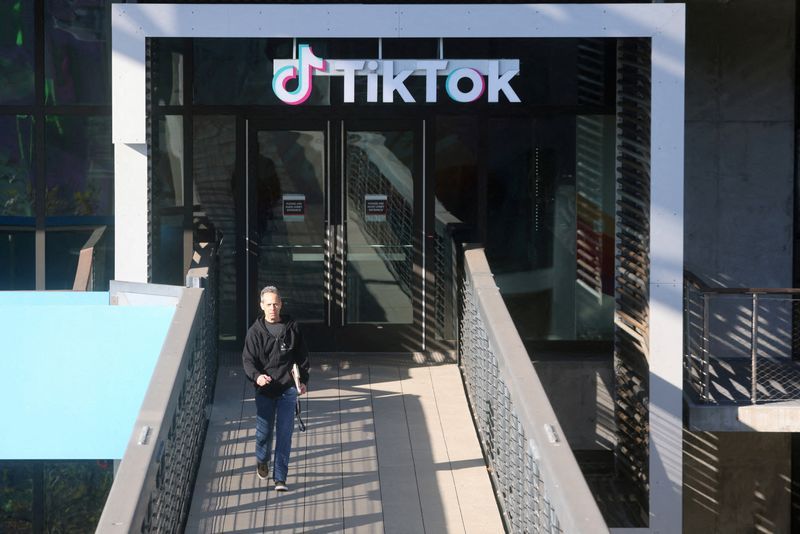
TikTok has reached a preliminary settlement agreement with a Florida teenager who sued the platform alleging it caused him serious psychological damage through deliberately addictive features designed to exploit young users. Morgan & Morgan, the law firm representing the 15-year-old plaintiff identified as R.K.C., confirmed the settlement in principle on Tuesday, though the specific terms remain under negotiation and have not been publicly disclosed. The development marks another significant retreat by a major social media company facing mounting legal pressure over claims that their platforms deliberately manipulate children's behaviour to maximise engagement at the expense of mental health.
The settlement signals TikTok's desire to avoid the public exposure and potential financial liability that comes with a jury trial in California state court. R.K.C.'s case represents only the second major lawsuit of its kind to advance toward trial in the state system, arriving amid a broader legal reckoning over social media's impact on youth mental health. The teenager's allegations paint a portrait of early and intensive platform use that he contends transformed into a damaging addiction—he began engaging with social media applications when he was approximately eight years old, subsequently experiencing sleep disruption, depressive episodes, and anxiety disorders that he attributes directly to the compulsive usage patterns the platforms encouraged.
When R.K.C. initially filed his complaint, he named four technology giants as defendants: YouTube under parent company Google, Instagram operated by Meta, Snapchat owned by Snap Inc, and TikTok controlled by ByteDance. YouTube has already resolved its portion of the dispute through settlement in June, while Meta and Snapchat remain locked in litigation with a trial scheduled to commence on July 27. The sequence of settlements and trial dates underscores the serious legal jeopardy these companies now face across multiple jurisdictions as courts begin to evaluate the evidence supporting addiction and mental health damage claims.
The cascade of legal actions against social media platforms has become extraordinary in scale. California state courts alone are processing more than 3,300 cases alleging addiction and related harms, while an additional 2,600 lawsuits filed by individual users, educational institutions, municipal governments, and state attorneys general are progressing through the federal court system in California. Beyond these consolidated actions, nearly every state across the United States has initiated its own separate legal proceedings against these same technology companies, creating unprecedented litigation exposure. The companies universally deny the underlying allegations and insist they have implemented comprehensive safeguards to protect younger users, though these legal and public relations defences have not prevented steady losses in court.
The first completed jury trial in this category of litigation concluded in March with a verdict that fundamentally altered the legal landscape. A woman who had grown up using social media platforms contested that their addictive architecture had been deliberately engineered to capture and retain juvenile attention. Rather than settling before trial as TikTok and Snap had chosen to do, Meta and Google proceeded to jury trial and lost decisively. The jury determined both companies had acted with negligence, resulting in a damages award of $4.2 million against Meta and $1.8 million against Google. When the presiding judge subsequently reviewed the companies' motion to overturn the verdict in June, that motion was rejected, allowing the jury's determination to stand.
Parallel proceedings in the federal system have generated even larger financial settlements. A Kentucky school district that had sued Meta, Snap, TikTok, and YouTube managed to extract a combined $27 million settlement before federal trial proceedings could commence in June. This represented a coordinated capitulation by all four defendant companies rather than risk the unpredictable outcome of jury deliberation. The willingness of these corporations to settle aggressively suggests internal legal analyses have concluded that the evidence of harm is sufficiently compelling and the reputational costs of protracted litigation sufficiently severe to justify substantial payments.
For Malaysian readers and the broader Southeast Asian technology market, these American legal developments carry significant implications. Social media platforms operating across the region must contend with the precedent now being established that addiction claims and mental health damage allegations can succeed before juries and survive judicial scrutiny. The verdicts and settlements also demonstrate that major corporations can no longer maintain that safeguarding measures are adequate when internal documentation and expert testimony suggest otherwise. As regulators in Malaysia, Singapore, and other neighbouring nations develop their own frameworks for digital platform governance, the American litigation outcomes will almost certainly influence how local authorities approach youth safety requirements.
The structural vulnerability these companies face stems from a fundamental legal theory that gains credibility with each successful case. Plaintiffs' attorneys argue that social media firms deliberately employ psychological manipulation techniques—including algorithmic recommendation systems, notification systems, and engagement metrics—specifically calibrated to trigger the dopamine-reward pathways in young brains in ways that parallel addiction mechanisms. The companies cannot simply assert that their platforms are voluntary or that users can disengage, because the litigation evidence increasingly demonstrates that the platforms were engineered with knowledge of their addictive properties and that younger users possess limited capacity to resist these engineered incentives.
The scope and persistence of litigation against social media companies also reflects broader public health concerns that have gained momentum over the past five years. Prominent mental health researchers, child development experts, and public health officials have grown increasingly vocal about correlations between heavy social media use and rising rates of depression, anxiety, and self-harm among teenagers. Surgeon General warnings in the United States have highlighted social media as a potential threat to adolescent mental health. These scientific and medical voices provide credibility and ammunition to litigation teams pursuing damages, and juries appear responsive to expert testimony linking platform design choices to documented psychological harm.
TikTok's decision to settle rather than contest this particular claim reflects pragmatic litigation strategy rather than admission of liability, yet the pattern of settlements accumulating across multiple defendants suggests an industry-wide reassessment of risk tolerance. Each settlement without a detailed public admission of wrongdoing technically preserves legal positions, but the cumulative effect nonetheless sends a market signal that the business model of maximising engagement through psychologically manipulative design may face unsustainable legal costs. For the social media industry globally, including platforms with significant user bases in Southeast Asia, the California litigation wave represents a critical inflection point where technological capability to engage users must increasingly be constrained by legal liability and regulatory pressure to protect younger users from documented harms.

