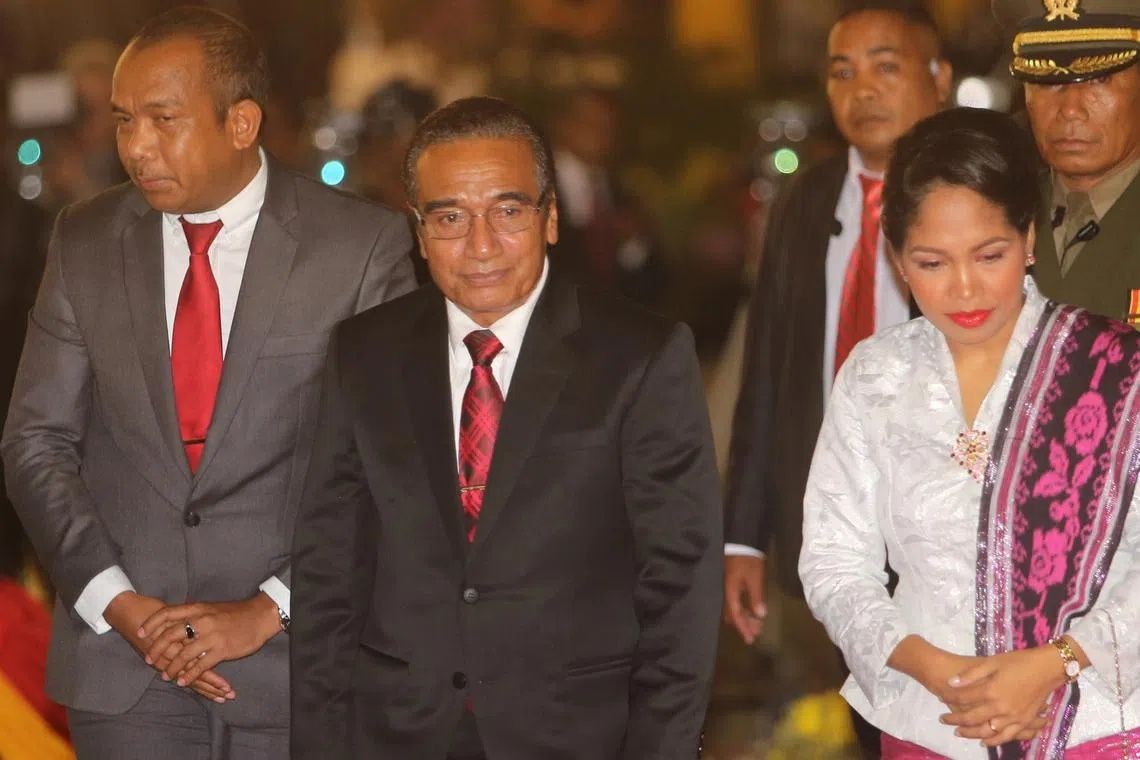
The government of Timor-Leste announced a week of national mourning on Monday, June 22, following the death of former president Francisco "Lu-Olo" Guterres over the weekend at a hospital in Malaysia. The 71-year-old, who served as the Southeast Asian nation's sixth president from 2017 to 2022, left an indelible mark on the country's modern history as a towering figure in its decades-long struggle for independence and self-determination.
Guterres passed away after a lifetime dedicated to Timorese liberation and nation-building. His journey mirrored that of his country itself—forged through conflict, sustained by unwavering political commitment, and ultimately vindicated by independence. During his presidency, he represented the living embodiment of East Timor's hard-won sovereignty, serving as a symbolic link between the armed struggle of the past and the democratic institutions of the present.
The official mourning period will see flags at half-mast across government buildings, embassies, and consulates throughout the capital and beyond. This ceremonial gesture reflects the profound respect held for Guterres, whose political legitimacy derived not from dynastic privilege but from his frontline participation in the armed struggle against Indonesian occupation. His family confirmed that his remains are scheduled to return to Dili on Tuesday, with funeral arrangements still being finalised by relatives and supporters.
Guterres's early life was shaped by the brutal 24-year Indonesian occupation that followed Portugal's decolonisation of the territory in 1975. Rather than accept foreign rule, he took up arms as a guerrilla fighter, enduring decades of conflict before independence was finally achieved in 2002 following a referendum and subsequent international intervention. This background distinguished him from many post-colonial leaders who gained power through less tumultuous paths, lending him considerable moral authority within Timorese society.
His ascent to the presidency came in 2017, when voters entrusted him with the nation's highest office by a commanding margin of 57 percent. This electoral endorsement validated his standing as a unifying figure capable of representing the entire nation after the independence struggle concluded. However, his tenure would prove to be a single, five-year term. When he sought reelection in 2022, Guterres faced a formidable challenge from Jose Ramos-Horta, another independence veteran who himself had won a Nobel Peace Prize for his advocacy work during the occupation period.
Ramos-Horta emerged victorious from the 2022 run-off ballot, bringing to an end Guterres's presidential chapter while neither man's legitimacy as a liberation hero was questioned. The electoral transition reflected the maturation of Timorese democracy, where even titans of the independence movement could be voted out peacefully. In his immediate response to Guterres's passing, Ramos-Horta transcended the electoral contest to praise his predecessor as a "great patriot," demonstrating the grace characteristic of veteran statesmen across generations.
The government's formal statement extended condolences not only to Guterres's immediate family but also to Fretilin, the Revolutionary Front for an Independent East Timor, which he had previously led as party chairman. This inclusive gesture acknowledged that Guterres's death represented a loss shared across multiple constituencies—his family, his political organisation, and the broader Timorese nation. The party that had championed independence under different leaders now mourned one of its most prominent voices.
Guterres's family has requested privacy during this period of grief, asking supporters and the public to respect their need for space and quiet reflection. The request reflects a dignified approach to mourning, even as tributes continue pouring in from across the political spectrum and from international partners. The juxtaposition of private family grief against public national mourning presents a delicate balance that many nations have navigated when losing respected elder statesmen.
Malaysia's connection to this moment extends beyond ceremonial acknowledgment. Prime Minister Datuk Seri Anwar Ibrahim issued a statement expressing personal sadness and extending formal condolences to both the Guterres family and the Timorese people. Anwar's remarks reflected Malaysia's role as a regional neighbour and partner to the young Southeast Asian nation, noting that Guterres would be remembered in Malaysia "with respect and affection." The fact that Guterres passed away in a Malaysian hospital underscores the cross-border medical relationships and people-to-people connections that link the region's nations together.
For Malaysia and broader Southeast Asia, Guterres's passing marks the end of an era for a leader whose political trajectory embodied the region's post-colonial journey. His life story—from armed resistance fighter to democratic president to respected elder statesman—mirrors the experiences of several senior regional leaders and reflects shared historical narratives of decolonisation, nation-building, and gradual democratisation. The mourning in Dili thus resonates across borders, serving as a moment for regional reflection on the individuals and movements that shaped modern Southeast Asia.
Guterres leaves behind a legacy that encompasses not merely political office but moral authority derived from sacrifice and commitment to principle. His death closes a chapter in Timorese history while his influence will persist in the institutions and democratic traditions that his generation helped establish. As Timor-Leste observes this period of mourning, the nation honours not just a former president, but a symbol of its own resilience and hard-won independence.

