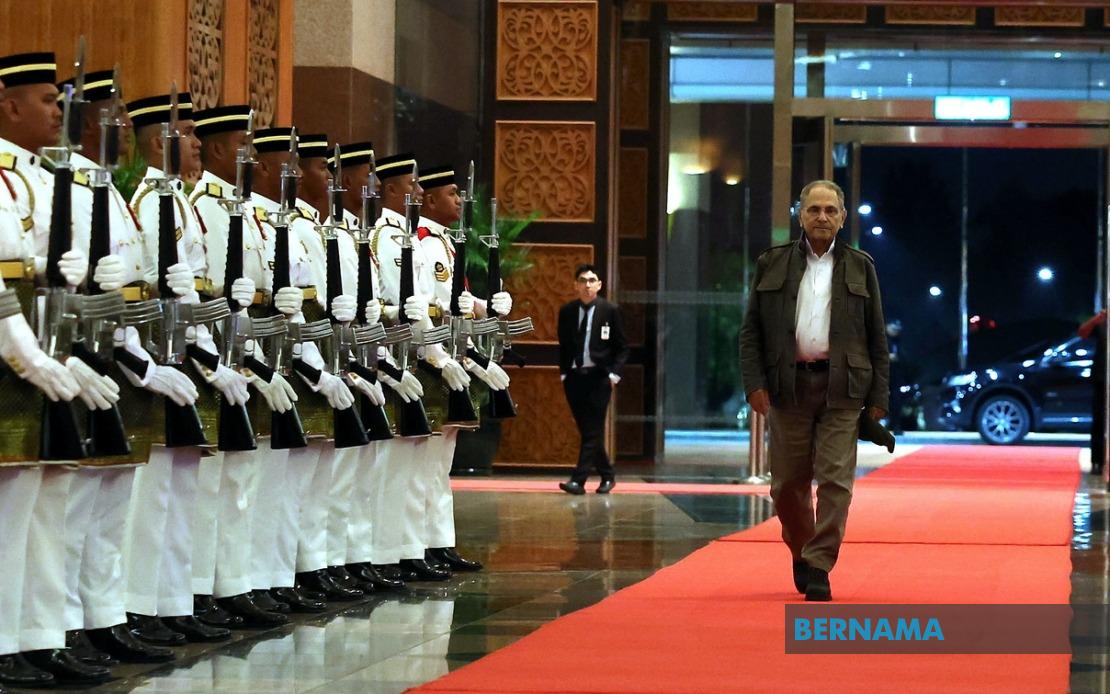
Timor-Leste President Jose Ramos-Horta departed Malaysia early on June 17 after completing a five-day special visit aimed at reinforcing bilateral cooperation and charting a course for deeper regional integration. The Nobel Peace Prize laureate boarded a Batik Air flight at Kuala Lumpur International Airport Terminal 1 at 2.15 am, concluding a diplomatic engagement that underscored the warming relationship between the two nations. His departure was marked by a formal Guard of Honour ceremony involving personnel from the First Battalion Royal Ranger Regiment, reflecting the official significance accorded to the visit.
The presidential visit showcased Malaysia's central role in Timor-Leste's integration into ASEAN, a milestone that remains relatively recent following the nation's admission as the bloc's 11th member on October 26, 2025. During a public dialogue session titled "A Changing World, Enduring Values" on June 15, Ramos-Horta characterized bilateral relations as "exceptionally good" and praised Malaysia's demonstrated success across multiple governance dimensions. His assessment touched on Malaysia's institutional frameworks in security, democratic practice, and economic management—areas of particular relevance for Timor-Leste as it seeks to consolidate its own governance structures following decades of post-conflict reconstruction.
A crucial element of the visit involved acknowledging Malaysia's sustained commitment to Timor-Leste extending back to the pre-independence period. The Malaysian government had provided active diplomatic and logistical support during the critical 1999 peacekeeping intervention, a formative moment that shaped Timor-Leste's trajectory toward independence in 2002. This historical foundation provides essential context for understanding the current relationship—it transcends ordinary bilateral diplomacy and reflects a deeper partnership rooted in Malaysia's investment in regional stability and democratic governance. Ramos-Horta's explicit recognition of this historical support served as both gratitude and reinforcement of the partnership's durability.
Timor-Leste's ASEAN membership represents a significant structural shift for the organisation and carries particular implications for Malaysia as an established regional power. Ramos-Horta specifically commended Malaysia's advocacy for Timor-Leste's full membership during Malaysia's tenure as chair, demonstrating the influential role that large ASEAN members play in shaping bloc composition and integration processes. This backing proved decisive in a context where ASEAN consensus operates on strict unanimity principles, making Malaysia's support institutionally crucial. The acknowledgment reflects both gratitude and an implicit understanding that Malaysia now holds certain diplomatic leverage within the relationship.
Looking forward, Timor-Leste has announced plans to host the ASEAN Summit in 2029, a responsibility that carries substantial organisational and infrastructural demands. Ramos-Horta expressed confidence in the nation's capacity to meet this obligation, noting that development efforts are being expedited to ensure adequate facilities and infrastructure. For Malaysia and other regional partners, this aspiration presents both opportunity and challenge. It signals Timor-Leste's commitment to full regional participation while simultaneously raising questions about the adequacy of preparation timelines and the potential for coordinated regional support to strengthen implementation. The 2029 summit represents a symbolic inflection point in Timor-Leste's integration trajectory.
Economic dimension formed a substantial component of the presidential agenda, with Ramos-Horta actively soliciting Malaysian investment interest in Timor-Leste's infrastructure expansion programs. The pitch emphasised several competitive advantages: notably the nation's comparatively low debt burden and a sovereign wealth fund that provides financial stability for development initiatives. Additionally, Ramos-Horta highlighted ongoing support from multilateral financing institutions, which collectively create a more favourable investment climate than might otherwise be anticipated for a Southeast Asian nation with Timor-Leste's relatively recent emergence from conflict. This economic outreach underscores a recognition that Malaysia possesses substantial capital and technical capacity that could meaningfully contribute to regional infrastructure development.
Trade flows between the two nations remain modest, with bilateral commerce totalling USD18.72 million during 2024, comprising USD18.37 million in Malaysian exports and USD0.35 million in imports from Timor-Leste. The pronounced asymmetry in this relationship reflects both the disparities in economic scale and Timor-Leste's narrow export base. Malaysian shipments predominantly consist of manufactured goods and intermediate products, while Timor-Leste's exports remain concentrated in primary sectors. However, the very limited trade volumes suggest substantial untapped potential, particularly as Timor-Leste's infrastructure development and institutional capacities expand. For Malaysian firms, this represents a nascent market opportunity rather than an established trading relationship.
Prime Minister Datuk Seri Anwar Ibrahim hosted Ramos-Horta at a formal luncheon at Seri Perdana Complex, providing a platform for senior-level dialogue on expanding cooperation across multiple sectors. The discussions encompassed trade expansion, investment facilitation, human capital development initiatives, and technical training programs. This broad engagement agenda demonstrates that Malaysian policymakers view the relationship as multi-dimensional rather than narrowly focused. The emphasis on human capital development and technical training carries particular significance for Timor-Leste, where institutional capacity-building remains an ongoing necessity. Malaysian technical expertise and educational frameworks could provide valuable models for institutional development.
The five-day visit functioned both as a reaffirmation of existing partnership foundations and as a platform for articulating future cooperation modalities. Ramos-Horta's consistent emphasis on bilateral relations being "exceptionally good" appears designed to establish a diplomatic baseline from which deeper engagement can proceed. The visit sequence—including dialogue sessions, official ceremonies, and high-level bilateral meetings—followed conventional diplomatic protocols while emphasising substantive engagement on concrete cooperation frameworks. For Malaysian readers and policymakers, the visit underscores Malaysia's enduring influence within ASEAN's expansion processes and its positioning as a trusted partner for emerging regional economies.
Timor-Leste's trajectory as ASEAN's newest member remains closely watched by regional observers assessing both the organisation's capacity for integration and the challenges facing post-conflict states attempting full participation in regional architecture. Malaysia's role as a supportive partner carries implications extending beyond bilateral ties—it contributes to broader narratives about ASEAN solidarity and the bloc's capacity to support institutional integration. The economic dimension of this partnership, while currently limited in absolute terms, possesses potential for meaningful expansion as Timor-Leste's infrastructure programs advance and institutional capacities strengthen. Malaysian investors, development partners, and technical agencies may find increasing opportunities in Timor-Leste's development trajectory, representing both commercial potential and a mechanism for broader regional consolidation.
The presidential visit concluded with enhanced institutional understanding regarding cooperation modalities and shared expectations for future engagement. Both nations appear positioned to deepen economic relationships, expand human capital initiatives, and strengthen bilateral institutional frameworks. For Malaysia, the relationship with Timor-Leste represents an opportunity to consolidate regional influence while supporting a neighboring nation's institutional development. For Timor-Leste, Malaysia's partnership provides access to established expertise, capital resources, and diplomatic support essential for consolidating its ASEAN integration and managing the substantial development challenges ahead. The visit thus encapsulates both the immediate bilateral relationship and the broader regional dynamics shaping Southeast Asian cooperation frameworks in the contemporary period.