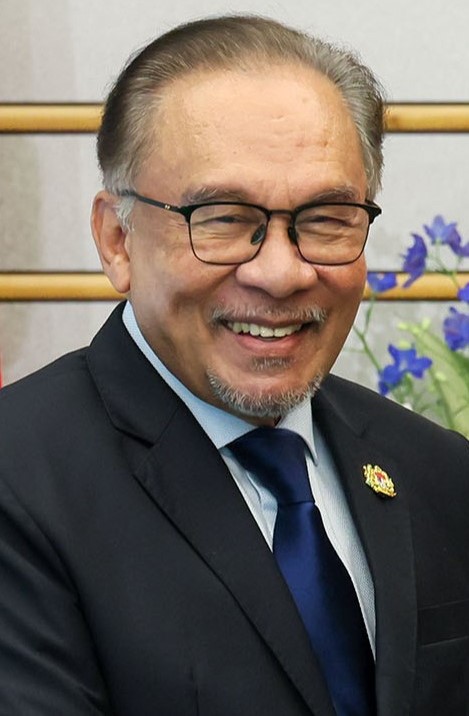
Malaysia's senior leadership has spotlighted the Tokoh Maal Hijrah awards as powerful reminders of the standards to which the Muslim community should aspire, emphasising that the honours bestowed upon this year's recipients underscore a broader call for intellectual rigour and civic responsibility across the nation's Islamic institutions and society. Deputy Prime Minister Datuk Seri Dr Ahmad Zahid Hamidi used the occasion to urge the broader Muslim population to intensify their commitment to scholarship, meaningful engagement with their communities, and advancement of both Islamic civilisation and the nation's collective development.
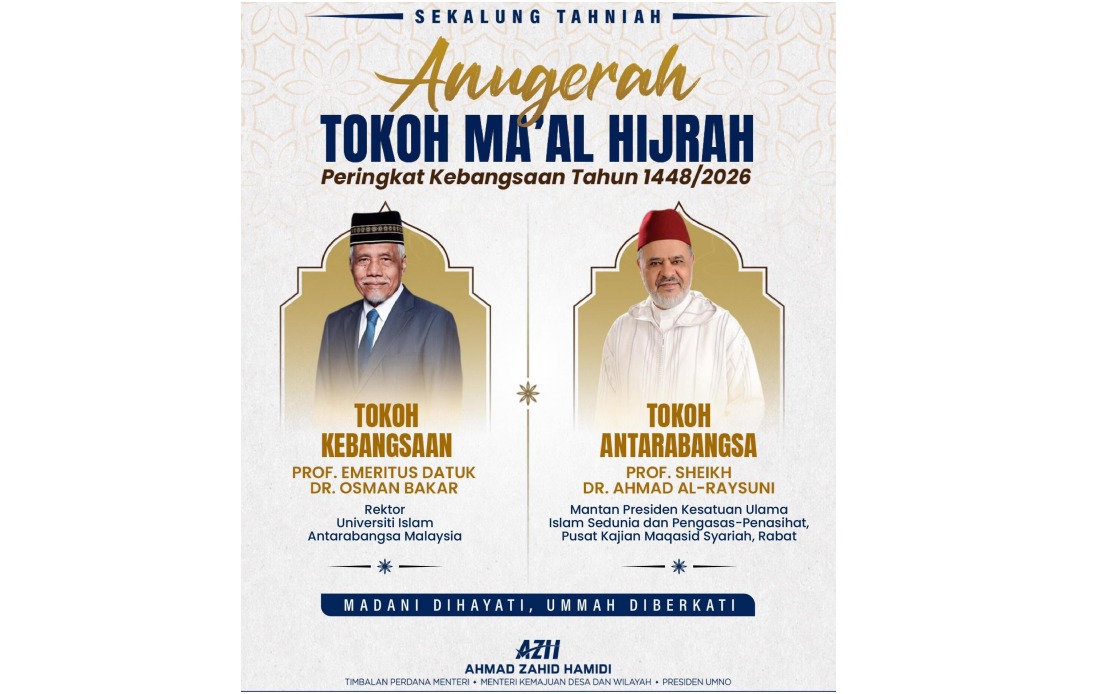
The 1448H/2026M cycle of awards recognised two distinguished scholars whose careers have substantially shaped contemporary Islamic discourse and education. Prof Emeritus Datuk Dr Osman Bakar secured the National Tokoh Maal Hijrah Award, while Prof Sheikh Dr Ahmad Al-Raysuni, a prominent Islamic jurisprudence specialist based in Morocco, received the International recognition. Their selection reflects a deliberate institutional choice to elevate voices that have moved beyond traditional scholarly boundaries to influence public policy and community consciousness regarding Islamic values and ethics.
Ahmad Zahid's public endorsement framed the awards within a strategic narrative about the role of knowledge workers and community leaders in strengthening Malaysia's multicultural society. His statement positioned the recipients' contributions as exemplifying the intersection of intellectual authority and social benefit—a connection that carries particular weight in a regional context where questions about Islam's relationship with modernity, governance, and development remain contested. By highlighting how Osman and Al-Raysuni have elevated both the status of Islamic knowledge and its practical application in promoting societal welfare, the Deputy Prime Minister implicitly addressed concerns about the relevance of traditional Islamic scholarship to contemporary challenges.
Osman's career trajectory has positioned him as a bridge figure between Islamic philosophy and modern scientific discourse, making his recognition symbolically significant for Malaysia's positioning as a Muslim-majority nation engaged with global knowledge systems. Al-Raysuni's expertise in Islamic jurisprudence and ethics brings international perspective to the discussion of how religious principles can inform governance and social policy—dimensions increasingly important as Southeast Asian nations grapple with balancing Islamic commitments with developmental imperatives.
Deputy Prime Minister Datuk Seri Fadillah Yusof complemented these remarks with his own interpretation of the awards' significance, grounding the recognition in the historical concept of hijrah itself. Rather than treating the hijrah of Prophet Muhammad as merely a historical reference point, Fadillah articulated it as an ongoing philosophical framework encompassing sacrifice, collective solidarity, institutional resilience, and purposeful social transformation. This reframing modernises the concept while anchoring contemporary Malaysian discourse in foundational Islamic principles, a rhetorical move designed to legitimise progressive development agendas within explicitly Islamic terms.
Fadillah's emphasis on building a society that is simultaneously progressive and values-based addresses a persistent tension in Malaysia's public conversation about modernisation. His call for unity, strengthened faith, and expanded charitable action suggests a vision of development that does not pit religious commitment against material advancement or institutional innovation. For Malaysian readers navigating questions about their nation's future direction, this framing offers an official perspective that religious leadership and nation-building are complementary rather than contradictory objectives.
The formal presentation ceremony held at Masjid Putra in Putrajaya, with Sultan Nazrin Shah of Perak conferring the awards, underscored the intersection of religious authority, state recognition, and intellectual merit within Malaysia's institutional framework. The Sultan's participation elevated the awards beyond academic recognition into the realm of official state endorsement, signalling that the federal government views these scholars' contributions as serving national as well as religious interests. The presentation of cash prizes, trophies, and certificates of appreciation provided tangible institutional validation alongside the symbolic honours.
The international dimension of the awards—with Al-Raysuni's inclusion—positions Malaysia as not merely a consumer of Islamic scholarship but as a generator and curator of global Islamic intellectual discourse. This reflects broader aspirations within Malaysian Islamic institutions to influence conversations across the Muslim world rather than simply responding to external religious authorities or trends. For Southeast Asian Muslim communities increasingly conscious of their own intellectual traditions and contributions, the inclusion of international recipients alongside domestic honourees signals that centre of gravity regarding Islamic thought and practice need not necessarily lie elsewhere.
The awards arrive at a moment when questions about Islamic education, the relationship between religious knowledge and public policy, and the roles of intellectuals in shaping community values occupy prominent space in Malaysian discourse. Both officials' remarks implicitly acknowledge that the Muslim community requires guidance not merely on personal devotional matters but on navigating complex contemporary challenges ranging from technological disruption to environmental sustainability to social cohesion. By celebrating scholars who have engaged these broader domains, the government signals its expectation that Islamic leadership extends beyond the pulpit into universities, think tanks, policy forums, and civil society spaces.
For students, academics, and professionals throughout the region observing Malaysia's approach to Islamic intellectual life, the awards offer a window into how one major Southeast Asian nation balances religious identity with developmental aspirations. The emphasis placed by both Deputy Prime Ministers on the recipients' roles in advancing knowledge, empowering communities, and spreading values that generate social benefit suggests an understanding that Islamic leadership in the contemporary context must demonstrate tangible contributions to human flourishing beyond doctrinal correctness or ritual observance.
The recognition also carries implications for Malaysia's positioning within broader Muslim-majority regions' intellectual ecosystems. By honouring scholars who bridge Islamic traditions with contemporary concerns, and by explicitly framing their work as beneficial to society at large, Malaysian officials present a particular vision of what engaged Islam looks like—one that assumes religious commitment enhances rather than diminishes the quality of intellectual and policy contributions to national and international affairs. This approach contests narratives, prevalent in some external commentaries, that position Islamic identity and modernisation as inherently antagonistic.