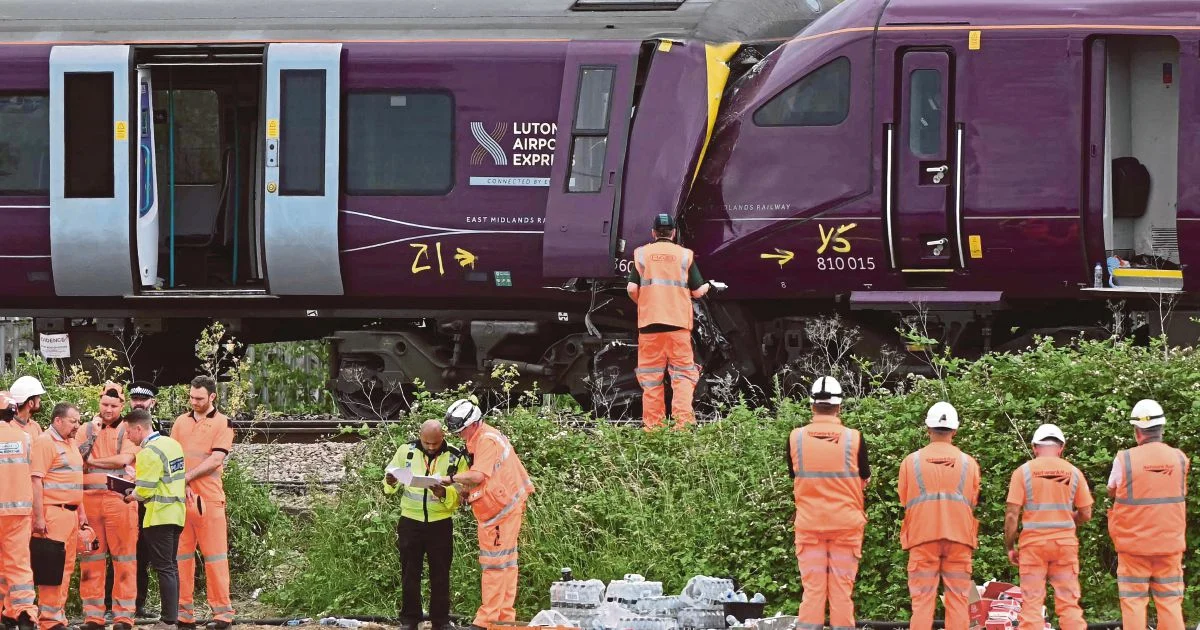
A train driver has been killed and 28 others hospitalised following a collision near Bedford, north of London, triggering an immediate investigation by UK accident authorities. The incident, which unfolded on Saturday, has left nine passengers and staff members in critical condition, prompting an urgent response from emergency services across the region.
Accident investigators from the UK's rail safety authority descended on the scene following the collision, beginning what is expected to be a comprehensive examination of the circumstances leading to the crash. Initial responses from emergency personnel focused on extracting injured passengers and stabilising those most severely affected, with paramedics working through the immediate aftermath to triage and transport the wounded to nearby medical facilities.
The severity of injuries suggests the impact was considerable, with nine individuals requiring critical care indicating the force with which the trains collided. Medical facilities in the region mobilised additional resources to cope with the influx of patients, many of whom required immediate treatment for injuries sustained in the impact. The concentration of critical cases points to the localised nature of the collision and its intensity.
Trains operating in the UK carry thousands of passengers daily, making rail safety investigations particularly high-stakes. When collisions occur, investigators typically examine multiple factors including signalling systems, communication protocols between drivers and control centres, train speed at the moment of impact, weather conditions, track conditions, and maintenance records. Each element forms part of a complex puzzle that accident investigators must piece together to understand how such incidents occur.
The Bedford area, situated on a major transport corridor serving London and connecting communities across the Midlands, has seen significant rail traffic historically. Understanding this collision will be critical not only for those directly affected but for the broader travelling public who depend on rail networks for commuting, business travel, and leisure journeys. Public confidence in rail safety can be substantially affected by major incidents, particularly when fatalities are involved.
For Malaysian readers familiar with public transport systems, rail safety remains a paramount concern across Southeast Asia. The UK's systematic approach to accident investigation, with dedicated regulatory bodies empowered to conduct thorough inquiries, reflects international best practices that many nations, including Malaysia, have adopted or are working to strengthen. The incident serves as a reminder of the importance of robust safety protocols, regular maintenance, and ongoing investment in rail infrastructure.
The driver's death represents a particular tragedy, as train operators are often overlooked in broader discussions of rail safety despite bearing responsibility for hundreds of lives at any given moment. Train operators undergo extensive training and face demanding working conditions, yet incidents such as this underscore the critical importance of supporting them with functioning safety systems and clear communication channels.
Investigators will likely examine the black box data recorder systems present on modern trains, which capture crucial information about speed, acceleration, braking, and communication between the train and signal boxes. These recordings often prove invaluable in determining exactly what sequence of events led to the collision. Additionally, witness statements from surviving passengers, staff members, and other railway personnel will contribute significantly to the investigation's findings.
The incident highlights ongoing discussions within the UK rail industry regarding automation, safety redundancies, and the human element in railway operations. While technology has advanced considerably, train operations still rely substantially on human decision-making, vigilance, and communication between numerous personnel across the rail network. Any breakdown in this complex system can have catastrophic consequences.
For the injured, recovery will vary considerably depending on the nature and severity of their injuries. Beyond immediate medical treatment, many may require ongoing rehabilitation and psychological support to process the trauma of experiencing a serious transport accident. Long-term effects on survivors can include physical complications and psychological consequences that persist well beyond the initial hospitalization period.
The collision will inevitably prompt reviews of current safety protocols at Bedford and similar locations throughout the UK rail network. Regulators may recommend additional safeguards, enhanced training procedures, or infrastructure modifications to prevent similar incidents in future. Such reviews, while sometimes criticised as reactive rather than proactive, often lead to meaningful improvements in overall rail safety.
As investigations continue, the focus remains on understanding precisely what circumstances aligned to produce this tragic outcome. Whether mechanical failure, human error, environmental factors, or system failures prove to be the primary cause, the results will likely inform safety enhancements not just in the UK but potentially across international rail operations. The incident underscores why maintaining vigilant oversight of rail safety infrastructure remains essential across all nations operating passenger rail services.

