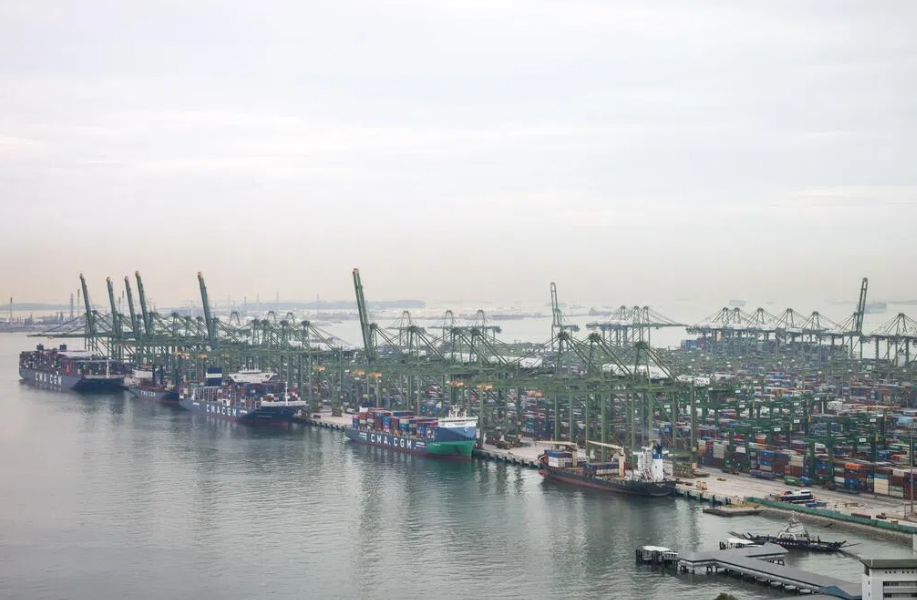
The United States has moved to apply a fresh 12.5 per cent tariff on Singapore's exports, marking a significant development in President Donald Trump's trade enforcement strategy and threatening to disrupt one of Southeast Asia's most trade-dependent economies. The move comes as part of a broader initiative targeting 45 countries worldwide that Washington says have failed to adequately adopt or enforce prohibitions on goods manufactured through forced labour. Published in the US Federal Register on July 23, the tariff regime emerged from a five-month investigation by the Office of the US Trade Representative that concluded this month, placing Singapore among the jurisdictions facing the steepest duties.
The Trump administration's decision carries particular weight for the island nation, given that roughly one-third of Singapore's domestic exports to America will fall under the new tariff structure. Senior US trade officials have framed the action as overdue enforcement of longstanding American law. Jamieson Greer, the US Trade Representative, emphasised that the United States has maintained a forced labour import prohibition for nearly a century and argued it was time for trading partners to demonstrate equivalent rigour in implementation. The statement reflects a hardening stance within the administration toward what it perceives as lax compliance among allied and partner nations.
Singapore's government has moved swiftly to contest the characterisation, maintaining that it neither engages in unfair trade practices nor condones forced labour within its supply chains. During bilateral talks with US Secretary of State Marco Rubio at this month's Asean Foreign Ministers' Meeting in Manila, Foreign Minister Vivian Balakrishnan raised the issue directly, signalling that Singapore intends to challenge the assessment through diplomatic channels. The ministry of Trade and Industry has been tasked with examining the implications and preparing a formal response to Washington.
The tariff structure itself reveals nuances in how the Trump administration is calibrating its enforcement approach. Ten other trading partners, including Mexico, the United Kingdom, Canada, and India, will face a comparatively lower 10 per cent duty, reflecting a determination that they have at least adopted forced labour restrictions even if implementation remains incomplete. Japan, Switzerland, and South Korea face the 12.5 per cent rate but through mechanisms that comply with existing bilateral or regional trade agreements they have concluded with the US, suggesting an attempt to navigate existing contractual obligations.
Critically, not all of Singapore's exports will bear the new burden equally. The White House exempted entire sectors from the tariff regime, including energy products, pharmaceuticals and their raw ingredients, designated electronics categories, specific aerospace components, semiconductors, and metals employed in currency and bullion production. This carve-out reflects the administration's recognition that blanket tariffs could disrupt critical supply chains and inflate prices for American consumers and manufacturers. However, the July 23 Federal Register notice updated the exemption list, requiring Singapore to recalculate its precise exposure to the new duty—a process that remains ongoing.
The tariff initiative represents a carefully constructed workaround to legal obstacles that have constrained Trump administration trade policy in recent months. In February 2026, the US Supreme Court invalidated the constitutional foundation of Trump's flagship reciprocal tariff programme, imposed in 2025, removing a key enforcement mechanism. The administration subsequently imposed a temporary 10 per cent global levy under Section 122 of trade law, which expired earlier this week. To avoid relying on statutory authority that courts have already dismantled, Trump officials pivoted to Section 301 of the Trade Act of 1974, a Cold War-era statute originally designed to address intellectual property theft and market access barriers.
Legal scholars and trade analysts view this manoeuvre as both strategically shrewd and constitutionally contentious. Section 301 carries no statutory expiration date and imposes no ceiling on tariff rates, qualities that historically have made measures authorised under it more resilient to judicial challenge than those relying on more recent statutes. However, experts caution that applying Section 301 as a universal enforcement tool across dozens of countries to address forced labour concerns represents a significant stretch of congressional intent when the law was enacted. Many anticipate immediate lawsuits once the tariff takes effect, with legal challenges arguing that the administration has weaponised trade law beyond its original scope.
The forced labour investigation itself was remarkably expeditious, commencing in March and concluding by July—a compressed timeline that has raised questions about the depth of the analysis supporting such broad determinations. The USTR simultaneously initiated a separate Section 301 investigation into alleged structural excess capacity and unfair production practices in manufacturing sectors, with Singapore again among 16 jurisdictions under scrutiny. Greer acknowledged in a recent Bloomberg Television interview that the excess capacity probe is proceeding more deliberately than the forced labour review, as the office seeks to ensure methodological rigour and legal defensibility.
For Malaysia and other Southeast Asian nations, Singapore's experience carries troubling implications. The region's economies are deeply integrated into global supply chains and heavily dependent on American market access. If Washington is willing to impose substantial tariffs on one of the region's most developed and transparent economies—one with comprehensive labour standards and sophisticated regulatory frameworks—the precedent suggests that other Southeast Asian exporters could face similar scrutiny. The move may herald a period of heightened uncertainty around trade relationships with the United States, potentially prompting other countries to accelerate negotiations or preemptively address American concerns about labour practices.
The timing also reflects broader shifts in US trade strategy under the current administration. Rather than pursuing comprehensive multilateral or bilateral trade negotiations, the Trump team is employing targeted unilateral tariffs and investigations as leverage to compel behavioural change among trading partners. This approach eschews negotiation in favour of enforcement, presuming that economic pressure will incentivise policy alignment without requiring sustained diplomatic engagement or reciprocal concessions. For Singapore and other affected nations, the challenge lies in determining whether formal disputes through the World Trade Organisation, bilateral diplomacy, or legal challenges offer the most promising path to resolution.
Singapore's exposure extends beyond the immediate tariff impact. The forced labour and excess capacity investigations signal that American policymakers are scrutinising Singapore's entire economic model with heightened scepticism, even as the nation maintains some of the world's strictest labour and environmental standards. This reputational dimension carries long-term consequences for investment flows, supply chain positioning, and Singapore's role as a trusted intermediary in global trade. How the government responds—whether through diplomatic negotiation, legal defence, or substantive policy adjustments—will shape both bilateral relations and Singapore's standing among global trading partners navigating similar pressures from Washington.

