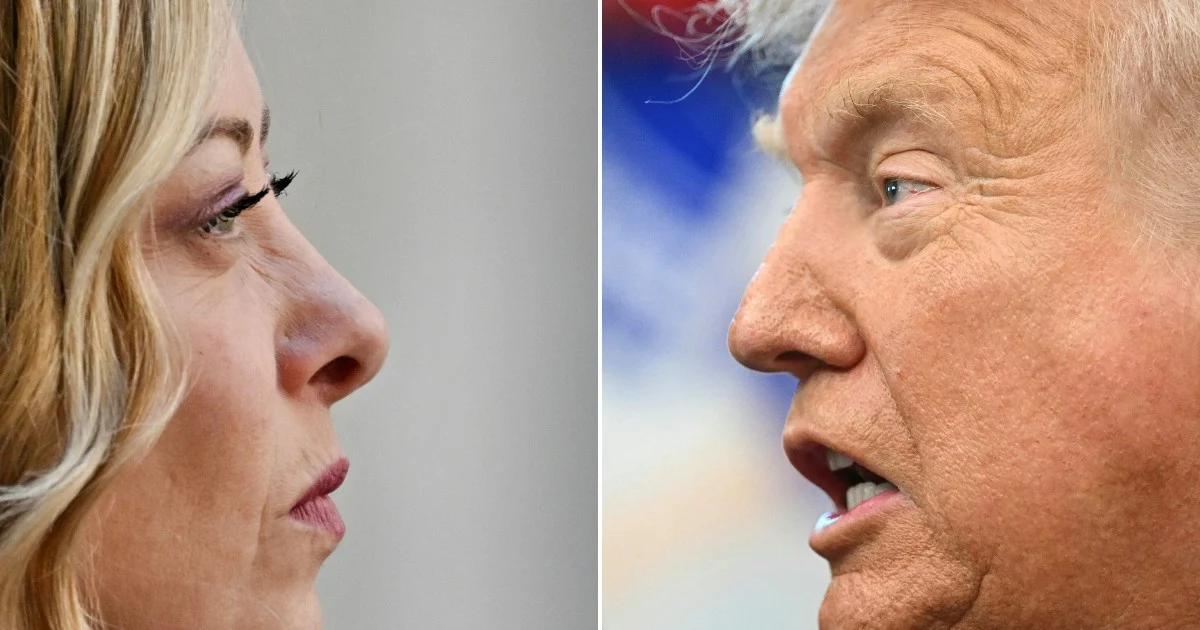
The brewing tensions between Washington and Rome took a sharper turn on Saturday when US President Donald Trump publicly accused Italian Prime Minister Giorgia Meloni of persistently pursuing photo opportunities with him, a grievance he used to broaden his criticism into areas of substantial geopolitical consequence. The escalation marks a notable deterioration in relations between two traditionally close allies within the Western democratic framework, signalling potential complications for transatlantic coordination on critical security matters.
Trump's public critique moved beyond the superficial nature of the photograph dispute, pivoting instead toward substantive foreign policy disagreements that carry implications for European security architecture and American strategic interests in the Mediterranean region. The US President specifically referenced disputes over Iran policy and NATO contributions, suggesting that personal grievances may be intertwined with his administration's broader approach to alliance management and burden-sharing expectations among member states.
The Italy-US relationship has historically served as a cornerstone of Western influence in the Mediterranean and Southern Europe. However, Trump's willingness to air such disagreements publicly raises questions about his administration's diplomatic approach toward longstanding allies and whether personality-driven conflicts might overshadow institutional cooperation frameworks that have endured for decades.
Meloni, who has positioned herself as a staunch supporter of Western interests and a reliable NATO partner, finds herself in a delicate position. Italy maintains significant strategic importance due to its geographic location, naval capabilities, and hosting of crucial American military installations. Any sustained deterioration in bilateral relations could complicate coordination on regional security matters affecting North Africa, the Middle East, and Eastern Mediterranean concerns.
The Iran dimension of this dispute carries particular weight for regional stability. Italy, as a European Union member state, operates within the framework of multilateral diplomacy regarding Iran policy, which occasionally diverges from American unilateral approaches. The US administration under Trump has historically favored maximum pressure strategies, while European allies, including Italy, have sought diplomatic engagement pathways. This fundamental difference in approach cannot be reduced to personal friction, yet Trump's framing suggests he views it through that lens.
NATO burden-sharing remains perpetually contentious within the alliance. Trump has repeatedly criticized European member states for insufficient defence spending, and Italy's expenditure levels have been subject to his criticism before. However, the president's linkage of this economic argument to a personal grievance about photographs suggests an unconventional negotiating style that prioritises immediate satisfaction over institutional dialogue channels that typically address such concerns.
For Malaysian policymakers and regional observers, this episode offers instructive lessons about American alliance management under the current administration. ASEAN nations that maintain defence relationships with the United States should note that institutional arrangements and treaty commitments may receive less weight than personal dynamics and immediate political calculations. This unpredictability introduces additional complexity for Southeast Asian nations balancing their strategic relationships.
The public nature of Trump's criticism also signals a departure from traditional diplomatic protocol, where such disagreements would typically be handled through private channels before any public disclosure. This openness about alliance tensions could embolden other actors internationally who perceive weakness or disarray within Western coordination, potentially affecting broader security architectures that Southeast Asian nations depend upon for their own strategic calculations.
Italy's response will likely reflect the bind in which Meloni finds herself. She cannot easily capitulate to perceived pressure from Washington without domestic political consequences, yet sustained conflict threatens real cooperation on matters ranging from Mediterranean security to coordinated approaches toward Russian actions in Europe and Middle Eastern developments. This mirrors challenges faced by many allies attempting to maintain relationships with an administration that appears willing to subordinate institutional arrangements to personal preferences.
The timing of this escalation also merits attention, as it occurs amid broader discussions about NATO expansion, Russian activities, and the European Union's autonomous capacity development. Whether Trump intends this dispute as leverage on these larger matters or whether it represents genuine personal grievance remains unclear, but the ambiguity itself complicates Italian policymakers' ability to respond effectively.
Looking forward, the resolution of this particular spat will likely set precedents for how other allied nations expect to be treated. If personal grievances routinely become tools for gaining policy concessions, the entire architecture of alliance management shifts toward less predictable, more personalised negotiation frameworks. For regional powers like Malaysia observing these dynamics, such uncertainty about American reliability in alliance relationships carries implications for how Southeast Asia structures its own strategic partnerships and hedging strategies.

