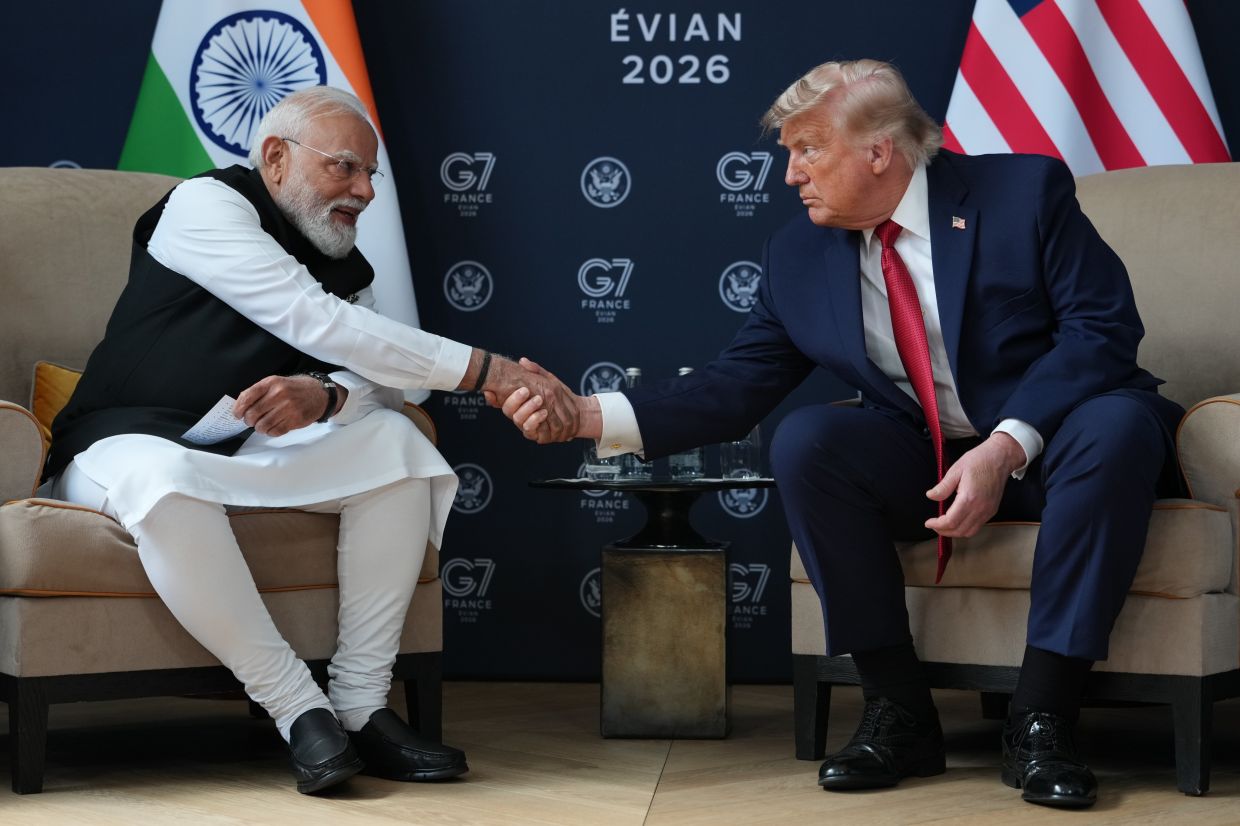
Donald Trump has drawn considerable backlash in India after showing little sympathy for the deaths of three Indian sailors killed by American military strikes on a commercial vessel, despite meeting with Prime Minister Narendra Modi to discuss deepening bilateral ties. Speaking to reporters following their first face-to-face meeting in 16 months, Trump characterised maritime casualties as an inevitable consequence of commercial shipping operations, stating that "this has been happening throughout time" while pledging that Washington and New Delhi would continue cooperating on the matter. His remarks notably lacked any formal expression of condolence or acknowledgement of responsibility for the incident, instead emphasising that both nations "love all of those people."
The tragic incident occurred when US Central Command forces launched missile strikes against the MT Settebello, a Panama-flagged cargo vessel, in the Strait of Hormuz last week, killing the three Indian nationals aboard. The attack was justified by American authorities as a response to what they characterised as violations of a blockade targeting Iranian oil exports through the strategic waterway. Two additional commercial vessels carrying Indian crew members also came under American fire during the same operation, illustrating the scale of the military escalation in one of the world's most critical shipping routes.
India's response through official diplomatic channels revealed the depth of concern over the killings. Foreign Secretary S. Jaishankar registered a "strong protest" with his American counterpart, yet the State Department's official summary of the conversation suggested Washington remained unapologetic about the blockade enforcement. The American readout explicitly stated that US officials "underscored that violations of the US blockade and the illicit transport of Iranian oil will not be tolerated," indicating that the military actions would continue regardless of civilian casualties among allied nations' citizens.
The incident has sparked unexpected public anger across India that extends far beyond diplomatic circles. Videos emerged from Delhi showing auto rickshaw drivers deliberately removing posters from their vehicles that were part of the US embassy's celebratory campaign featuring Trump's image and "Happy Birthday America" messaging. Such spontaneous acts of protest, unusual in a nation where the government has carefully cultivated closer ties with Washington, reflect genuine popular frustration with perceived American insensitivity to Indian lives.
Opposition politicians have seized on the moment to challenge Prime Minister Modi's approach to the relationship. Rahul Gandhi, the Indian National Congress leader, posted sharply critical commentary on social media, accusing Modi of being "compromised" and describing India's response as that of an "obedient servant" listening to American orders rather than a sovereign nation defending its citizens' interests. The language suggests that domestic political pressure is building on the Modi government to demonstrate stronger resistance to perceived American overreach, even as it pursues deeper strategic partnership with Washington.
Trump's characterisation of maritime violence as an occupational hazard stands in sharp contrast to the evident Indian perception that American forces should exercise greater restraint when targeting vessels in international waters where crew safety is at stake. By framing the deaths within a broader historical context of maritime accidents rather than addressing the specific circumstances of deliberate military action, Trump appeared to dismiss the distinctly political nature of the incident. His assertion that "we love all of those people, and they're great people" came across as inadequate consolation to a nation processing the loss of three citizens.
The timing of this crisis has complicated efforts to advance the bilateral relationship at a sensitive juncture. Trump and Modi had met in Washington in February 2025 to initiate discussions toward a comprehensive bilateral trade agreement, making India one of the first nations to negotiate directly with the new Trump administration on commerce terms. These talks represented a significant diplomatic achievement for Modi, positioning India as a priority trading partner within Washington's reorientation toward major Asian economies. Yet the maritime incident and Trump's dismissive response have injected considerable tension into these negotiations.
Trade discussions remain ongoing under the direction of US Trade Representative Ambassador Robert Lighthizer, with negotiators working toward finalising an interim agreement that could establish the framework for more comprehensive commerce arrangements. The political damage from the sailor deaths and Trump's comments threatens to complicate these negotiations by giving domestic Indian opposition figures ammunition to argue that the Modi government is surrendering national dignity for economic gain. Any perception that New Delhi is accepting unequal treatment in exchange for trade access could undermine domestic support for agreements that Modi's government hopes will boost India's economic growth.
Despite the evident tension, both leaders attempted to project continuity and warmth during their meeting. Trump referred to Modi as a "tough trader" and praised him as a "great guy," while indicating plans to visit India at an unspecified future date. The rhetoric of personal friendship and strategic alignment persisted even as the substantive disagreement over the maritime incident remained unresolved and unaddressed in any meaningful way. Secretary of State Marco Rubio, who visited India shortly after this meeting, characterised the country as among America's "most important strategic partners," suggesting that the administration views the relationship as sufficiently valuable to salvage despite the current controversy.
The incident highlights the inherent complexity of the US-India relationship in an era of intensifying great power competition and American military interventionism across critical shipping routes. India faces genuine pressure to align with Washington on strategic issues while simultaneously managing the political reality of public opinion and the demands of domestic opposition parties. The deaths of three Indian sailors have exposed the limits of personal diplomacy between Modi and Trump, revealing that transactional relationships built primarily on leadership affinity lack sufficient foundation when material disagreements arise over issues touching national sentiment and citizens' safety.
Looking ahead, the trajectory of US-India relations will depend substantially on how this crisis is managed and whether the Modi government can extract meaningful concessions or explanations from Washington. The trade negotiations will likely proceed, but the political capital both sides can invest in agreements has been depleted by the incident. For other Southeast Asian nations watching this dynamic unfold, the episode illustrates the potential costs of deepening military and economic ties with an administration that appears willing to prioritise strategic objectives over explicit concern for the welfare of citizens from allied nations operating in contested waters.

