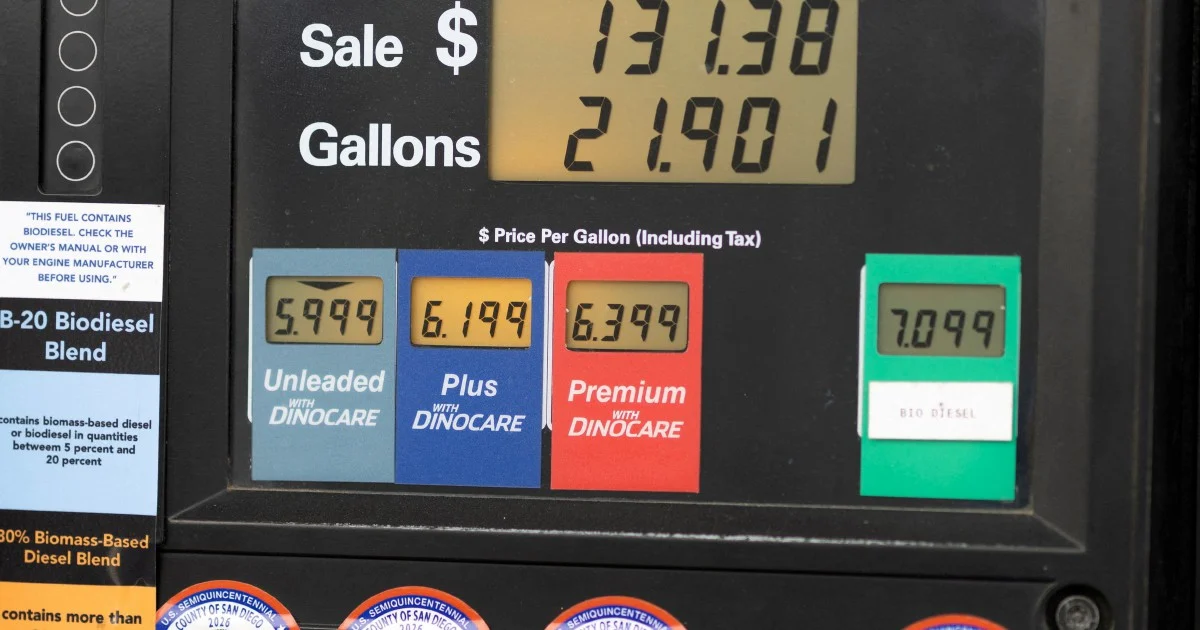
Facing mounting political pressure over sustained fuel cost pressures across America, President Donald Trump announced on Wednesday that he has instructed authorities to launch a formal inquiry into the practices of major petroleum corporations. The decision reflects growing frustration within his administration at the pace of petrol price declines, which have not kept pace with earlier expectations despite shifts in global energy markets over recent months.
The investigation represents a significant escalation in Trump's confrontational approach toward the energy sector, signalling his willingness to use federal authority to scrutinise pricing mechanisms that he views as excessive. By directing this probe, the president is attempting to respond to public dissatisfaction with fuel costs at the pump, a perennial political vulnerability that can influence voter sentiment ahead of electoral cycles. The move underscores how energy prices remain deeply intertwined with political messaging in American public discourse.
Trump's frustration emerges against the backdrop of escalating tensions in the Middle East, a region that supplies significant portions of global oil production. The geopolitical instability in this strategically vital zone has created uncertainty in energy markets, potentially constraining supply expansion and contributing to price pressures that have proven resistant to downward movement. International conflicts in the region have historically triggered supply concerns, even when actual production disruptions remain limited, as market participants price in risk premiums.
The timing of this inquiry coincides with broader criticism that the administration has struggled to manage the economic consequences of Middle Eastern developments. Energy-intensive industries and transportation sectors across the United States have voiced concerns about sustained elevated costs, and consumers remain acutely sensitive to petrol price fluctuations. Trump's decision to initiate an investigation allows him to demonstrate responsiveness to these complaints while placing responsibility squarely on corporate actors.
For Malaysian readers and Southeast Asian policymakers, this American initiative carries significant implications. The region's own energy markets remain tightly linked to global crude oil pricing mechanisms, and any shift in US energy policy or corporate behaviour could reverberate across Asian markets. Malaysia's own downstream petroleum sector, refining capacity, and fuel subsidy considerations all respond to international price movements. Should Trump's investigation result in regulatory changes affecting American oil majors' global operations, Malaysian importers and refiners could experience market ripple effects.
The investigation also reflects broader international tensions surrounding oil pricing transparency and the relationship between geopolitical events and market outcomes. American policymakers have long harboured suspicion that major oil corporations exploit crises to justify price increases that exceed fundamental supply-demand justifications. Trump's directive appears motivated by concerns that petroleum companies are capitalising on Middle Eastern uncertainty to maintain elevated margins rather than passing on any cost reductions to consumers.
This investigative action carries potential consequences for how multinational oil corporations operate across their global portfolios. Should the probe uncover evidence of coordinated pricing or other anticompetitive practices, remedial actions could reshape competitive dynamics in international petroleum markets. Smaller energy consumers and importing nations like Malaysia might benefit from increased regulatory scrutiny that constrains pricing power among major producers and traders.
The political economy of Trump's energy stance reveals tensions between free-market rhetoric and intervention-minded practice. While generally favouring deregulation, the president has consistently prioritised cheap energy as a public good worthy of governmental protection. This selective approach to government involvement—opposing regulation in some sectors while aggressively intervening in energy markets—reflects a distinctive governing philosophy that prioritises immediate consumer relief over abstract market principles.
Globally, the investigation signals that major oil corporations face heightened scrutiny from Washington regardless of which administration holds power. Energy companies must navigate an increasingly complex landscape where political sensitivities around fuel costs intersect with demands for corporate responsibility and environmental considerations. The investigation introduces additional uncertainty into their strategic planning, particularly regarding pricing transparency and communication with government authorities.
For Southeast Asian economies dependent on stable energy prices for manufacturing competitiveness and transportation costs, developments in American energy policy carry material consequences. The region's integration into global supply chains means that American energy policy decisions transmit through to production costs and logistics expenses across the region. Malaysia's refining sector, which processes crude imported from various global sources, remains sensitive to the international price environment that Trump's policies may influence.
Looking forward, the investigation's conclusions could influence how Washington engages with energy markets globally and shapes diplomatic relationships with major oil-producing nations. If the probe identifies systemic issues within corporate pricing practices, broader policy reforms addressing transparency, competition, and consumer protection could follow. For Malaysia and other Asian importers, such reforms might ultimately contribute to more stable and equitable global energy market outcomes, though transition periods could create short-term price volatility.

