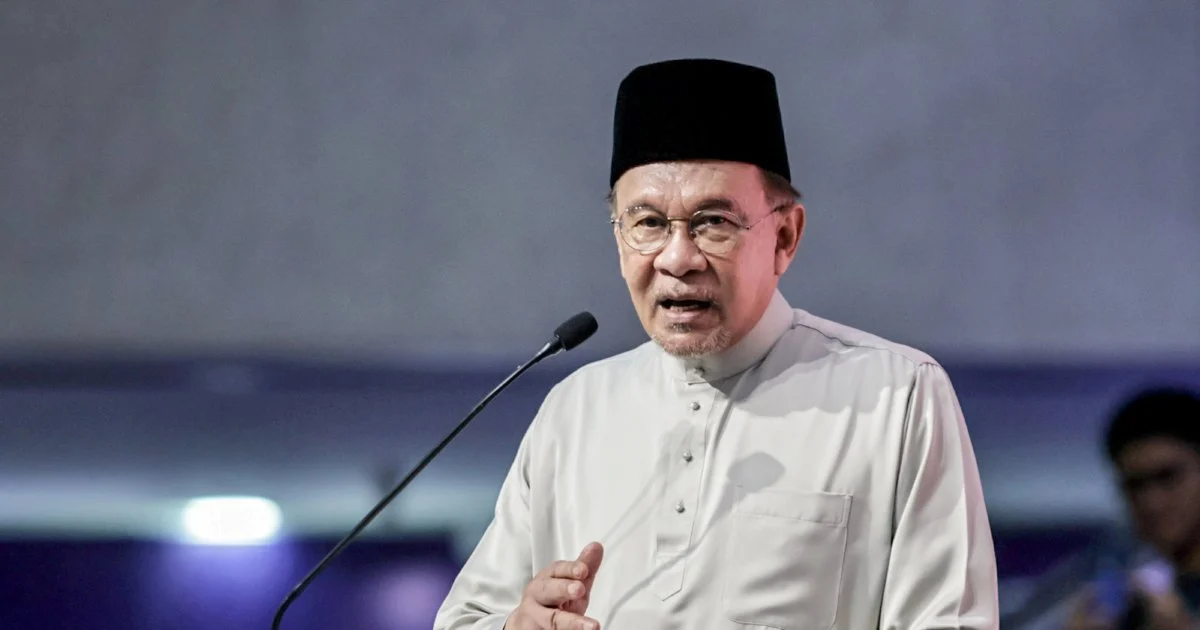
Tunku Ismail Sultan Ibrahim, the Tunku Mahkota of Johor, extended a formal audience to Prime Minister Datuk Seri Anwar Ibrahim during a session held in Kuala Lumpur today. Officials characterized the encounter as cordial and harmonious, underscoring the constructive nature of discussions between Malaysia's federal executive leadership and the heir to the Johor throne.
The meeting represents ongoing dialogue between senior state-level royalty and the nation's top political leadership. In Malaysia's constitutional framework, Rulers and their heirs occupy significant ceremonial and advisory roles, particularly within the Conference of Rulers, an institution that influences matters ranging from constitutional amendments to federal legislation. Regular audiences between Rulers' representatives and the Prime Minister form part of the customary engagement between federal and state leadership structures.
Johor's prominence within Malaysia's political and economic landscape makes such meetings noteworthy. As one of the country's largest and most developed states, Johor has consistently played a pivotal role in national affairs. The state's strategic location, spanning a peninsula stretch bordering Singapore and encompassing significant industrial and agricultural zones, means that cooperation between federal and Johor leadership carries implications extending beyond the state's boundaries.
The Tunku Mahkota's position carries particular weight in contemporary Malaysian politics. As the designated successor to the Sultan of Johor, he represents institutional continuity within one of the federation's most influential royal households. His engagement with federal leadership reflects the institutional checks and balances embedded within Malaysia's constitutional monarchy, where Rulers maintain relevance in governance despite the Prime Minister's executive authority.
Anwar Ibrahim's administration has placed emphasis on strengthening relationships across Malaysia's federal structure, including with state governments and royal institutions. Regular engagements with territorial leadership help facilitate dialogue on policy implementation, development priorities, and matters affecting inter-governmental coordination. Such meetings also serve a symbolic function, reinforcing the principle that federal governance operates within a framework acknowledging state autonomy and royal constitutional roles.
The characterization of today's meeting as harmonious carries significance in a political environment where centre-state relations occasionally experience friction. Malaysia's system distributes considerable power to state governments in areas including land administration, Islamic affairs, and local development. Maintaining constructive relationships between federal leadership and state-level power centres requires sustained communication and mutual respect for institutional boundaries.
Johor specifically has maintained independent approaches to several policy areas, particularly concerning state development initiatives and revenue management. The state government under Sultan Ibrahim Iskandar has pursued economic diversification strategies and infrastructure projects, some of which intersect with federal development frameworks. Clear communication channels between the Tunku Mahkota and federal leadership help navigate the complex interplay between state and national priorities.
From a broader Malaysian perspective, such formal engagements underscore the continuing relevance of traditional institutions within the nation's modern political structures. Despite Malaysia's evolution into a democratic system with elected federal leadership, royal institutions retain formal recognition and consultative roles. This reflects Malaysia's unique constitutional arrangement, where monarchical traditions coexist with democratic governance mechanisms.
The meeting also carries implications for Southeast Asia's understanding of Malaysian governance. Regional observers watching Malaysia's political development note that the country maintains a balance between democratic processes and institutional traditions. The continued observance of formal protocols between elected officials and royal representatives demonstrates this equilibrium, even as the nation navigates contemporary political complexities.
For stakeholders monitoring Malaysian federal-state relations, the cordiality of today's exchange provides reassurance regarding institutional functionality. Political turbulence in Malaysia over recent years has occasionally strained relationships between different levels of government and between political institutions. Evidence of smooth engagement between senior federal and state-level leadership suggests that constitutional channels for inter-governmental communication remain functional despite broader political pressures.
Looking forward, the maintenance of robust communication between Prime Minister Anwar Ibrahim's administration and Johor's royal leadership will likely remain important as Malaysia addresses shared challenges in economic development, infrastructure planning, and regional positioning. The state's role in Malaysia's overall development trajectory means that harmonious federal-state relations contribute to effective national governance.
The audience reflected customary protocols governing interaction between Malaysia's elected leadership and hereditary royal institutions. These formalized procedures, rooted in constitutional provisions and constitutional conventions, continue to structure high-level political engagement despite the nation's transition through various political phases. Today's meeting exemplified the ongoing institutional dialogue that characterizes Malaysian governance across multiple levels.

