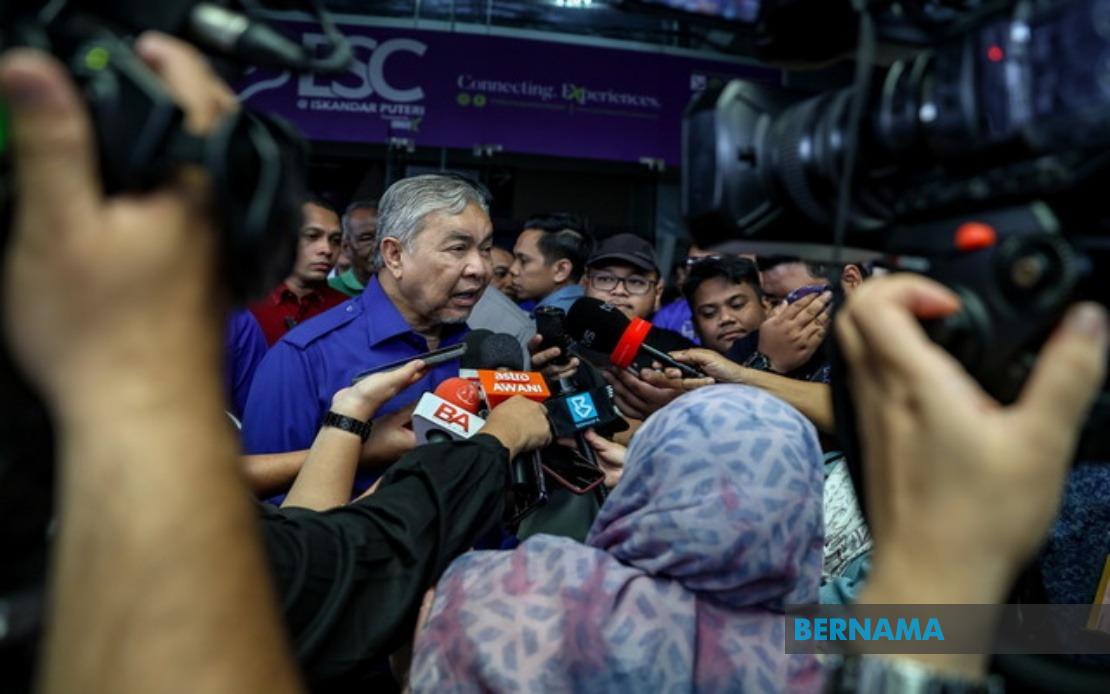
The government aims to complete the establishment of a dedicated Technical and Vocational Education and Training Commission before 2024 concludes, according to Deputy Prime Minister Datuk Seri Dr Ahmad Zahid Hamidi. The initiative represents a significant institutional restructuring intended to elevate Malaysia's capacity in skills development and workforce preparation.
The proposed commission will supplant the existing National TVET Council, marking a deliberate shift towards a more robust governance framework for technical and vocational education. Ahmad Zahid, who doubles as Rural and Regional Development Minister and chairs the current National TVET Council, disclosed the timeline while speaking at the Johor Darul Ta'zim TVET MARA Roadshow held at Educity Sports Complex in Iskandar Puteri. This venue was symbolic, reflecting the government's commitment to bringing technical skills development initiatives directly to communities.
Currently, the administration is conducting intensive consultation sessions with diverse stakeholders across the TVET ecosystem—including industry bodies, educational institutions, employers, and worker representatives. These engagements are foundational to ensuring that the new commission's structure and mandate reflect the actual needs of Malaysia's labour market and educational landscape. Only after these consultations conclude will the government proceed to seek Cabinet endorsement, followed by the formal submission of enabling legislation to both the Dewan Rakyat and Dewan Negara.
Although the government has already secured policy approval for the commission's creation, the parliamentary phase remains in motion and involves intricate legal considerations. Ahmad Zahid explained that the tabling process in both legislative chambers demands careful attention to constitutional and procedural requirements. This deliberate pace, while potentially frustrating for those eager to see immediate reforms, reflects the complexities inherent in restructuring a major educational institution and the necessity of building consensus among stakeholders who hold divergent interests.
The model underpinning this commission draws from best practices observed in developed economies that maintain similar dedicated bodies for technical and vocational training. What distinguishes this Malaysian commission from its predecessor is the intended scope of authority—rather than limiting its functions to policy formulation, the new body will assume responsibility for both implementation and enforcement of established policies. This represents a move towards greater accountability and more direct oversight of TVET quality and relevance across the country.
For Malaysia's broader development agenda, this institutional innovation carries significant implications. The nation's transition towards higher-value manufacturing and service-oriented sectors depends critically on workforce capabilities. A more empowered TVET commission, operating with clear implementation mandates and enforcement authority, could help bridge persistent gaps between skills training outputs and actual employer requirements. This structural improvement may also facilitate faster adaptation of curricula to emerging technologies and industry shifts.
During the same event, Ahmad Zahid addressed the expanding influence of younger voters in Malaysian politics, particularly in Johor. The Barisan Nasional chairman noted that voters aged 40 years and below, inclusive of the newly enfranchised 18-year-old cohort following the Undi18 reform, now constitute approximately 52 percent of Johor's electorate. This demographic shift underscores how electoral mathematics in the state have fundamentally changed, making younger voters not merely a constituency to engage but potentially the decisive factor in determining electoral outcomes.
Ahmad Zahid expressed confidence that Johor's younger voters maintain a strong connection with state Menteri Besar Datuk Onn Hafiz Ghazi, describing him as a young leader positioned to drive the state's development agenda forward. The Deputy Prime Minister signalled BN's intention to renominate Onn Hafiz as Menteri Besar, subject to Palace consent, framing this as a mechanism for ensuring continuity in leadership. This positioning reflects a deliberate strategy to leverage generational appeal and maintain political momentum in a state that remains economically vital to Malaysia.
The convergence of these two policy developments—TVET institutional reform and demographic political shifts—reveals broader patterns in Malaysian governance. As the nation grapples with skills gaps in its workforce and seeks to compete regionally and globally, the TVET Commission represents an attempt to inject greater dynamism into technical education administration. Simultaneously, the rising influence of younger voters creates political incentives for delivering visible improvements in employment prospects and economic opportunity, domains where TVET directly contributes.
For Malaysian employers, particularly those in manufacturing, construction, hospitality, and emerging sectors like digital technology and renewable energy, a more capable TVET commission could translate into better-matched workforce recruitment and reduced hiring friction. Enhanced coordination between training institutions and industry through a commission with implementation authority may also accelerate the adoption of emerging occupational standards and competency frameworks.
The timing of these announcements also reflects broader regional trends. Throughout Southeast Asia, countries are competing intensely for skilled workers and investment in sectors demanding technical expertise. Thailand, Indonesia, and Vietnam have all recently prioritised TVET reforms. Malaysia's move to strengthen institutional governance in this domain signals recognition that technical education quality increasingly determines national competitiveness. The year-end deadline provides a concrete target, though implementation challenges—particularly ensuring that the new commission operates with genuine independence and effectiveness—will define whether this reform proves transformative or merely administrative.
As stakeholder consultations continue and Cabinet papers move through approval channels, the success of this initiative will depend heavily on how comprehensively the new commission is empowered and resourced. The distinction between policy formulation and implementation authority, which Ahmad Zahid emphasised, will be critical. A commission that can genuinely direct curriculum changes, quality assurance, and institutional accountability could reshape Malaysia's technical workforce. Without such authority, it risks becoming another coordinating body without transformative capability.

