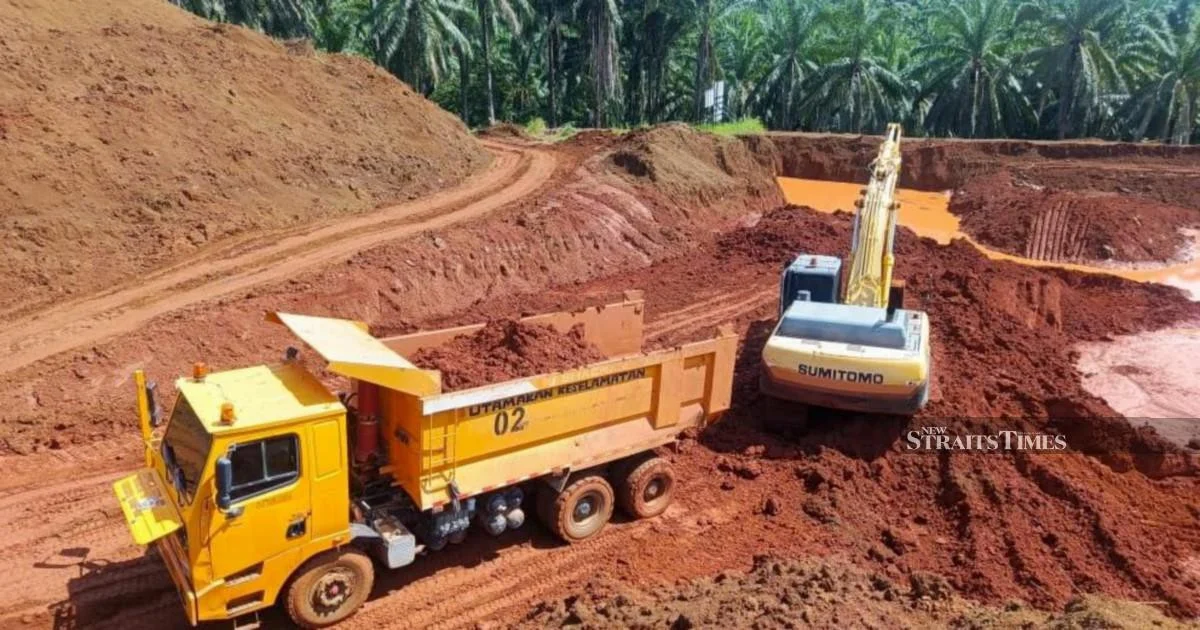
Law enforcement authorities in Terengganu have intensified efforts to combat organised sand mining operations following the arrest of two men suspected of engaging in the unlicensed transfer of silica sand in Marang. The operation, which unfolded yesterday, represents a significant step in tackling the illicit extraction and movement of mineral resources that has plagued the eastern seaboard of peninsular Malaysia. Equipment seized during the raid carried a replacement value of RM1.8 million, signalling the substantial scale of the illicit enterprise operating in the state.
The arrests underscore growing concerns about unregulated sand mining across Terengganu, an industry that has repeatedly drawn scrutiny from environmental and regulatory bodies. Silica sand extraction, though legitimate when conducted under proper licensing arrangements, has become increasingly problematic when undertaken without official sanction or environmental oversight. The operation in Marang appears to form part of a broader pattern of illegal mineral extraction that regional authorities have struggled to contain effectively.
Silica sand holds significant industrial value across Malaysia and throughout Southeast Asia, serving as a critical raw material in glass manufacturing, construction, foundry work, and water filtration processes. The lucrative nature of the silica sand trade creates powerful financial incentives for criminal syndicates to bypass regulatory frameworks and exploit mineral-rich areas without proper authorisation or environmental safeguards. Operators engaged in such activities typically circumvent licensing procedures and avoid paying rightful royalties to state governments, while simultaneously causing ecological damage to local ecosystems.
Terengganu, positioned along the South China Sea and blessed with substantial geological deposits of sand and mineral resources, has historically been vulnerable to extractive industries operating beyond legal parameters. The state's geography and relative isolation of certain coastal and riverine areas have made it particularly attractive for clandestine mining operations seeking to avoid detection. Previous crackdowns have yielded arrests and asset seizures, yet the persistence of such activities suggests that illicit operators continue to view the potential profits as outweighing the risks of law enforcement intervention.
The machinery recovered during yesterday's operation likely included excavation equipment, transport vehicles, and processing apparatus used to extract, sort, and prepare silica sand for sale to downstream buyers. The RM1.8 million valuation reflects both the sophisticated infrastructure required for large-scale operations and the substantial financial investment that criminal enterprises commit to their ventures. Such equipment seizures, while important, represent only the visible component of enforcement actions; the broader distribution networks and end-market buyers often remain difficult to identify and prosecute.
The investigation into the two arrested men will probably extend beyond the initial arrests as authorities seek to establish the full scope of their operation, identify financial beneficiaries, and trace supply chains leading to legitimate or semi-legitimate buyers of illegally sourced sand. Such networks frequently operate across state boundaries and may involve corrupt officials, transport operators, and commercial entities willing to accept materials of questionable provenance. Understanding these interconnections remains essential for authorities seeking to dismantle the underlying infrastructure supporting sand mining criminality.
Environmental implications of unregulated silica sand extraction are substantial and long-lasting, affecting river systems, coastal erosion patterns, and terrestrial habitats across affected regions. Uncontrolled mining operations frequently proceed without environmental impact assessments, remediation planning, or restoration obligations, leaving degraded landscapes that require years or decades to recover. In a state already facing pressures from rapid urbanisation and development, the cumulative impact of such activities poses additional challenges for environmental management and sustainable resource stewardship.
The arrests in Marang signal renewed commitment from law enforcement agencies to pursue sand mining violators, though observers note that singular enforcement actions typically yield only temporary disruption to criminal networks. Sustained reduction in illicit sand extraction requires coordinated efforts encompassing enhanced surveillance capabilities, intelligence gathering, international cooperation on transnational operations, and addressing the demand-side dynamics that make illicit sand commercially attractive to buyers. The economic incentives driving this activity will persist until authorities create sufficient certainty regarding detection and meaningful consequences.
Malaysia's broader experience with combating natural resource crimes offers sobering lessons about the challenges facing enforcement agencies. Sand and aggregate theft, in particular, represents a comparatively low-enforcement-priority crime in many jurisdictions despite significant cumulative environmental and economic impacts. Building effective deterrence requires not only operational capacity to detect and arrest offenders, but also judicial systems capable of delivering meaningful sentences and civil penalties that exceed potential profits from illegal operations. Current enforcement strategies, while commendable, appear insufficient to address the scale of unlicensed extraction occurring across the region.

