Two separate bomb explosions struck Thailand's troubled southern provinces on Friday, targeting police units and leaving eleven officers injured in what appears to be a coordinated campaign of violence. The incidents occurred within hours of each other in Yala and Pattani, regions that have long grappled with militant insurgency and criminal violence, renewing concerns about security operations in the area.
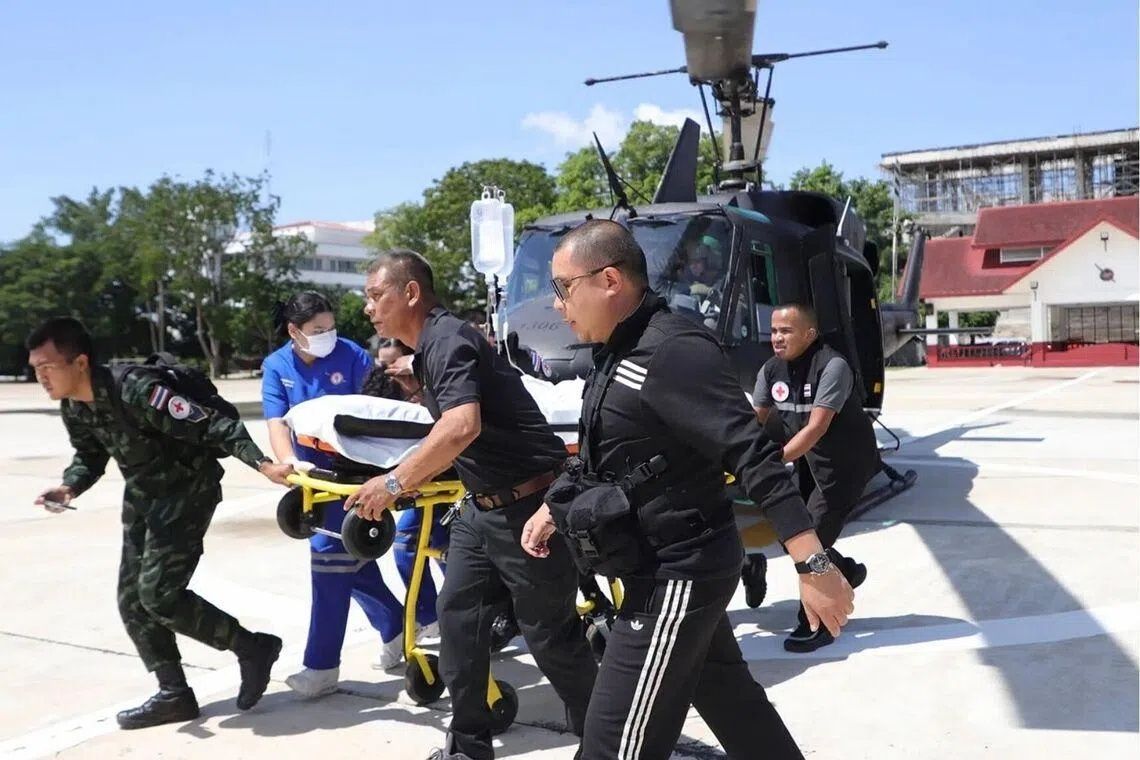
The first attack happened at 8:10 a.m. on June 19 when assailants detonated an explosive device on the Ban Pulo Saniyae–Ban Sakai road in Thanto district, Yala province, targeting a mobile team of border patrol police officers assigned to a teacher protection unit. Six officers sustained injuries from the blast, with two suffering severe trauma requiring immediate helicopter evacuation from Thanto Hospital to the regional medical facility in Yala. The targeting of a teacher protection detail suggests that militant groups continue to focus on government personnel involved in community security operations, a tactic that has defined the southern insurgency for nearly two decades.
Corporal Kittisak Saksang and Corporal Poraphat Wongruaydee were identified as the critically wounded officers. Saksang sustained facial lacerations from shrapnel, while Wongruaydee presented with chest injuries and respiratory distress. Medical officials at Yala Regional Hospital subsequently announced that Wongruaydee required emergency surgery to address blood accumulation in his pleural cavity and lung damage, necessitating an urgent call for blood donations of all types. The severity of his condition illustrates the indiscriminate nature of improvised explosive devices, which inflict injuries to multiple organ systems and often require specialized surgical intervention unavailable in rural facilities.
Less than four hours after the Yala incident, a second bombing struck the Pattani Police Special Operations unit in Mayo district when officers returned from establishing a security checkpoint in the Ban Khuan Yi area. The attackers employed similar tactics, detonating an explosive that wounded five additional policemen identified as Sergeants Anuchit, Bunyawat, Wisitphon, Aphisit and Sumit. All five sustained chest injuries consistent with blast trauma and were transported to Mayo Hospital for observation and treatment. The proximity of the two attacks in time and the comparable targeting of police units operating in outlying areas raise questions about potential coordination among militant factions or a deliberate effort to overwhelm security operations across multiple jurisdictions simultaneously.
These incidents reflect the persistent instability that characterizes Thailand's deep south, where a decades-long conflict involving separatist movements has claimed thousands of lives and created a climate of uncertainty for both civilians and security forces. The southern border provinces, particularly Yala and Pattani, remain epicenters of militancy despite continuous government operations. The targeting of mobile police units suggests that insurgent groups possess sufficient operational intelligence to identify patrol patterns and coordinate ambushes with short notice, indicating sophisticated command structures operating within the region.
For Malaysian readers and regional observers, the bombings carry significance beyond Thai national security concerns. Yala and Pattani provinces border Malaysia's Kedah and Perlis states, and the cross-border nature of trafficking, militant recruitment, and weapons smuggling means that instability in Thailand's south has direct implications for Malaysian border security. The movement of personnel and materiel across the Thailand-Malaysia frontier remains a persistent challenge for both nations' authorities, and attacks targeting security forces may reflect broader destabilization efforts that extend across national boundaries.
Immediate response from Thai authorities included securing the bombing sites, launching forensic investigations, and intensifying efforts to apprehend those responsible. Explosive ordnance disposal teams and forensic specialists examined the attack locations to extract evidence regarding bomb construction, detonation methods, and potential perpetrator networks. Security presence was heightened throughout the affected districts, though such reactive measures typically address symptoms rather than underlying conditions that permit insurgent operations to persist.
The resource implications of these attacks extend beyond the immediate medical requirements for the wounded. Each bombing necessitates extensive investigation, reinforced security measures, and disrupted service delivery in the affected areas, straining already-stretched law enforcement capabilities in remote border regions. The necessity for helicopter medical evacuation underscores both the severity of injuries inflicted and the limitations of medical infrastructure in provincial Thailand, requiring centralized hospital facilities to handle trauma cases.
These bombings represent the latest chapter in an unresolved conflict that has resisted numerous government initiatives spanning multiple Thai administrations. Intelligence operations, military sweeps, and community engagement programs have achieved mixed results, with periods of relative calm followed by renewed violence suggesting that underlying grievances and militant organizational capacity remain intact. The ability of attackers to strike twice within hours indicates operational freedom in areas nominally under government control.
The incidents also highlight the occupational hazards faced by Thai police and military personnel serving in the southern provinces, where routine deployment carries genuine risks of injury or death. The commitment of these officers to community-facing roles such as teacher protection and security checkpoint operations remains essential to government presence in contested areas, yet their vulnerability to attack creates a difficult security dilemma: maintaining civilian protection requires dispersed deployment, yet dispersal exposes personnel to targeted violence.
Regional implications extend to broader Southeast Asian security considerations. Border regions throughout the Mekong River basin and maritime zones have become contested spaces where state authority competes with non-state actors, criminal networks, and militant organizations. Thailand's southern instability reflects wider patterns affecting the region's stability architecture, relevant to ASEAN member states' collective security interests and transnational law enforcement cooperation mechanisms.

