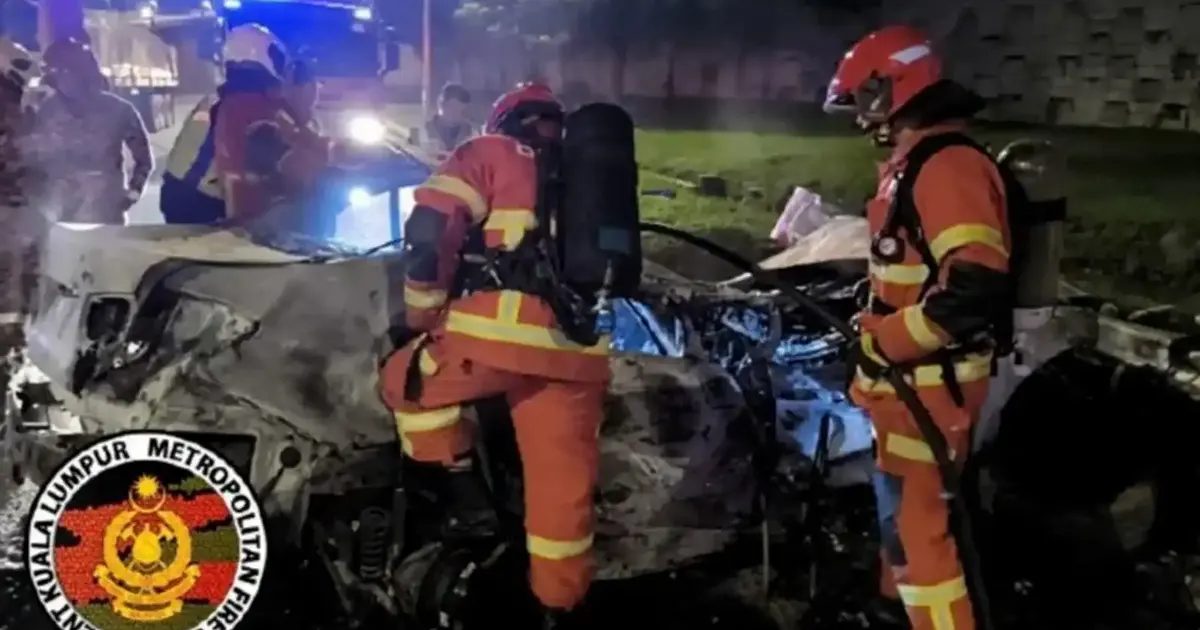
Two individuals lost their lives on Friday after their vehicle careened out of control, left the roadway, and ignited in a catastrophic blaze on the DUKE highway serving the Kuala Lumpur metropolitan area. The incident, which unfolded during peak travel conditions, underscores the persistent dangers posed by high-speed accidents on Malaysia's busy expressway network and the critical role played by emergency responders in mitigating tragedy.
According to the Kuala Lumpur fire and rescue department, the three-occupant vehicle experienced loss of control before skidding across the highway surface. The exact circumstances precipitating the skid remain under investigation, though preliminary observations suggest the car left its intended trajectory with sufficient force to trigger a post-impact conflagration. Firefighters who responded to the emergency call discovered the vehicle fully engulfed when they arrived at the scene, presenting immediate challenges for rescue and recovery operations.
The rescue effort proved partially successful, though bittersweet in its outcome. Firefighters managed to extract one passenger from the burning wreckage before the structural integrity of the vehicle became compromised. This survivor, conscious and responsive to immediate medical intervention, was transported by ambulance to a nearby hospital for comprehensive medical evaluation and ongoing treatment. Medical personnel at the hospital noted the severity of injuries consistent with exposure to extreme heat and blunt force trauma from the collision.
The two fatalities represent a sobering reminder of the hazards inherent in expressway travel, particularly when vehicles lose stability at high speeds. Emergency responders confirmed that both deceased victims were pronounced dead at the scene, with their identities being withheld pending formal notification of next of kin. The exact mechanism by which the fire originated—whether from mechanical failure, fuel system rupture, or collision-related ignition—remains part of the ongoing investigation.
The DUKE highway, which facilitates critical commuter and commercial traffic flows between Kuala Lumpur and surrounding areas, experienced significant disruptions following the incident. Traffic management authorities implemented lane closures to facilitate emergency response operations and subsequent recovery of the vehicle. These congestion management measures, while necessary, highlighted the cascading impacts that major accidents have across the broader transportation network and the hundreds of motorists whose journeys were affected by the incident.
The Kuala Lumpur fire and rescue department deployed multiple units to the scene, with personnel working to contain and extinguish the blaze while simultaneously coordinating rescue attempts and scene preservation for subsequent investigation. Firefighting operations focused on preventing fuel-related explosions and containing the spread of flames to adjacent vegetation or vehicles. The coordination between fire services, medical responders, and traffic police demonstrated the integrated emergency response protocols that govern Malaysian expressway incidents.
Vehicle safety experts have long cautioned that accidents occurring at expressway speeds frequently result in severe outcomes, particularly when vehicles exit the controlled environment of the roadway and become subject to secondary impacts or environmental hazards. The addition of post-collision fire significantly elevates fatality risk, as occupants face simultaneous exposure to blunt force trauma, thermal injuries, and smoke inhalation in compressed timeframes that limit survival opportunities.
The incident raises questions about whether vehicle maintenance, driver condition, or external factors such as weather or road surface integrity contributed to the loss of control. The Malaysian police force, in conjunction with the Highway Patrol Corps, typically conducts comprehensive accident reconstruction investigations in fatal highway collisions to establish causation and identify preventive measures for future incidents. Such investigations frequently examine vehicle mechanical systems, roadway conditions, and driver-related factors comprehensively.
For Malaysian motorists, particularly those who regularly traverse the DUKE highway during commuting periods, such incidents serve as sobering reminders of the importance of defensive driving practices, vehicle maintenance, and heightened awareness of road conditions. The expressway network, while facilitating efficient long-distance travel, demands respect from operators who must maintain vigilance and adapt their driving behaviour to prevailing conditions and traffic circumstances.

