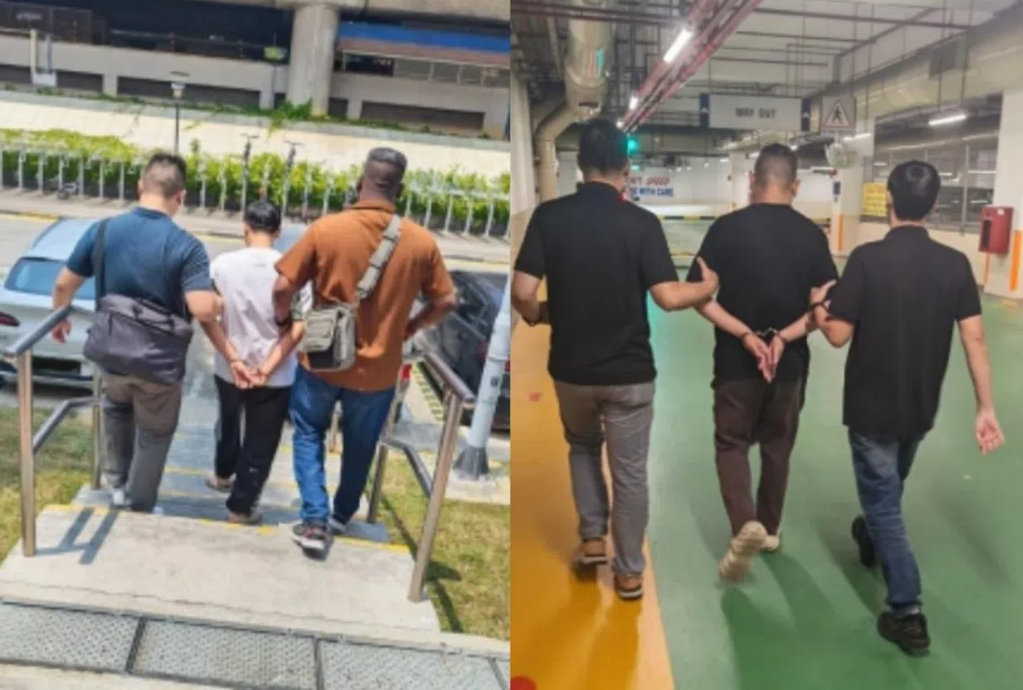
Two Malaysian nationals working at mobile phone retail outlets in Singapore have been arrested for their alleged role in a sophisticated identity theft and money laundering operation that exploited compromised Singpass credentials to establish fraudulent e-wallet accounts. The men, aged 25 and 47, were detained on Tuesday, August 25, marking a significant development in ongoing investigations into a complex criminal network that has victimised over 170 individuals across Singapore and foreign workers in the republic.
The operational mechanics of the scheme reveal a calculated approach to identity theft. The suspects leveraged their positions in retail mobile phone shops to gain access to customer personal information and authentication credentials. In documented cases, one of the accused exploited situations where customers sought routine assistance—such as updating Singpass details during a SIM card purchase—to secretly obtain login information without consent. These compromised credentials were subsequently used to establish LiquidPay accounts, a digital payment application operated by Singapore-based fintech firm Liquid Group, all without the knowledge or authorisation of the legitimate account holders.
The scale of the operation became apparent through comprehensive police investigations. More than 160 LiquidPay accounts were fraudulently registered using the compromised Singpass credentials obtained through these illicit means. The systematic nature of the activity—affecting over 170 Singaporean and foreign worker victims—indicates this was not isolated criminal conduct but rather part of a broader syndicate operation designed to facilitate money laundering on a significant scale.
The financial dimensions of the scheme underscore its serious nature. Since early March 2026, at least 20 Singapore citizens and work permit holders have been investigated for their involvement in registering or managing these fraudulent LiquidPay accounts. These accounts collectively received approximately $110,063 derived from various scam operations, suggesting the compromised e-wallets served as critical infrastructure for criminal proceeds to enter the financial system and be distributed among syndicate members.
The investigation that led to the arrests represents a coordinated response by Singapore's law enforcement and digital governance authorities. The police's Cyber Command division, in collaboration with the Singpass Trust & Safety team operating under the Government Technology Agency of Singapore, conducted the operation that identified the two Malaysian suspects as part of a larger criminal network specialising in Singpass account compromise. This interagency approach highlights the sophisticated nature of modern financial crimes that straddle cybersecurity, identity theft, and money laundering domains.
The legal consequences facing the arrested individuals carry substantial weight. Both men will be charged in court on August 27 with assisting another to retain benefits from criminal conduct, a serious offence under Singapore law that carries imprisonment of up to 10 years, fines reaching $500,000, or both penalties applied concurrently. This charge reflects the severity with which Singapore treats organised fraud and money laundering activities that compromise national payment infrastructure.
Beyond the two arrested individuals, Singapore police are continuing investigations into additional offences related to Singpass security. Authorities are examining cases where legitimate Singpass account holders voluntarily surrendered their authentication credentials to third parties, a practice that represents a critical vulnerability in the national digital identity system. This behaviour carries distinct legal penalties including up to three years imprisonment and fines of $10,000, indicating that Singapore law holds account holders partially responsible for negligent credential sharing.
The incident carries particular relevance for Malaysian citizens and residents throughout the region. The involvement of Malaysian nationals employed in Singapore's retail sector demonstrates how transnational criminal networks exploit cross-border employment patterns and operational access to compromise security systems. For Malaysian expatriates or those conducting business across the Causeway, the case serves as a cautionary reminder regarding the risks of sharing sensitive credentials even with seemingly trustworthy individuals in positions of service.
From a broader cybersecurity perspective, the operation reveals vulnerabilities in the authentication chain for digital payment systems. The ability of retail employees to casually obtain Singpass credentials suggests insufficient security protocols around identity verification processes in commercial settings. This finding may prompt fintech companies across Southeast Asia to implement additional verification layers and reduce reliance on single-factor authentication when establishing new e-wallet accounts, particularly in high-risk scenarios involving in-person credential collection.
The case also highlights the interconnection between digital identity systems and financial crime prevention. Singpass serves as a critical gateway to Singapore's digital ecosystem and financial services access. Its compromise undermines not only individual consumer security but also the integrity of broader digital identity frameworks. For regional observers and policymakers, particularly in Malaysia where similar centralised identity verification systems exist, the incident offers valuable lessons in maintaining robust security governance around national authentication infrastructure.
Looking forward, the investigation remains fluid with authorities continuing to pursue additional leads within the syndicate structure. The involvement of multiple victims, multiple fraudulent accounts, and substantial financial flows suggests there may be additional co-conspirators yet to be identified. The case underscores ongoing challenges in combating organised financial crime in increasingly digitalised economies where payment systems, identity frameworks, and cross-border employment create complex vulnerability surfaces that criminals actively target and exploit.

