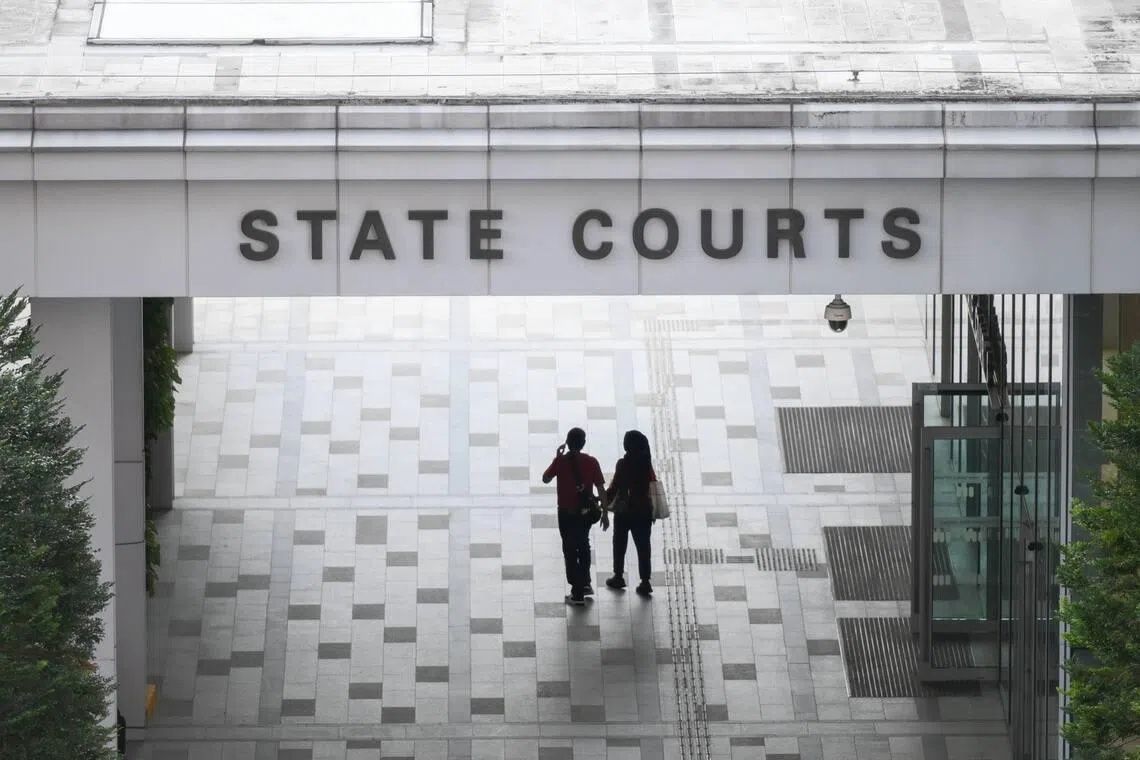
Three individuals—two medical practitioners and a woman—are contesting charges in a Singapore court related to the orchestration of a drug consumption gathering that allegedly took place in April this year. Loke Wei Kang, 33, and Lee Wei Sheng, 35, both doctors, along with Le Vie, 33, face the serious charge of planning a gathering for drug use, an offence that carries a maximum sentence of 20 years' imprisonment and ten strokes of the cane under Singapore law. The trio maintains that their gathering at Orchid Country Club was an impromptu decision rather than a premeditated arrangement, contending that while they had initially booked the hotel room for a social party, the decision to procure narcotics came only afterwards.
The sequence of events that led to their arrest began on April 9, 2024, when the defendants were initially gathered at Loke's parents' residence in Seletar for what was planned as a social occasion. When police arrived at the property shortly after 10pm responding to noise complaints from neighbours, the trio made the consequential decision to relocate to continue their activities elsewhere. Rather than dispersing, Loke and Lee approached Vie with a request: could she use her personal contacts to source ketamine and what is colloquially known as "happy water"—a dangerous cocktail combining controlled substances including ketamine, Ecstasy, and methamphetamine, alongside prescription medications such as diazepam and tramadol.
The composition of "happy water" highlights the particular dangers inherent in this case. According to a 2022 assessment by the United Nations Office on Drugs and Crime, the effects of consuming such polypharmaceutical preparations remain highly unpredictable and pose severe health risks. The international body noted that the majority of overdose incidents, including those resulting in fatality, involve the simultaneous use of multiple drug types—a pattern that makes the substance particularly hazardous when users cannot anticipate or control its effects. This context underscores why Singapore's legal framework treats the organisation of such gatherings with considerable severity.
Vie subsequently contacted a supplier and arranged to procure three packets of "happy water" and two packets of ketamine. She coordinated a handover at a proximate park and departed with Lee to collect the narcotics. At approximately 11pm, a mutual acquaintance arrived at Loke's residence to participate in the gathering. The four individuals collectively decided to relocate once more to continue socialising. Lee made a reservation at Orchid Country Club, booking a hotel room as their new venue. This decision to move to a commercial establishment rather than a private residence may have bearing on the court's assessment of whether their actions constituted spontaneous behaviour or premeditated planning.
When the group arrived at their new location and attempted to use the substances they had acquired, they discovered that two of the four packets of ketamine were no longer in their possession. A subsequent search located the missing packets in Loke's vehicle, but rather than abandon their intentions, Vie contacted her supplier a second time to arrange additional supplies. She personally collected two further packets of ketamine at Orchid Country Club itself and transported the drugs into their reserved room, making the substances available for group consumption. This second procurement effort—particularly the decision to source additional supplies at the venue itself rather than cancelling their plans—represents a critical factual element that prosecutors may argue demonstrates planning and intent rather than spontaneity.
Law enforcement conducted a raid on the hotel room at approximately 3.50am, resulting in the arrest of all individuals present. Court documentation does not clarify whether the fourth person who had joined the group was subsequently charged with any offence. All three defendants face additional charges relating to drug possession and consumption, though notably they are not contesting the consumption charges themselves. This acceptance of culpability on the consumption count contrasts sharply with their vigorous defence against the more serious planning charge, which carries a minimum three-year custodial sentence compared to the one-year minimum for consumption alone.
The distinction between these charges carries significant legal consequences. Singapore's approach to drug-related offences reflects a zero-tolerance policy with some of the world's harshest penalties. The allegation that the three deliberately organised a gathering specifically to enable drug use elevates their conduct beyond individual consumption, rendering them liable for what authorities characterise as facilitating collective drug use. The minimum sentence of three years for the planning charge, escalating to a potential maximum of 20 years, represents a substantial escalation in consequences compared to consumption-only charges. This sentencing framework reflects a legislative judgment that organising such activities poses greater societal harm than isolated personal drug use.
For Malaysian observers, the case illustrates the markedly different regulatory approaches adopted by neighbouring Singapore, which maintains significantly stiffer penalties for drug-related conduct than those typically imposed in Malaysia. The case also demonstrates how jurisdictions in the region treat drug offences not merely as matters of individual choice but as public health and safety concerns warranting severe criminal sanctions. The involvement of medical professionals adds an additional dimension, as healthcare practitioners are typically held to heightened professional standards and may face additional consequences through their regulatory bodies beyond criminal prosecution.
The contention that the gathering was spontaneous hinges on whether the court accepts that the initial hotel booking was genuinely disconnected from the intention to consume drugs. The prosecution's case likely emphasises the deliberate contact with a known drug supplier, the specific selection of particular substances, and the effort to arrange a second procurement when the first proved incomplete. Defence counsel presumably argues that the series of relocations following the police visit to Loke's residence demonstrates that the drug consumption was a reactive decision prompted by external circumstances rather than a pre-arranged plan. The trial's continuation is scheduled for July 30, with the court's determination on this factual question expected to significantly influence sentencing if convictions are secured.
For the broader Southeast Asian context, this case underscores how rapidly drug enforcement operations can escalate personal social conduct into serious criminal liability. The four-hour interval between the noise complaint response and the hotel raid demonstrates the intensive surveillance and rapid-response capabilities that Singapore law enforcement maintains regarding suspected drug activity. The case also reflects the region's ongoing struggle with synthetic drug use, particularly substances like ketamine and the dangerous polysubstance mixtures that increasingly characterise urban drug markets. As Southeast Asian economies continue to develop and urbanise, policymakers across the region face persistent challenges in addressing drug use while balancing public health, criminal justice, and rehabilitation considerations.

