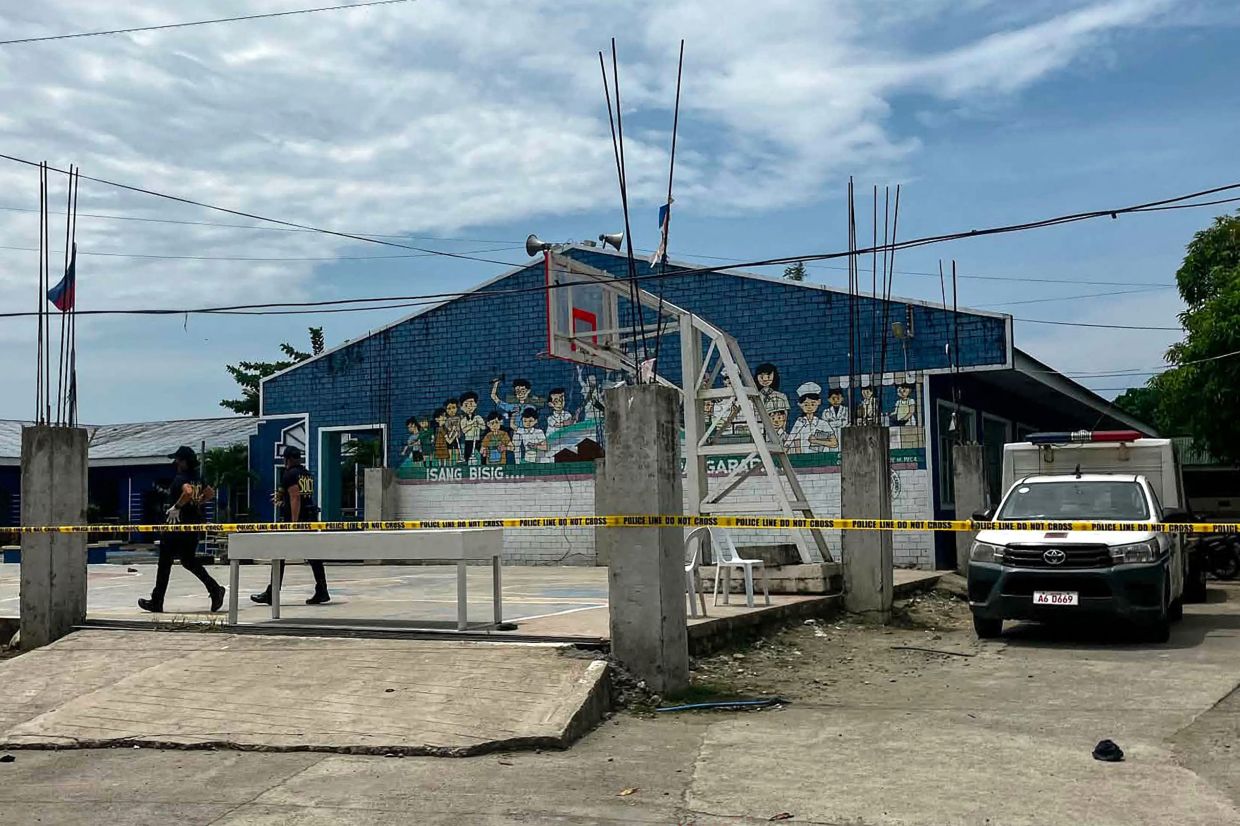
A mid-morning shooting at San Jose National High School in Tacloban City has left the central Philippines reeling, with three students dead and seven more wounded after two armed adolescents discharged their firearms into crowded school corridors and classrooms. The suspects, both students at the government-run institution serving over 1,500 pupils, were aged 14 and 15 at the time of the attack and were swiftly taken into custody. Regional police chief Brig. Gen. Jason Capoy confirmed that the young shooters claimed during preliminary interviews that they had experienced bullying within the school environment, though he declined to provide additional specifics regarding the nature or extent of the harassment they endured.
The two suspects, who were reportedly close friends before the violence erupted, possessed clean criminal records prior to Monday's incident. However, their access to firearms revealed troubling lapses in weapon security and school protection protocols. One teenager obtained a 9 mm pistol from his aunt, who holds the rank of police officer and is now facing investigation for her role in providing access to the weapon. The second suspect acquired a .38 calibre revolver through undisclosed means. These weapons were successfully brought onto school grounds because the institution relied upon a solitary security guard to monitor multiple entry and exit points, creating significant vulnerabilities in campus security procedures that appear to have been exploited.
The shooting unfolded across multiple locations within the school building, underscoring the chaos and terror experienced by students and staff during the assault. After firing in an initial classroom, the suspects pursued fleeing students into a second location, suggesting the violence was not contained to a single area but rather escalated as young people attempted escape. Police recovered at least 40 spent shell casings from the scene, indicating sustained and repeated gunfire. The majority of those killed and injured were female students, a demographic breakdown that raises additional questions about targeting or circumstances during the rampage.
Harrowing footage circulated on social media platforms captured the trauma unfolding in real time, offering disturbing documentation of the shooting's immediate aftermath. Video recordings showed students huddled beneath desks in darkened classrooms, their voices trembling with terror as gunshots continued outside their classroom doors. Several young people could be heard frantically telephoning parents to alert them to the emergency, their voices conveying the desperation and fear gripping those trapped inside the school. Additional videos depicted streams of students evacuating the campus, many visibly shaken, embracing classmates and clinging to one another as they fled the danger.
The apprehension of the suspects proceeded differently for each individual. Law enforcement officers arrested the first shooter at the school immediately following the assault, but his co-conspirator managed to escape the immediate vicinity and sought shelter in a nearby residential structure. Only after members of the local community alerted police to his whereabouts was the second suspect located and taken into custody, highlighting how civilian cooperation proved essential in concluding the active threat phase of the incident.
President Ferdinand Marcos Jr. responded to the tragedy by directing authorities to conduct an exhaustive investigation into the shooting's circumstances, motivations, and any systemic failures that permitted the violence to occur. Additionally, the president instructed law enforcement agencies to augment security measures across schools, workplaces, and public gathering spaces nationwide. Communications Undersecretary Claire Castro conveyed the presidential response to journalists, emphasising the gravity with which the administration viewed the incident and the emotional toll it had exacted on victims' families and the broader population. Castro's statements reflected acknowledgment that such violence strikes at the heart of public confidence in institutional safety and student protection.
The legal status of the suspects presents a significant complication within the Philippine justice system. Both young perpetrators are slated for transfer to government welfare officials overseeing juvenile cases, rather than traditional criminal proceedings. The 14-year-old suspect benefits from statutory protection under a 2006 Philippine law establishing a minimum age of criminal responsibility at 15 years, with the additional requirement that authorities must demonstrate the suspect possessed clear awareness of both the criminal nature of their actions and their potential consequences. This legislative framework means the younger suspect may face diminished accountability compared to the older teenager, a distinction that reflects broader philosophical questions about juvenile culpability and rehabilitation versus punishment.
The incident represents a departure from the Philippines' typical crime pattern, where firearms-related offences remain disturbingly commonplace due to widespread circulation of illegal weapons throughout society. Nevertheless, school shootings specifically remain statistically uncommon, making Monday's tragedy particularly shocking to communities accustomed to other manifestations of gun violence. The rarity of such incidents within educational institutions may partly explain the profound national shock and psychological impact reverberating through the country following the shooting.
Historical comparison underscores this unusual character. A comparable incident occurred during 2022 when an armed gunman opened fire at an exclusive university in the Manila metropolitan area during graduation ceremony preparations, killing a former municipal official with whom he harboured a longstanding personal dispute, along with two additional victims. That gunman was promptly apprehended. However, such occurrences remain sufficiently infrequent that each one commands extraordinary public and media attention, contrasting sharply with the tragically routine nature of shootings in other contexts throughout Philippine society.
The Manila police force issued public appeals requesting citizens to remain composed whilst simultaneously urging community members to provide any intelligence that might facilitate the ongoing investigation. Such calls recognise that public panic could hinder investigation efforts whilst acknowledging that eyewitness accounts and community information often prove invaluable in understanding the full circumstances surrounding violent crimes. The investigation continues to examine not only the immediate trigger for Monday's shooting but also the systemic vulnerabilities—ranging from security protocol deficiencies to weapon access and school mental health provisions—that converged to permit such tragedy.

