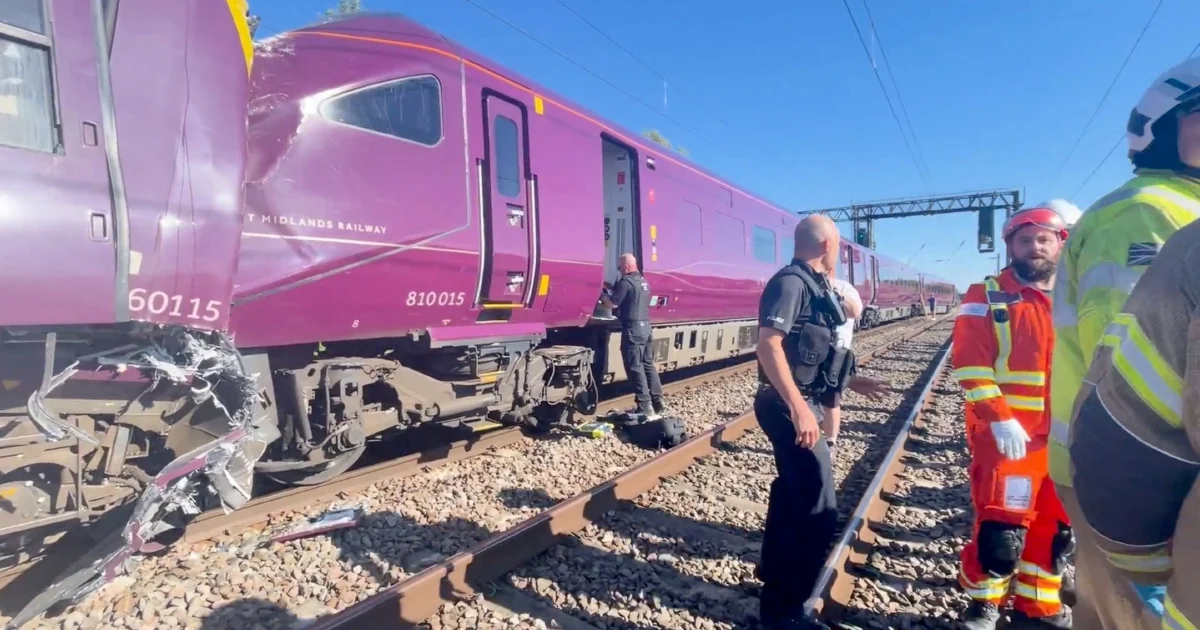
A fatal railway collision unfolded north of London on Friday afternoon when two passenger trains struck each other, resulting in one confirmed death and dozens of people requiring medical attention. Among those injured, emergency responders identified 11 individuals with very serious injuries requiring urgent hospital treatment. The incident triggered a major emergency response as rescue teams rushed to the collision site to extract trapped passengers and provide emergency care.
The collision represents a significant railway safety event in the United Kingdom, a country with extensive rail infrastructure connecting major urban and regional centres. Britain's rail network carries millions of passengers annually, making such incidents particularly concerning for public safety and confidence in the transport system. The fact that one person lost their life underscores the severe impact forces involved in train accidents, where the combination of speed and mass can result in devastating consequences even in modern safety frameworks.
Emergency services coordinated a substantial response effort at the scene, deploying paramedics, firefighters, and specialist rescue personnel. The scale of injuries across the two trains required multiple ambulances and hospital resources to manage the sudden influx of patients. The British emergency services demonstrated their well-established protocols for mass casualty incidents, which have been refined through decades of railway transport operations and regular training exercises.
For Malaysian and Southeast Asian observers, such incidents provide important context regarding railway safety standards in developed economies. While the UK benefits from mature rail infrastructure and regulatory frameworks, the occurrence of such collisions demonstrates that risk management in rail transport remains an ongoing challenge even in wealthy nations with advanced safety systems. This carries implications for developing rail networks in Southeast Asia, where rapid expansion of passenger rail services—including planned high-speed corridors linking major cities—must incorporate comprehensive safety measures based on international best practices.
The circumstances leading to the collision remained under investigation by relevant UK authorities tasked with determining exactly what sequence of events resulted in the two trains meeting. Such investigations typically examine multiple factors including weather conditions, track maintenance records, signalling systems, train speeds, crew communications, and potential mechanical failures. Understanding root causes enables regulators to implement preventive measures that reduce risks of similar incidents occurring elsewhere.
This incident arrives as the UK rail sector continues operating amid broader challenges including aging infrastructure in certain regions, maintenance backlogs, and ongoing industrial relations between operators and workforce unions. These systemic pressures can indirectly affect safety performance if maintenance schedules are compressed or if staffing levels fall below optimal levels. The collision underscores why robust investment in infrastructure renewal and adequate resourcing of safety-critical railway operations remain essential priorities for any nation operating extensive rail networks.
The human toll of the accident extends beyond immediate physical injuries to affected passengers and crew. Survivors of railway collisions frequently experience psychological trauma and post-incident stress disorders, requiring long-term support from mental health professionals. Families of the deceased victim face devastating loss, while the broader travelling public may experience increased anxiety about rail travel safety following high-profile accidents of this nature.
South Asian and Southeast Asian nations actively developing rail capacity should note how even countries with mature, heavily-regulated rail systems experience occasional serious incidents. Malaysia's ongoing expansion of its rail network, including projects like the Klang Valley Double Track project and proposals for additional high-speed rail corridors, must be accompanied by investment in world-class safety management systems, driver training programmes, and signalling technology. The cost of implementing robust safety measures is invariably less expensive than managing the human, financial, and reputational consequences of major railway accidents.
The incident also highlights the interdependencies within modern rail operations. When a collision occurs on a major route north of London, it inevitably disrupts services for thousands of commuters and travellers, creating cascading effects throughout the regional transport network. Passengers must find alternative routes, some of which may be severely congested, affecting productivity and economic activity. For nations like Malaysia with expanding urban populations dependent on rail networks, building in sufficient redundancy and alternative routes becomes increasingly important as network utilization increases.
Investigations into such incidents typically become public domain through official reports released weeks or months after the event. These reports serve crucial functions in the railway industry globally, as detailed technical analysis of failures, near-misses, and accident mechanisms informs safety practice improvements across multiple countries. International railway organizations and regulators track such incidents closely, using lessons learned from accidents elsewhere to strengthen their own regulatory frameworks and safety culture.

