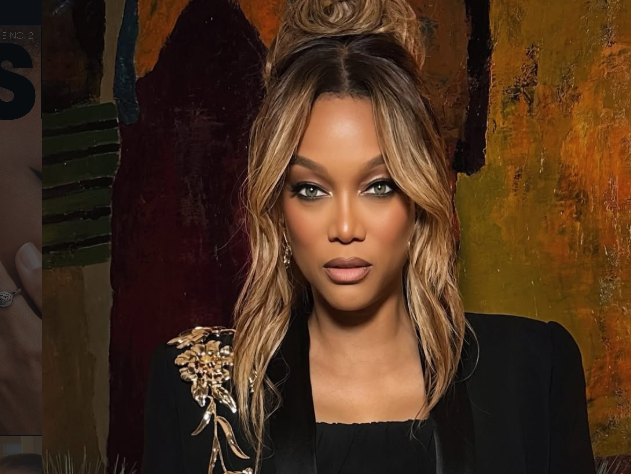
Tyra Banks, the supermodel who created and hosted the long-running reality competition series 'America's Next Top Model,' has launched a defamation lawsuit against Netflix and the creators of a critical docuseries examining the show's troubled legacy. The suit, filed on Saturday in Los Angeles federal court, names defendants including streamers Netflix, directors Daniel Sivan and Mor Loushy, and production company EverWonder Studio. Banks is seeking substantial damages and an injunction prohibiting the use of her likeness in connection with the documentary's released soundtrack.
At the heart of Banks' legal challenge is her claim that the filmmakers engaged in what she characterises as deliberately deceptive editorial practices. According to court filings, the producers employed "selective editing, deliberate omission, and surgical manipulation of continuous footage" to construct a false narrative suggesting Banks knew about a sexual assault incident on the show, exploited the victim's trauma for ratings, and then feigned amnesia when questioned about it during interviews. Her legal team emphasises that Banks was never informed about the assault before the interview and was therefore unprepared to address an accusation that would later become central to the documentary's portrayal of her.
The timing and conditions surrounding Banks' participation have become significant points of contention. According to the lawsuit, she was given access to view the finished documentary only one day before its 16 February release date—a window so narrow that meaningful review or response was effectively impossible. More troubling to her legal representatives is Netflix's subsequent refusal in March to grant Banks access to the full, unedited footage of her interview segments, a denial that prevented her from understanding precisely what had been cut, what remained, and how her words were contextualised within the final edit. She was also not afforded an opportunity to respond to allegations from other participants featured in the series.
Transparency and editorial fairness became additional bones of contention in the dispute. Banks' team asserts that she was excluded from the post-interview fact-checking process, a standard editorial practice designed to catch inaccuracies before publication. More significantly, they contend that the documentary's editorial direction was shaped by consultants, including at least one former ANTM judge whom her lawyers suggest harbours personal animosity toward Banks. Had she known about these individuals' involvement in steering the narrative, the lawsuit argues, she would have recognised the potential for bias and would have declined to participate at all.
'America's Next Top Model' launched in 2003 and became a defining reality television programme, running for 24 seasons before concluding its initial run. Over recent years, the series has undergone significant critical reassessment, with growing scrutiny of its practices around body shaming, psychological manipulation of contestants, and numerous problematic photoshoots that many now view as deeply insensitive or inappropriate. Banks herself has publicly acknowledged these shortcomings, issuing statements recognising "the insensitivity of past ANTM moments" and conceding that the show had made "some really off choices."
Despite Banks' willingness to engage with criticism and reflect on the show's legacy, the Netflix documentary's approach appears to have crossed a threshold she found unacceptable. Her lawyers characterise the documentary as having weaponised selective editing to misrepresent both her knowledge and her intentions. The lawsuit specifically contests the filmmakers' editing technique that made it appear Banks was deliberately evasive when questioned about a sexual assault—when in reality, she had never been apprised of the topic she was being asked to address. This distinction between ignorance and evasion proves crucial to her defamation claim.
The real-world consequences of the documentary's release have been considerable and, from Banks' perspective, demonstrably harmful. Public reaction has been "swift, harsh, and directed squarely at Ms. Banks," according to court documents. The fallout has extended beyond social media discourse into her commercial ventures, with her SMiZE & DREAM ice cream shop in Sydney, Australia, experiencing coordinated review bombing on Google—a phenomenon suggesting that the documentary's narrative has influenced consumer behaviour and business reputation. This tangible economic damage bolsters Banks' argument that the alleged defamation has caused quantifiable harm extending beyond reputational injury.
Banks' legal team emphasises that their client came to the interview prepared for candid, comprehensive reflection on 'America's Next Top Model's' legacy. Instead, they argue, the producers constructed a misleading narrative that now drowns out any opportunity for meaningful dialogue about the series' actual problems and Banks' genuine accountability efforts. The lawsuit frames these accountability statements as having been deliberately relegated to the "cutting room floor"—present in the original footage but deliberately excised from what viewers ultimately saw, thereby distorting the historical record of what transpired during filming.
The dispute also underscores broader questions about documentary ethics and editorial responsibility in the streaming era. Banks' team contends that they attempted to resolve matters directly with Netflix and the producers before resorting to litigation, but those efforts were rebuffed. This escalation to lawsuit suggests a fundamental breakdown in negotiation and an unwillingness by Netflix to consider Banks' perspective or address her concerns about accuracy and fairness in the final product released to millions of viewers globally.
For Malaysian and Southeast Asian audiences, the case carries implications beyond celebrity gossip, touching on issues of media accountability, the power dynamics between platforms and subjects, and the ethical frameworks governing documentary filmmaking. As streaming services increasingly dominate the global entertainment landscape, questions about editorial fairness, right of reply, and transparency in the editing process have become increasingly consequential. Banks' lawsuit suggests that even prominent figures with resources face significant disadvantages when confronted with the editorial choices of major platforms—a concern relevant to how stories about public figures, institutions, and controversies are constructed and presented to audiences across the region and worldwide.