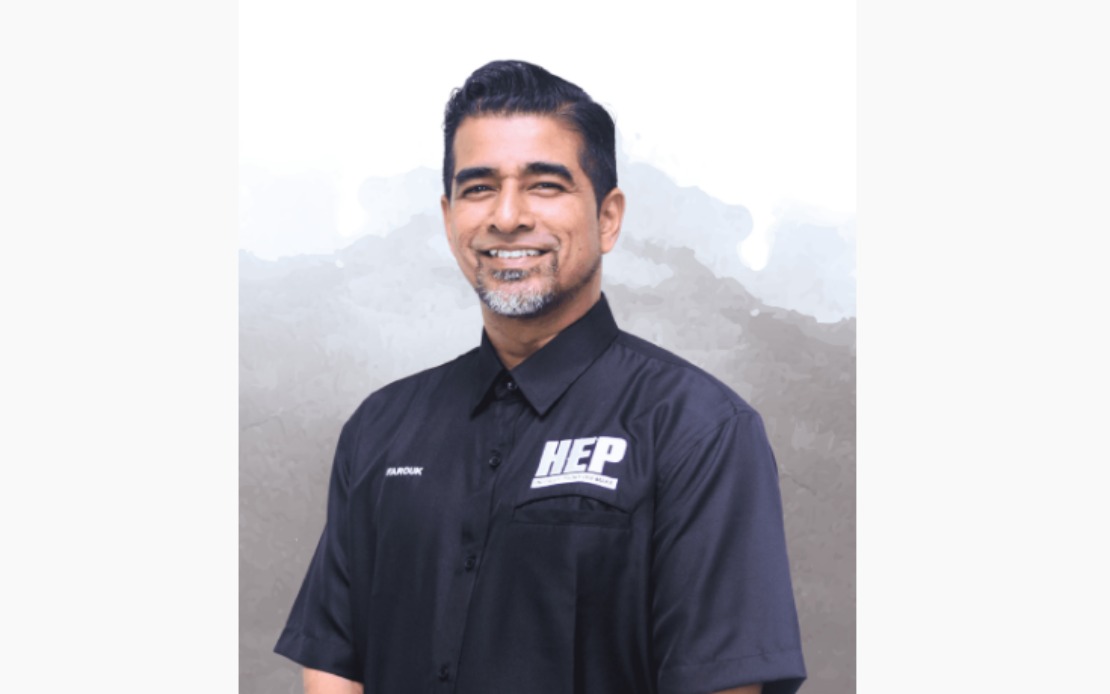
Universiti Teknologi MARA's Kelantan campus is actively campaigning to prevent capable students from lower-income households from turning down admission offers due to financial concerns. The push comes amid growing competition for places at Malaysian public universities and a recognition that many qualified applicants abandon their educational aspirations prematurely when facing cash flow difficulties. Deputy Rector for Student Affairs Meer Zhar Farouk Amir Razli emphasised during the university's recent Rector's Cakna Programme that prospective students and their families often lack awareness of the full spectrum of support mechanisms beyond conventional loan facilities.
The financial assistance landscape at UiTM Kelantan extends considerably further than the National Higher Education Fund Corporation (PTPTN) loans that typically represent the first port of call for funding-strapped families. The institution has established multiple revenue streams for student support, including zakat assistance programmes that tap into Islamic charitable frameworks, designated welfare funds specifically earmarked for hardship cases, and the innovative "Dapur MADANI" initiative. This scheme operates through residential college networks to help undergraduate residents manage monthly living expenses—often the largest variable cost beyond tuition fees—throughout their degree programmes.
The "Dapur MADANI" initiative represents a structural innovation in how Malaysian universities address the real cost of attendance. Rather than treating financial aid purely as post-admission remediation, the programme is embedded within on-campus accommodation infrastructure, creating a systematic approach to expense management. By integrating food security and basic living cost support directly into residential college operations, UiTM has attempted to lower the effective total cost of study for vulnerable cohorts. This targeted approach recognises that even when tuition fees are subsidised through government funding, the gap between what families can afford for living expenses and actual costs remains a significant barrier to degree completion.
Meer Zhar's appeal reflects a broader institutional concern that Malaysia's public higher education system inadvertently loses talented students to perceived rather than actual financial barriers. The problem is compounded by information asymmetry—many families from lower socioeconomic backgrounds lack the social capital or networks to navigate complex assistance application processes or understand which schemes apply to their circumstances. The Rector's Cakna Programme attempts to address this by partnering with local non-governmental organisations that have existing credibility and reach within disadvantaged communities. These collaborations create trusted intermediaries capable of translating university support offerings into comprehensible information for families making critical educational decisions.
Intensifying competition for public university places amplifies the stakes of this outreach effort. Malaysia's demographic profile and rapid expansion of secondary education completion rates have created a situation where qualified applicants significantly exceed available spaces. Each student who unnecessarily declines an offer represents a lost opportunity for both the individual and the nation's human capital development. From an institutional perspective, UiTM Kelantan's efforts also serve to fill its student intake targets and maintain enrolment numbers, but the framing emphasises the student's interests—capturing opportunities that may not emerge again in subsequent application cycles.
The personal testimony of Norzarra Dhania Amir Abdullah, 19, illustrates the concrete circumstances driving the university's intervention. Having received an offer from UiTM Sarawak the previous year, Norzarra Dhania found herself unable to pursue that opportunity due to her family's precarious financial position. As the eldest of seven children in a household relying solely on her mother's income as a restaurant assistant, and with her father managing chronic diabetes that diminished his earning capacity, the economics of studying at a distant campus became prohibitive. Transportation, accommodation, and living expenses for Sarawak residence simply exceeded what the family could sustain, even with PTPTN lending.
Norzarra Dhania's situation exemplifies how geography intersects with economics in Malaysian higher education access. The availability of a UiTM campus in Kelantan—her home state—suddenly renders university feasible by eliminating accommodation costs and reducing transportation expenses to negligible levels. This geographic factor transforms her educational prospects from impossible to manageable, yet without proactive outreach and support confirmation from the institution, she might still have declined the offer based on assumptions about unaffordable living costs. The laptop presented to her through the Rector's Cakna Programme serves both practical utility for coursework and symbolic affirmation that the institution recognises and actively supports her participation.
The Diploma in Management pathway Norzarra Dhania will pursue represents a credential sequence increasingly valuable in Malaysia's services-oriented economy. Three-year diploma programmes offer faster time-to-employment and credential completion compared to four-year degree pathways, enabling graduates to begin earning sooner and potentially supporting their families within a shorter timeframe. For students from disadvantaged backgrounds, this efficiency gains particular significance—each additional year of dependency imposes costs not just financially but psychologically and socially on families already stretched thin. The diploma option also maintains flexible progression pathways for top performers seeking subsequent degree-level qualifications.
UiTM's multipronged support infrastructure reflects lessons learned from retention challenges in Malaysian higher education. Institutions recognise that recruiting students is only the first challenge; ensuring they persist through completion requires addressing material hardships that can otherwise derail progress. When undergraduate students face hunger, housing instability, or inability to afford essential resources, academic performance deteriorates regardless of intellectual capacity. By implementing systems like "Dapur MADANI" that guarantee basic living standards, universities remove one category of completion risk and demonstrate institutional commitment to student welfare beyond transactional education delivery.
The outreach effort also carries implicit messaging about expanding educational opportunity in Malaysia. Public universities in recent years have faced scrutiny over whether they effectively serve lower-income populations or replicate existing socioeconomic stratification. By visibly supporting students like Norzarra Dhania and actively encouraging qualified applicants from disadvantaged backgrounds to enrol, UiTM Kelantan signals commitment to access principles. This carries reputational and potentially funding implications, as government evaluations of institutional performance increasingly incorporate equity metrics measuring whether universities serve diverse student populations.
For Malaysian families navigating university decisions, the message from UiTM Kelantan carries practical significance. The assumption that university attendance requires family wealth sufficient to cover all expenses independently is incorrect; the reality encompasses multiple assistance pathways that can render education accessible. Yet this knowledge remains unevenly distributed, concentrated among families with university experience or professional advisory access. Programmes that reach families without such social capital—through schools, community organisations, and direct household engagement—represent crucial infrastructure for equitable education access.
The underlying challenge UiTM identifies reflects a systemic gap between available support and awareness thereof. Malaysia invests substantially in making higher education financially accessible through government subsidies, PTPTN loans, and now institutional assistance schemes. Yet if eligible students remain unaware of these mechanisms or too discouraged to pursue them, the investments fail to translate into actual opportunity realisation. Addressing this requires not merely expanding financial support but equally emphasising information provision and institutional outreach—making universities themselves active partners in recruitment rather than passive institutions processing applications from those who already understood the system.
As Malaysia pursues increasingly ambitious higher education participation targets and emphasises skills development for economic competitiveness, ensuring that talent from all socioeconomic backgrounds reaches university becomes strategically important. The nation cannot afford to lose capable students to remediable financial barriers. UiTM Kelantan's campaign thus serves both immediate student interests and broader national development imperatives—enabling individuals like Norzarra Dhania to realise educational potential while strengthening the quality and diversity of Malaysia's emerging professional workforce.