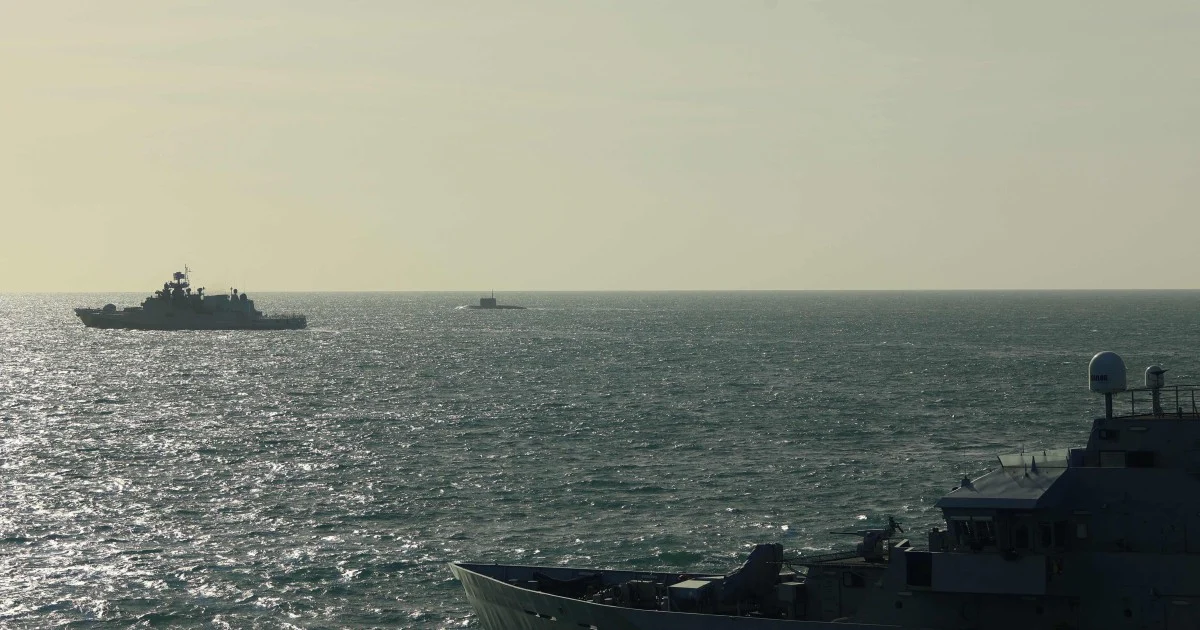
Prime Minister Keir Starmer sought to strike a carefully calibrated tone on Wednesday regarding a recent incident involving a Russian military vessel in the English Channel, describing the firing of warning shots as manifestations of careless behaviour rather than intentional intimidation. The distinction between characterising the incident as "reckless" versus "sinister" carries significant diplomatic weight, suggesting the British government views the action as reflecting poor judgment rather than a premeditated message of aggression toward the United Kingdom.
The encounter, occurring in one of the world's busiest shipping lanes, has intensified the already fraught relationship between London and Moscow. The English Channel represents a critical maritime corridor for international commerce and naval operations, making any military incidents within its waters matters of considerable concern not just for Britain but for the broader European shipping community and Southeast Asian trading interests dependent on European markets. The proximity of the event to British territorial waters adds another layer of complexity to what might otherwise be dismissed as a localised naval mishap.
Starmer's framing of the incident provides insight into how the British government intends to respond to an increasingly assertive Russian military posture in European waters. By distinguishing between recklessness and sinister intent, the Prime Minister appears to be leaving room for de-escalation while simultaneously registering clear disapproval of Russian conduct. This rhetorical positioning reflects the broader challenge facing Western nations in managing their relationship with Moscow: acknowledging troubling behaviour without allowing each incident to spiral into a major diplomatic confrontation that could trigger unpredictable consequences.
The incident represents the latest in a series of at-sea tensions that have become an almost routine occurrence in recent years. Russian naval vessels have been increasingly visible in the North Atlantic and waters surrounding Europe, conducting exercises and patrols that Western governments view as demonstrations of military capability and political assertiveness. For maritime nations throughout Southeast Asia with significant shipping interests and naval operations, such incidents in distant waters carry implications for international norms governing freedom of navigation and the conduct of military forces in shared waters.
The warning shots themselves—fired as a yacht passed near the Russian warship—underscored the volatile nature of modern naval operations where miscommunication or procedural lapses can quickly escalate into serious incidents. While such warnings are occasionally employed in maritime operations to signal distress or require course corrections, firing them near commercial or civilian vessels raises questions about proportionality and adherence to established international protocols governing naval behaviour. The distinction between defensive precautions and aggressive posturing often depends heavily on context and interpretation, making such incidents inherently prone to misunderstanding.
Starmer's measured response likely reflects consultation with military advisors and consideration of Britain's broader strategic interests. Overreacting to any single incident could serve Russian objectives by escalating tensions, while underreacting might invite further provocative behaviour. The Prime Minister's language therefore represents a calculated middle ground intended to communicate firmness without abandoning opportunities for eventual dialogue or clarification. This approach mirrors how other European leaders have attempted to manage their interactions with Russia while maintaining deterrent capabilities.
The incident occurs within the context of existing tensions between London and Moscow spanning several years, including the poisoning case involving Novichok nerve agent on British soil and the Skripal affair. These historical grievances create a backdrop of mistrust that shapes how both nations interpret each other's actions. What might be viewed as routine military manoeuvres by one side is often understood through a lens of suspicion by the other, making objective assessment of intentions deeply challenging.
For maritime traders and shipping companies operating across European and Asian routes, such incidents raise practical concerns about navigational safety and insurance coverage. The English Channel remains one of the world's most important trading routes, with thousands of vessels transiting annually. Any increase in unpredictable military behaviour, regardless of whether characterised as reckless or sinister, creates friction and potential economic costs as shipping companies adjust routes or impose additional safety protocols.
The incident also highlights broader questions about enforcement of international maritime law and the role of naval powers in maintaining order in shared waters. Countries throughout Southeast Asia, which depend heavily on freedom of navigation and the unimpeded flow of trade through international waters, have a vested interest in maintaining norms that prevent military forces from disrupting commercial shipping. The English Channel incident thus resonates beyond British-Russian relations, touching on global principles that maritime nations rely upon for their prosperity and security.
Looking forward, Starmer's characterization suggests Britain will continue monitoring Russian naval activity while attempting to prevent individual incidents from becoming flashpoints for wider confrontation. The challenge lies in maintaining this balance as Russian military operations continue to test Western responses and resolve. The careful diplomacy on display in the Prime Minister's comments reflects recognition that managing great power competition requires both firmness and restraint, a lesson increasingly relevant as geopolitical tensions reshape the international order that Asian trading nations depend upon.