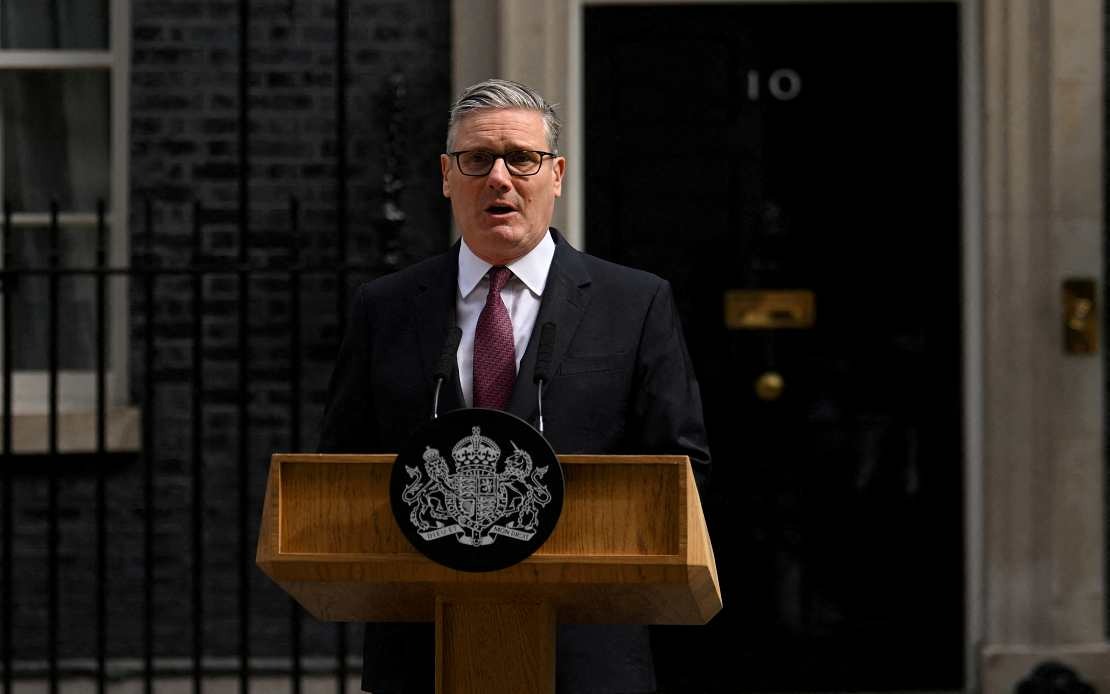
Prime Minister Keir Starmer's announcement that he will step down from his position marks a dramatic reversal for the British leader who swept to power less than two years ago with promises to restore stability to Westminster politics. The transition will be managed to allow a new prime minister to take office by the time parliament reconvenes in September, according to statements on Monday, with Starmer committing to support his successor throughout the transition process.
Starmer's tenure has been marked by a sharp deterioration in political fortunes that few observers predicted when Labour secured a decisive election victory. His personal approval ratings have plummeted to levels unmatched by any recent British leader, reflecting widespread public dissatisfaction with his administration's inability to address core concerns around living standards and public service quality. The collapse in popularity stands in stark contrast to the optimism that greeted his early months in office.
The crescendo of pressure on Starmer intensified dramatically on Friday when Andy Burnham, the mayor of Greater Manchester, achieved a commanding victory in a parliamentary by-election against a candidate from Nigel Farage's Reform UK party. This result provided an unexpected lifeline to Labour MPs seeking a change in leadership, suggesting that Burnham's political brand and communication abilities might revitalise a party that has haemorrhaged support under Starmer's watch. The by-election outcome demonstrated that Labour could still win in competitive contests when presenting an alternative face to voters.
Burnham, a seasoned politician with extensive experience in government and local administration, has built a reputation for his ability to communicate effectively with working-class communities. However, his policy platform remains incompletely developed in several critical areas. He has articulated a commitment to bringing transformational change and reducing living costs for ordinary Britons, yet has offered limited detail on how his government would approach foreign policy, economic management, and defence spending—issues that will demand immediate attention from any incoming prime minister.
The incoming leadership will face formidable constraints that Starmer himself encountered. British borrowing costs already rank highest among the Group of Seven advanced economies, a consequence of elevated public debt, substantial interest payment obligations, years of sluggish economic growth, and persistent difficulties in reducing spending while simultaneously investing in critical areas such as military capability. These structural headwinds will limit the scope for radical policy departures regardless of who occupies Number 10.
Market participants maintain sceptical views about Burnham's capacity to navigate the fiscal landscape. Financial institutions spoken to by Reuters expressed particular concern about whether Burnham, who previously declared that Britain must move beyond depending on bond market confidence, would ultimately accede to market demands. Citibank economists concluded in analysis circulated Friday that any Burnham government would inherit fundamentally constrained fiscal circumstances with minimal capacity to implement substantive policy reforms.
Starmer's initial position suggested he would contest any formal leadership election launched by Labour to select his replacement. This stance shifted over the weekend, however, as he moved toward accepting a managed departure rather than defending his position through party democracy. The trajectory of British prime ministerial instability will only accelerate with this transition, as Burnham would become the seventh individual to hold the office since the Brexit referendum a decade ago.
This extraordinary rate of leadership turnover—the most volatile succession of prime ministers Britain has experienced in nearly two centuries—testifies to the profound difficulty modern governments face in sustaining electoral confidence. Successive administrations have failed to deliver measurable improvements in living standards, reverse the decay of public services infrastructure, or develop effective responses to immigration concerns. These repeated disappointments have corroded voter faith in political institutions and generated recurring demands for fresh leadership and altered direction.
Industry observers, including the Eurasia Group advisory service, had speculated that the optimal outcome would involve Starmer announcing a September departure. This timeline would permit him to attend a scheduled UK-European Union reset summit planned for July, providing continuity in diplomatic engagements while simultaneously affording Burnham adequate preparation time before assuming the premiership. The arrangement represents a compromise balancing immediate institutional stability with the political urgency of demonstrating tangible change to a sceptical electorate increasingly convinced that Westminster's existing structures cannot deliver meaningful improvement in their circumstances.

