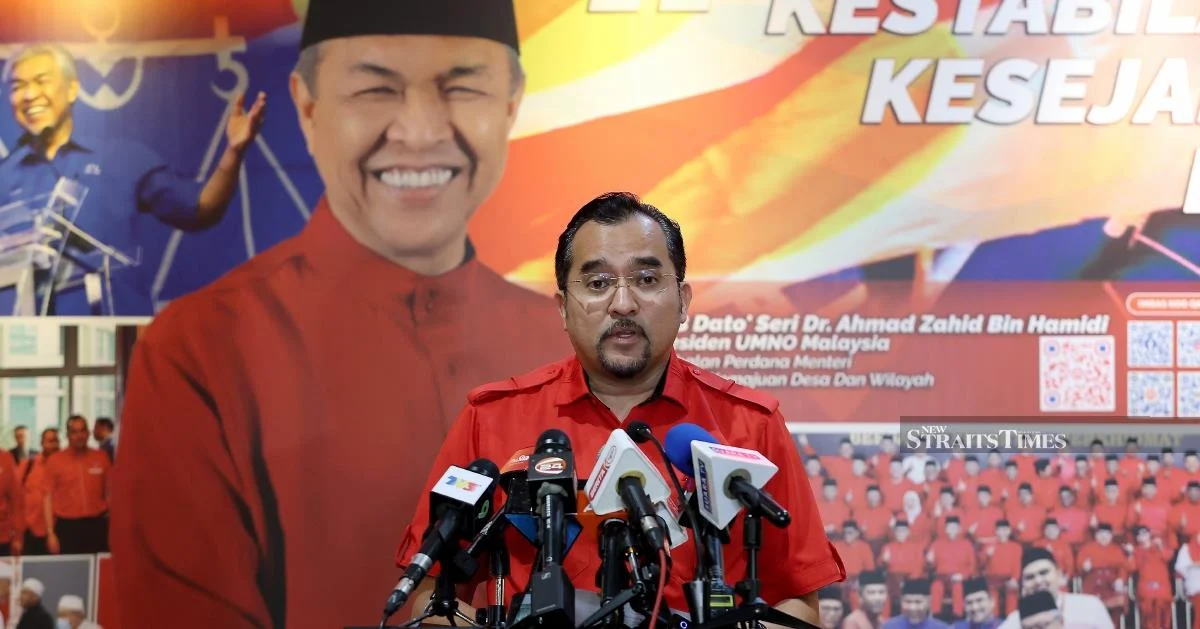
Umno will pursue a principled approach in its election campaigns for Johor and Negri Sembilan, keeping the spotlight firmly on policy substance and tangible benefits to voters rather than personal accusations or attacks on opponents. Datuk Dr Asyraf Wajdi Dusuki, the party's secretary-general, made this commitment during recent remarks in Kuala Lumpur, signalling the party's intention to contest the upcoming state polls on the merits of its governance record and electoral promises.
The pledge represents a notable positioning for Umno as Malaysian politics continues to grapple with perceptions of increasingly adversarial campaigning. By explicitly eschewing what the party describes as mudslinging, Umno appears conscious of public sentiment regarding campaign ethics and voter expectations for elevated political discourse. This stance carries particular significance in both Johor and Negri Sembilan, two states with distinct political dynamics and voter demographics that have shaped competitive election environments in recent electoral cycles.
Johor, Malaysia's second most populous state, remains a crucial political battleground where Umno has historically held considerable influence but faces ongoing competition from both opposition coalitions and within its own ruling partnership. The state's diverse electorate spans urban, semi-urban, and rural constituencies with varying priorities ranging from economic development and employment to healthcare and education. Negri Sembilan, meanwhile, presents a different electoral landscape as a smaller state where community-focused issues and state-level governance capabilities carry substantial weight in voter decision-making.
Umno's emphasis on policy-driven campaigning reflects broader strategic calculations within the party. By anchoring its electoral pitch to substantive governance agendas, the party aims to differentiate itself through constructive messaging that addresses voter concerns about development, service delivery, and economic opportunity. This approach potentially allows Umno to shape the election narrative around its administration's achievements and future commitments rather than becoming entangled in personality-based disputes or character attacks that could diminish its public standing.
The commitment to clean campaigning also carries implications for coalition dynamics within Malaysia's ruling government structures. Umno's declaration sets expectations for its partners and opposition rivals regarding campaign conduct, creating potential pressure for reciprocal commitments to elevated standards of political engagement. For Malaysian voters already fatigued by intensely partisan rhetoric, a campaign environment prioritising substantive policy comparison over personal antagonism could enhance political participation and voter confidence in electoral processes.
For Johor voters, Umno's campaign messaging will likely centre on economic development initiatives, infrastructure improvements, and strategies for addressing cost-of-living pressures that have emerged as priority concerns across Malaysian society. The party may emphasise its track record in managing state resources and delivering visible projects that demonstrate government effectiveness. Similarly, in Negri Sembilan, the focus on policy offerings suggests Umno will highlight state-specific development priorities and governance competencies that resonate with local constituencies.
The opposition parties and rival coalitions will face their own strategic choices regarding campaign approaches in these elections. Umno's declaration could create competitive pressure for opponents to similarly commit to substantive campaigning or risk appearing defensive or dismissive of ethical campaign standards. The electoral environment in both states will likely reflect these collective positioning decisions, potentially establishing a tone for future Malaysian electoral contests.
Datuk Dr Asyraf Wajdi Dusuki's statement underscores Umno's awareness that contemporary voters increasingly demand substantive engagement with policy questions rather than sensationalised political theatre. The party secretary-general's explicit rejection of mudslinging suggests internal party discipline around campaign messaging and a coordinated effort to maintain brand integrity amid broader political competition. This disciplined approach reflects lessons from previous electoral cycles where campaigns perceived as excessively negative or personality-focused generated voter backlash.
For Malaysian observers and international commentators monitoring political developments in Southeast Asia's largest democracy, Umno's campaign commitment offers insights into evolving standards of political discourse. The balance between vigorous electoral competition and responsible democratic conduct remains central to Malaysia's political maturation. Umno's positioning on Johor and Negri Sembilan state elections contributes to this ongoing conversation about how Malaysia's major political parties can contest vigorously while maintaining institutional and ethical standards that strengthen rather than undermine democratic institutions.
As these state campaigns progress, the actual conduct of both Umno and competing parties will test the sincerity and durability of such commitments. Voters, civil society organisations, and media observers will scrutinise whether campaign rhetoric aligns with stated principles. The outcomes in Johor and Negri Sembilan may well establish benchmarks for campaign conduct in future Malaysian electoral contests, with implications extending across the federation's competitive political landscape.