UMNO's political strategy for the Melaka state election remains undecided, with the party's Supreme Council scheduled to deliberate the matter at a critical meeting on August 28. The gathering, to be presided over by party president Datuk Seri Dr Ahmad Zahid Hamidi, will examine multiple pathways forward for Barisan Nasional in a state where political realignments could reshape the electoral landscape.
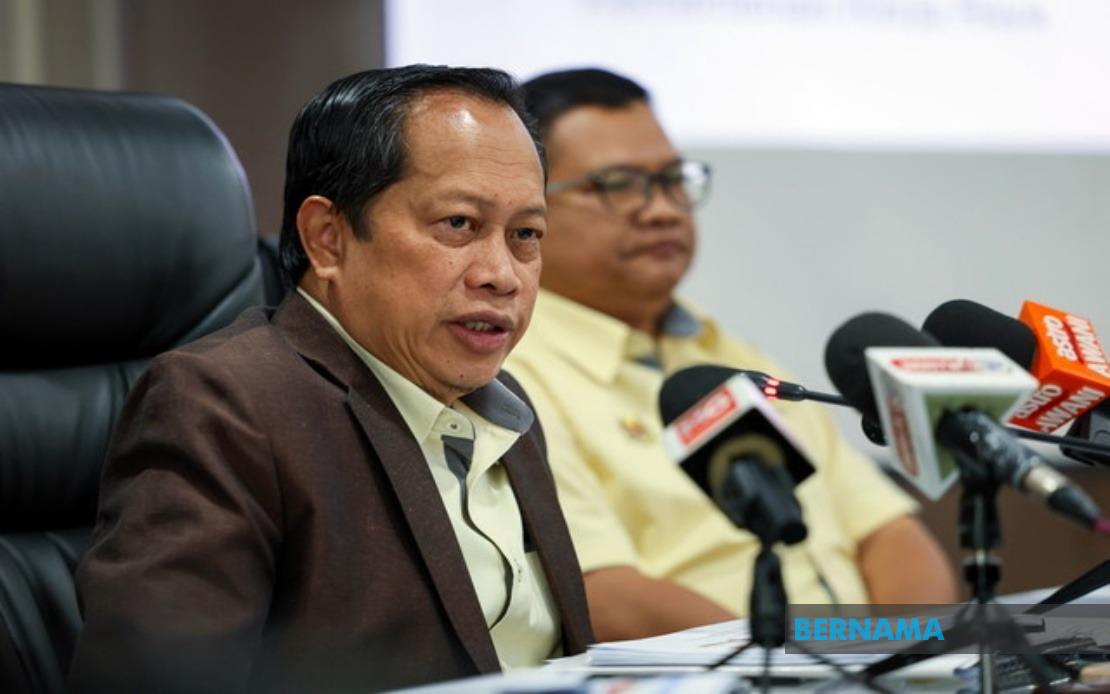
Datak Seri Dr Ahmad Maslan, a Supreme Council member and Deputy Works Minister, indicated that no binding decision has yet crystallized within UMNO's leadership regarding coalition arrangements for the Melaka contest. The ambiguity reflects deeper tensions within the ruling coalition as it navigates an increasingly fractious political terrain across different states, where local circumstances often dictate departures from national strategies.
The uncertainty surrounding UMNO's direction stems from competing interests and preliminary discussions in both party circles and public discourse. Various UMNO figures, particularly those rooted in Melaka politics, have ventured proposals for cooperation with either Pakatan Harapan or Perikatan Nasional. These exploratory conversations, while not yet formalized, suggest that multiple scenarios are being actively considered by senior party strategists weighing electoral viability against coalition stability.
Dr Ahmad Maslan stressed the importance of party discipline once the Supreme Council reaches its determination. Any decision emanating from the August 28 meeting should command loyalty across UMNO's ranks, he emphasized, underscoring that Barisan Nasional's electoral approach must remain flexible and responsive to each state's particular political economy. This flexibility represents a calculated departure from monolithic national strategies, acknowledging that what succeeds in one jurisdiction may prove counterproductive elsewhere.
The timing of this strategic review carries significance given that Melaka's state government mandate concludes on December 31. This deadline creates a window for political maneuvering but also imposes urgency on decision-making, as prolonged uncertainty could undermine party cohesion and voter confidence heading into electoral campaigning.
Currently, Barisan Nasional commands a commanding position in Melaka's legislative assembly following the 15th state election, securing 21 of 28 seats. Pakatan Harapan captured five seats while Perikatan Nasional holds two. This distribution might suggest comfortable numerical superiority for BN, yet the state executive council's composition tells a more nuanced story. The governing line-up includes assemblymen from Pakatan Harapan, a structural arrangement that mirrors the broader Unity Government framework operating at the federal level.
This mirroring of federal governance patterns raises complex questions about whether Melaka will maintain its current Unity Government configuration or revert to a purely Barisan Nasional administration. The presence of PH representatives within the state executive council represents an active experiment in cross-coalition cooperation at the subnational level, demonstrating that pragmatic power-sharing arrangements can function despite national-level political competition. The August 28 meeting will essentially determine whether this experiment continues or whether UMNO pivots toward more traditional competitive politics.
For Malaysia's broader political ecosystem, Melaka's trajectory carries implications extending beyond a single state. The decision will signal whether the Unity Government framework remains a flexible model adaptable to various state contexts or whether it represents a temporary federal phenomenon destined to dissolve at lower governance tiers. Other states and potential future electoral contests will likely draw lessons from whatever approach UMNO ultimately adopts.
The competing coalition options present distinct strategic calculations. A continuation of the current cross-coalition arrangement with PH offers stability and continuity, leveraging existing working relationships and avoiding the political costs of sudden reconfiguration. Conversely, a pivot toward Perikatan Nasional would represent a significant realignment, potentially offering UMNO different electoral calculi and governing arrangements while potentially destabilizing existing governance structures.
Perhaps most crucially, UMNO's decision will reveal whether the party views coalition politics as merely tactical convenience or as a strategic reorientation reflecting genuine shifts in Malaysia's political landscape. The August 28 meeting thus represents more than procedural rubber-stamping; it constitutes a genuine inflection point where Malaysia's largest Malay-Muslim political party will articulate its vision for power-sharing and competitive politics in the contemporary era. As the party deliberates, observers across Southeast Asia will watch closely, recognizing that Malaysia's internal realignments often presage broader regional political movements.

