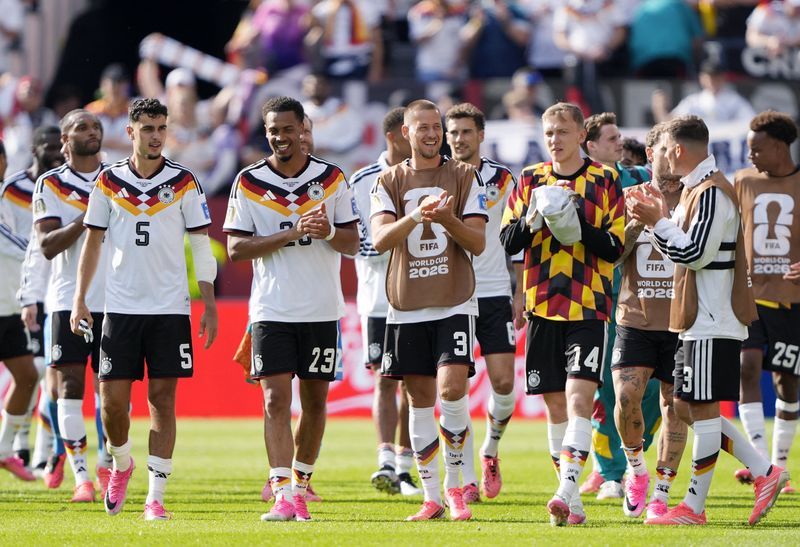
Germany secured their passage to the World Cup knockout stage on Saturday with a pulsating 2-1 comeback victory over Ivory Coast in Toronto, powered by substitute Deniz Undav's clinical brace that underlined the striker's explosive form in recent matches. The West African side had taken the lead through Franck Kessie's first-half effort, but the Germans' second-period dominance and intricate build-up play ultimately proved decisive in a Group E encounter that offered flashes of attacking brilliance from both teams.
Undav's introduction from the bench proved transformative for the German side, who had laboured against an Ivory Coast team brimming with attacking intent throughout the opening 45 minutes. The 26-year-old striker, now boasting an impressive nine goals in his last eight appearances, levelled proceedings in the 68th minute with a composed volley before adding a second when he received possession on the turn, shifted his body, and dispatched a low drive past goalkeeper Yahia Fofana. These clinical finishes vindicated head coach Julian Nagelsmann's tactical adjustments and demonstrated Germany's capacity to find solutions even when attacking moves went awry in the first half.
The opening stages had proven frustrating for Germany, despite their eight attempts on goal before the interval. The Irvine-based midfielder Aleksandar Pavlovic appeared to have broken the deadlock from a short corner routine in the 25th minute, only for the referee to determine that he had fouled Fofana during the header. That controversial decision—which drew audible disapproval from the partisan German crowd in Toronto, where more than 100,000 residents of German descent reside—proved a turning point in momentum. Shortly after that disallowed goal, Ivory Coast struck when Franck Kessie capitalised on a rebound from Amad Diallo's shot, with the initial cross arriving courtesy of Yan Diomande's penetrating left-wing run.
Germany's frustration at their fortunes in front of goal continued when what appeared to be a second-half breakthrough was ruled out after officials determined that Jamal Musiala had committed a foul on Odilon Kossounou during the build-up. These marginal decisions could easily have derailed Germany's tournament momentum, yet the quality of their possession-based football and willingness to probe methodically through midfield ultimately overcame such setbacks. The combination of technical sophistication and directness in the final third, particularly after Undav entered the field, exposed the gaps in Ivory Coast's defensive shape.
Ivory Coast entered the match with an impressive scoring record, having netted in each of their previous seven World Cup tournament matches—the longest such sequence in their history on football's biggest stage. Franck Kessie's opening goal demonstrated the threat posed by their dynamic attacking approach, with the midfield general converting a loose ball that emerged from intelligent wing play. Late in the match, Simon Adingra squandered a promising opportunity to level the score, failing to get a clear shot away in the penalty area before Germany's rapid counter-attack saw Nathaniel Brown's effort blocked by Fofana.
With this victory, Germany moved to the summit of Group E with six points and secured their first knockout-stage appearance since winning the tournament in 2014. That nine-year absence from the final 32 represented a stark decline for a nation accustomed to deep runs in major competitions, yet their attacking intent and recovery from adversity in Toronto suggests they have righted their course just as the competition intensifies. Ivory Coast remain third in the group standings with three points from two matches, facing an uphill task to advance from a pool that continues to be contested.
The implications of Germany's progression extend beyond mere tournament advancement. For Southeast Asian football observers, the match showcased how elite European sides navigate high-pressure knockout football—through a combination of possession retention, tactical flexibility, and clinical finishing when opportunities arise. Germany's ability to absorb early disappointment and execute their game plan with greater precision after the interval offers instructive lessons in tournament management. Undav's impact as an impact substitute also underscores the depth available to top-tier national teams, a consideration relevant as regional sides assess their own squad composition and strategic options.
The path forward differs markedly for both sides. Germany will conclude their Group E campaign against Ecuador in New Jersey on Thursday, seeking to top the pool and secure a favourable knockout draw. Ivory Coast travel to Philadelphia to face Curacao, knowing that anything less than victory would likely terminate their tournament ambitions. Ecuador and Curacao's own encounter in Kansas City later on Saturday will further clarify the group's dynamics, but Germany's win has substantially improved their position as they head toward the business end of the World Cup.
For Malaysian and Southeast Asian readers monitoring the tournament, Germany's comeback carries significance beyond the scoreline. The emergence of Undav as a reliable goalscoring threat provides intrigue ahead of Europe's quarterfinalsand potentially beyond, while Ivory Coast's attacking prowess—despite the defeat—confirms that African football continues to produce exciting, free-flowing teams capable of troubling even established powerhouses. The match exemplified how World Cup football at its best combines tactical sophistication with raw attacking ambition, setting the stage for the knockout rounds that promise to deliver equally compelling narratives.

