The Malaysian government moved to dispel public misconceptions about refugee documentation on Friday, with Economy Minister Datuk Akmal Nasrullah Mohd Nasir making clear that possession of a United Nations High Commissioner for Refugees card does not place holders beyond the reach of domestic law. Speaking during a live-streamed briefing on the Ministry of Economy's Facebook channel, Akmal Nasrullah underscored that individuals carrying such documents remain fully subject to investigation and prosecution for any criminal conduct, dismissing suggestions that the card functions as a protective talisman against legal accountability.
The clarification arrived amid growing public apprehension about the management of refugee populations within Malaysia's borders, with concerns centring on documentation practices, vulnerability to human trafficking networks, and perceived threats to community safety. The Home Ministry had escalated the matter to the National Economic Action Council meeting, reflecting official concern about the intersection of refugee administration and broader national security imperatives. This high-level engagement signals that policymakers view refugee-related issues not in isolation but as elements within a larger framework encompassing border integrity and public confidence in government systems.
Underscoring its commitment to tightened oversight, the government outlined a multi-agency approach anchored on the Refugee Registration Document programme, which represents a shift toward systematic biometric registration and more rigorous screening protocols. This initiative extends beyond merely issuing identity papers; it encompasses active verification, continuous monitoring, and enforcement mechanisms designed to identify and manage security risks at every stage. The integration of biometric data reflects international best practices while acknowledging Malaysia's particular vulnerability to irregular migration patterns and organised criminal networks that exploit refugee populations as covers for trafficking and smuggling operations.
Authenticity of registration forms a cornerstone of Malaysia's strategy. By implementing document screening and cross-checking procedures, authorities aim to detect fraudulent credentials and prevent the use of refugee status as a front for undocumented entry or illicit activity. The government signalled that these are not passive systems but active surveillance and verification platforms capable of flagging anomalies and supporting rapid enforcement responses.
Coordinated enforcement represents another pillar of the government's approach. Authorities have pledged to intensify integrated operations targeting the organised networks that facilitate human smuggling, trafficking in persons, document falsification, and clandestine border crossings. Such operations require real-time coordination across the Immigration Department, police, military and other agencies, demanding investment in shared intelligence systems and rapid-response protocols. The emphasis on simultaneous action against multiple offences—smuggling, trafficking, fraud, and illegal entry—reflects understanding that these activities are often interlinked and conducted by the same criminal syndicates.
Technological capability underpins these enforcement ambitions. The government intends to deploy data analytics and monitoring systems capable of identifying patterns consistent with trafficking or smuggling activity. Such technology allows authorities to shift from reactive responses to proactive detection, scanning for behavioural red flags, geographic anomalies, and network patterns that may indicate organised criminal involvement. For Malaysia, where organised trafficking networks operate with considerable sophistication, such analytical tools represent a necessary upgrade to immigration administration.
Resource commitment reflects the seriousness with which the government treats these challenges. An allocation of RM1.2 billion across multiple agencies signals substantial financial backing for border control and security enhancements. This funding supports both infrastructure investments—enhanced screening equipment, surveillance systems, secure facilities—and human resources, including additional personnel for border agencies and law enforcement units. The magnitude of investment demonstrates that Malaysia views refugee management not as a peripheral concern but as integral to national security and public safety.
Expansion of the Malaysian Border Control and Protection Agency features prominently in these plans. Streamlining operations under this single entity promises to eliminate jurisdictional ambiguities and create clearer accountability chains. Consolidating border management authority also permits more coherent deployment of resources, unified training standards, and coordinated response protocols that could prove more effective than fragmented approaches where multiple agencies operate with inconsistent procedures or overlapping mandates.
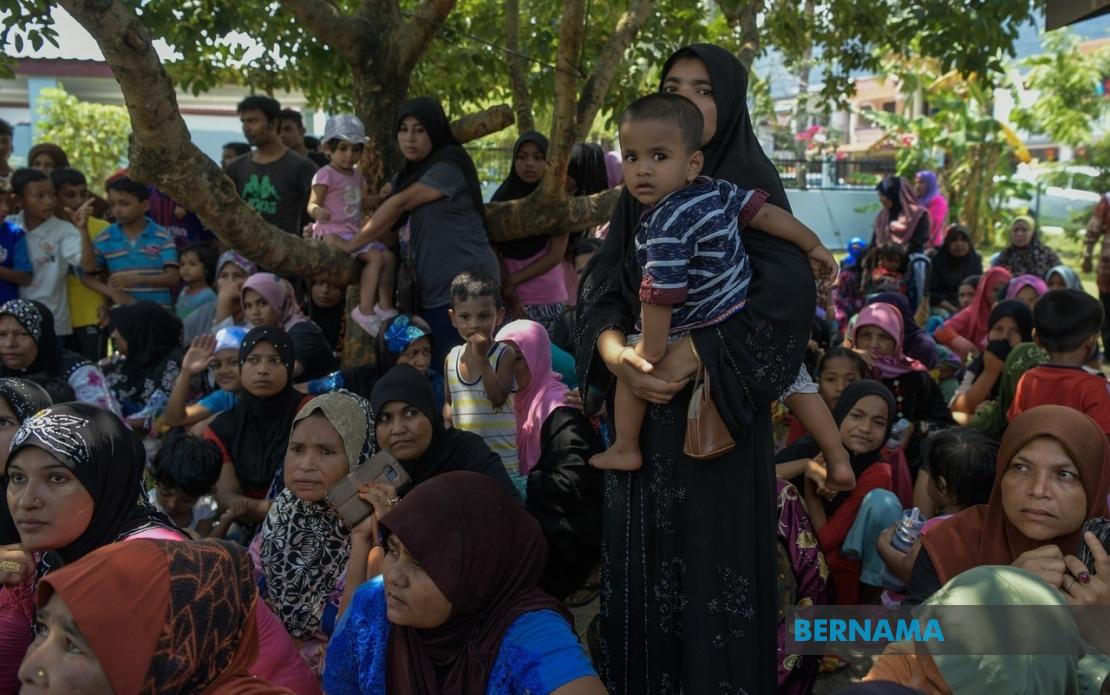
These measures emerge within a specific Southeast Asian context. Malaysia hosts one of the world's largest refugee populations, with over 180,000 registered individuals. The country's geographic position as a transit point for irregular migrants moving within the region compounds management challenges. Neighbouring countries face similar pressures, creating opportunities for regional cooperation but also risks if gaps in one country's systems become vulnerabilities exploited by criminal networks. Malaysia's emphasis on tightened documentation and enforcement thus carries implications beyond its borders.
The government's emphasis on distinguishing between refugee registration documents and citizenship or immunity reflects important legal architecture. Many Malaysians harbour legitimate concerns about the implications of hosting large refugee populations, partly rooted in uncertainty about the status and rights of documented refugees. By stressing that documentation confers no special legal status, the government attempts to reassure citizens while signalling to refugees that their presence in Malaysia operates within clearly defined parameters. This clarification protects both government credibility and public confidence in border management.
Food security and manufacturing resilience alongside refugee management formed part of the National Economic Action Council's agenda, chaired by Prime Minister Datuk Seri Anwar Ibrahim. This combined focus reflects the interconnected nature of contemporary policy challenges—refugee flows often accompany global economic disruptions, irregular migration strains social infrastructure, and insecurity undermines economic productivity. Addressing these issues comprehensively requires coordination across economic and security portfolios.
The government's multifaceted response suggests evolution in how Malaysian policymakers approach refugee populations and irregular migration. Rather than viewing these challenges primarily through security lenses alone, authorities now integrate enforcement with documentation, technology with personnel, and domestic measures with implicit recognition of regional dimensions. Success depends not merely on policy announcement but on sustained institutional implementation, adequate training for frontline officers, and continued public communication that separates fact from speculation about refugee populations in Malaysia.

