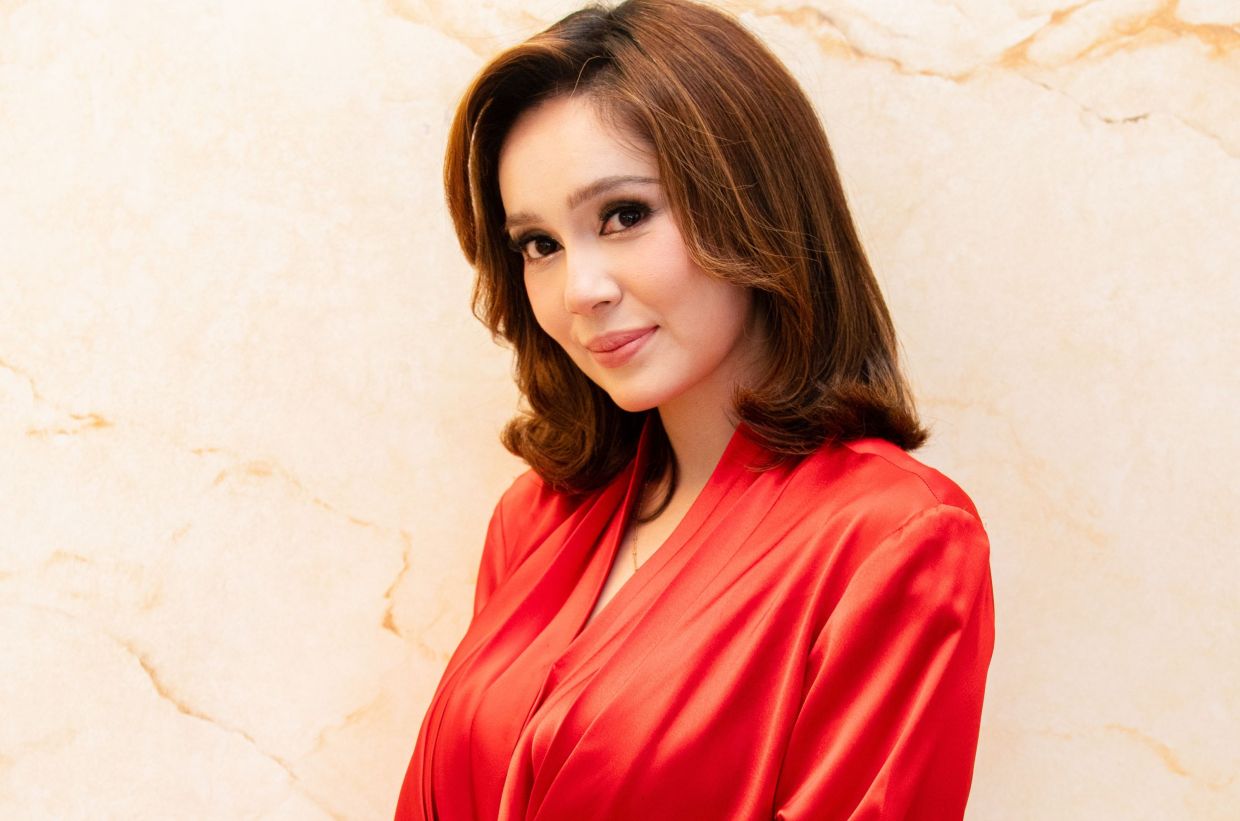
Malaysian actress Uqasha Senrose has defended her decision to work alongside actor Aliff Aziz on an upcoming television series, despite his highly publicised personal turmoil earlier this year. In March 2024, Aliff became embroiled in a khalwat controversy that ultimately triggered the breakdown of his marriage to singer-actress Bella Astillah, with whom he shares two children. The incident played out in public view, subjecting both parties to intense media scrutiny and public commentary. Yet when it came time to collaborate on the new project, Uqasha chose to compartmentalise the actor's personal difficulties from their professional relationship, a stance that reflects a pragmatic approach increasingly common in Malaysia's entertainment industry.
Uqasha's willingness to move past Aliff's personal crisis speaks to her own maturity and understanding of the complexities surrounding public figures. When asked about her decision to work with him, she articulated a philosophy grounded in compassion and self-awareness. "Who am I to judge someone else's personal life? I'm a sinner too and I've made mistakes too," she stated, acknowledging that moral judgement of colleagues lies outside her purview. This perspective is particularly noteworthy given that Uqasha herself has recently navigated challenging personal circumstances, having filed for divorce from actor ex-husband Kamal Adli in October 2025 and officially divorced in January 2026. During those proceedings, she levelled accusations of domestic abuse against Kamal, who denied the claims. Her willingness to extend understanding to others' struggles suggests a person who has developed empathy through adversity.
Throughout the filming process, Uqasha emphasised that Aliff maintained strict professionalism on set, never allowing his private difficulties to compromise the work. "He came to the set, did his job. That's what mattered to me," she explained, noting that she never experienced discomfort or hesitation about their collaboration. This account suggests that industry professionals can and do separate personal from professional spheres, challenging narratives that suggest public scandals should automatically result in professional ostracism. For Malaysian audiences accustomed to following celebrity drama, Uqasha's stance offers a different perspective on redemption and the possibility of moving forward within the same professional ecosystem.
Crucially, Uqasha distinguished between rejecting someone's moral character and respecting their right to continue earning a livelihood. "I don't believe in rejecting someone's rezeki," she said, using the Malay-Islamic term for sustenance or livelihood bestowed by Allah. This framing moves the discussion beyond Western notions of cancellation and into a Malaysian cultural and religious context where concepts of forgiveness and second chances hold particular resonance. For her, Aliff's professional opportunities represented earnings that sustained him, and she saw no moral imperative to deny him that chance. "This is his work, and this is my work. We were simply colleagues doing our jobs professionally," she concluded, drawing a clear boundary between personal judgment and professional courtesy.
The project itself is an ambitious 12-episode series exploring the complexities of polygamous marriage, with Aliff playing Adli, Uqasha portraying Azura, and Elisya Sandha taking the role of Nikita. The thematic content—centring on the emotional dynamics of a man married to two women—creates particular resonance given Aliff's real-world marital complications. Rather than drawing parallels between her fictional role and her own failed marriage, however, Uqasha made a deliberate artistic choice. She resolved not to mine her personal experience for Azura's characterisation, believing that doing so would compromise her portrayal. "If I brought my own personal feelings into the role, I don't think I would have been able to portray Azura properly," she explained. "Azura is her own person, and her story is very different from mine. I wanted to separate Uqasha from Azura."
Yet maintaining that separation between self and character proved emotionally taxing nonetheless. The role demands considerable emotional range, with Azura navigating intense scenes of conflict, vulnerability, and pain. Uqasha disclosed that filming included moments in which she was physically manhandled on screen—slapped and dragged—and numerous sequences where her character confronts profound emotional suffering. "There were times when I really felt Azura's pain," she confessed, describing how the character's arc proved genuinely affecting despite her conscious effort to maintain distance. The psychological toll of inhabiting a role defined by betrayal and emotional trauma clearly registered with the actress, even as she distinguished between her own journey and that of her fictional counterpart.
What particularly appeals to Uqasha about the series is its refusal to cast characters in moral absolutes. The narrative resists the temptation to present clear heroes and villains, instead crafting a more nuanced portrait of human complexity. "What I like about this series is that no one is completely good or completely bad," she observed. "Someone who appears kind may not actually be kind, and someone who seems cruel may have reasons behind their actions." This thematic sophistication aligns with increasingly mature storytelling in Malaysian television, reflecting audiences' capacity to engage with morally ambiguous characters and situations. For Malaysian viewers, particularly those invested in exploring domestic and relational complexity, such layered characterisation offers something beyond melodrama.
Uqasha's current life priorities have clearly shifted in the aftermath of her own marital breakdown. She emphasised her focus on personal wellbeing and professional development, with her daughter occupying central importance in her worldview. Motherhood, she noted, had fundamentally altered her perspective on responsibility and purpose. "Becoming a mother has made me realise that I have a responsibility that's much bigger than myself," she reflected, suggesting that parental duty now supersedes other considerations in her decision-making framework. This reorientation represents a common pattern among Malaysian women navigating professional careers alongside parenthood, particularly following relationship dissolution.
Reflecting on her lived experiences, Uqasha articulated a philosophy of growth through hardship, viewing her difficulties as catalysts for maturation rather than as sources of permanent damage. "Every difficult experience I've gone through has taught me something and helped me become more mature," she stated, adopting a perspective aligned with resilience-focused psychology and also resonant with Malaysian cultural values emphasising acceptance and spiritual development. Her ability to articulate this growth narrative—rather than remaining defensive or bitter about her circumstances—suggests an emotionally intelligent individual determined to extract meaning from pain. For Malaysian audiences, particularly women navigating similar challenges of divorce, professional disruption, and single parenthood, Uqasha's public articulation of her recovery process offers something increasingly rare: a celebrity willing to model vulnerability without self-pity.

