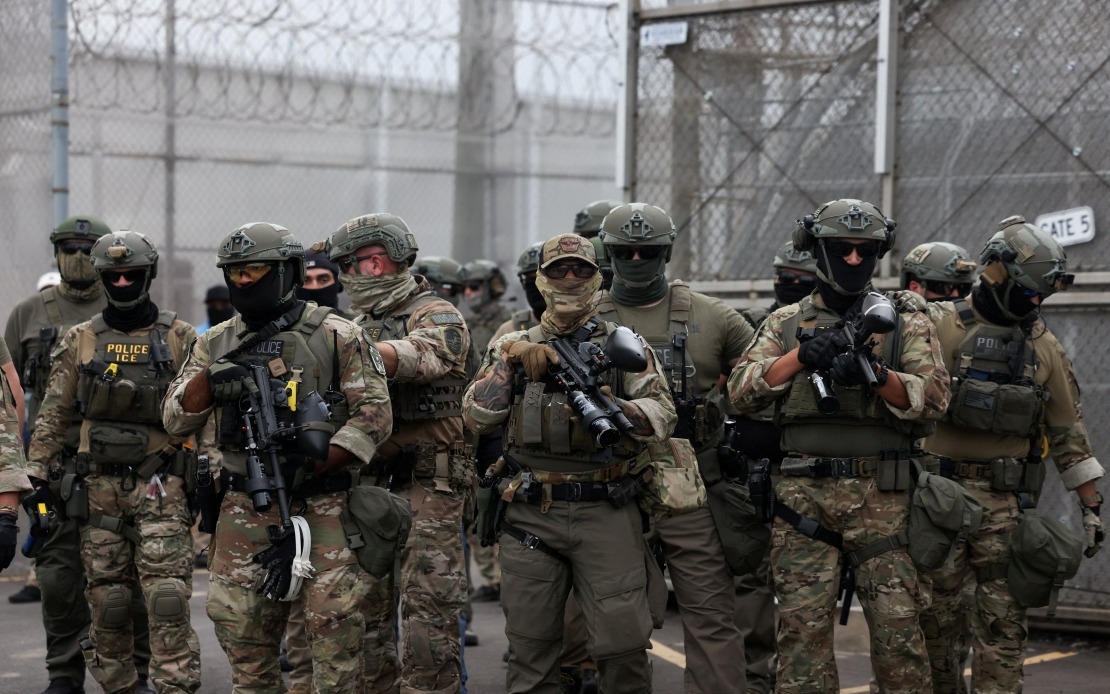
A federal judge in California has issued a sweeping nationwide injunction preventing United States Immigration and Customs Enforcement from conducting arrests at immigration courthouses, effectively dismantling a contentious enforcement practice that has sparked widespread concern among civil rights advocates and legal experts. The ruling represents a significant judicial check on the Trump administration's aggressive approach to immigration enforcement, which has intensified during the president's second term in office.
The practice targeted by the court involved ICE officers stationed at or near immigration court facilities to apprehend migrants, often at moments when individuals were in the building to attend their own deportation hearings or related legal proceedings. This tactic had been expanded substantially since the start of Trump's current administration, with the agency deploying officers more systematically across courthouse locations nationwide. The enforcement strategy marked a deliberate shift in approach, with new agency guidelines explicitly promoting the tactical advantages of courthouse-based arrests for furthering immigration enforcement objectives.
Immigration courts function as specialised judicial venues where removal proceedings against migrants are adjudicated. These venues handle complex legal questions about eligibility for asylum, cancellation of removal, family unity considerations, and other humanitarian protections embedded in US immigration law. The process is designed to provide due process protections, with migrants entitled to legal representation and opportunities to present evidence and testimony before an impartial judge. The courthouse arrest practice directly interfered with this framework by creating a climate of fear that discouraged migrants from appearing for scheduled hearings or presenting their cases fully.
Judicial analysis of the policy revealed that ICE had substantially modified its operational guidelines at the commencement of Trump's second term, explicitly repositioning courthouse arrests as a priority enforcement mechanism. The new directives highlighted operational efficiencies and enforcement metrics rather than addressing substantive legal or constitutional concerns. This transition occurred without the agency providing adequate rationale for the shift or meaningfully engaging with criticism from judicial actors, legal scholars, and immigrant advocacy organisations about potential harms to the judicial process itself.
The federal judge determined that the agency's failure to meaningfully consider how courthouse arrests might undermine judicial administration and due process protections rendered the new practice vulnerable to legal challenge on administrative law grounds. Courts reviewing agency actions require that significant policy shifts be accompanied by reasoned explanations acknowledging changed circumstances or contradicting prior positions. The court found that ICE's new guidelines fell short of this fundamental requirement, instead appearing to prioritise enforcement metrics without adequate deliberation about collateral consequences.
The implications of this ruling extend beyond the immediate question of arrest locations. It signals judicial willingness to scrutinise enforcement practices that, while nominally within agency authority, may compromise the integrity of the judicial process itself. Immigration courts in the United States have faced severe resource constraints and backlogs, with approximately 1.6 million pending cases as of recent counts. Adding uncertainty about personal safety during courthouse visits compounds these systemic pressures and threatens to undermine an already overburdened system's basic functionality.
For Southeast Asian nations and Malaysia specifically, this development carries relevance for regional migration dynamics. The United States remains a significant destination for migrants from Southeast Asia, including through temporary visa programmes and asylum channels. Enforcement developments in the US court system often influence broader migration patterns and decisions by potential migrants about whether to pursue legal pathways. A climate of fear around judicial proceedings can push people toward irregular channels rather than legitimate legal processes, potentially complicating bilateral cooperation on migration management between the US and regional governments.
The ruling also reflects broader tensions within the American legal system about how executive immigration enforcement should be constrained by judicial process protections. While federal agencies possess substantial discretion in immigration enforcement, that discretion is not unlimited and must be exercised consistently with statutory requirements and constitutional principles. The court's decision reinforces that even enforcement-focused policies must demonstrate fidelity to rule-of-law principles, including access to justice and due process.
Civil rights organisations and immigrant advocacy groups have emphasised that courthouse arrest practices particularly affect vulnerable populations including asylum seekers fleeing persecution, families separated by deportation, and individuals with substantial ties to the United States including citizen children. The practice created perverse incentives where legal options became less accessible precisely to those most in need of judicial relief, fundamentally undermining the immigration system's purpose of providing protection where warranted by law.
The Trump administration's immigration enforcement agenda reflects the president's consistent campaign messaging about deportations and border management, representing a core policy priority. However, this federal court decision demonstrates that implementation must proceed through lawful channels and cannot disregard judicial process considerations. The ruling will likely be appealed, setting up potential further litigation in higher courts about the balance between enforcement prerogatives and judicial administration principles.
For migrants and their legal representatives, the court's decision provides immediate protection against a practice that had created tangible risks of detention during court appearances. Legal practitioners handling immigration cases report that courthouse arrest fears had consistently prevented clients from attending hearings or presenting full cases, directly undermining judicial review. Restoration of confidence in the judiciary's independence represents a prerequisite for legitimate immigration enforcement and voluntary compliance with legal processes.
The decision ultimately reflects fundamental tensions about how democratic societies manage immigration enforcement while maintaining rule-of-law principles. Whether this judicial intervention will prove durable or will face reversal on appeal remains uncertain, but it establishes an important statement about the limits of executive enforcement tactics and the judiciary's role in preserving access to legal proceedings.

