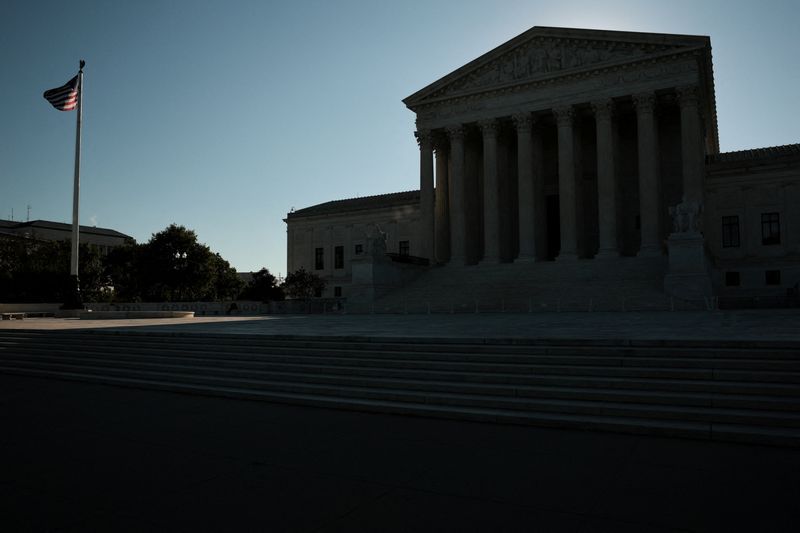
The US Supreme Court's decision to reject Tata Consultancy Services' appeal on Monday represents a decisive conclusion to a high-stakes intellectual property dispute that has consumed the Indian technology powerhouse since 2019. The court's refusal to hear the case means the $168 million award—comprising $56 million in compensatory damages and $112 million in punitive damages—stands as final judgment against the Bangalore-headquartered firm.
The case originated from DXC Technology's allegation that Tata had systematically misappropriated proprietary technology and accumulated expertise when hiring approximately 2,200 former Transamerica Insurance employees. According to DXC, these workers possessed intimate knowledge of and direct access to the life-insurance software platform that had been originally developed and licensed by CSC (Computer Sciences Corp), DXC's predecessor entity. The Dallas-based federal court lawsuit, which commenced in 2019, contended that Tata leveraged this human capital advantage to construct a competing insurance technology product, thereby capitalizing on confidential methodologies and technical frameworks it had no right to access.
Tata's defence throughout the proceedings centered on two principal arguments. The firm maintained that the information in question did not meet the legal threshold for trade secret protection, suggesting the data had become sufficiently known within industry circles to forfeit its protected status. Additionally, Tata argued it had accessed all relevant software and systems through legitimate business channels, implying no improper conduct had occurred. These arguments carried considerable weight in commercial litigation, where the distinction between competitive intelligence gathering and illegal misappropriation often turns on technical legal nuances.
The procedural journey of the case revealed how damages awards can escalate through the judicial system. When a jury delivered its non-binding advisory verdict in 2023, it recommended damages of $210 million against Tata, effectively labeling the conduct as willful trade secret theft. However, U.S. District Judge Brantley Starr exercised judicial discretion to reduce this figure to $168 million when entering his final judgment in 2024. Subsequently, the New Orleans-based Fifth Circuit Court of Appeals, which oversees federal cases from Texas and neighbouring states, upheld Judge Starr's modified award during its 2025 review.
The Supreme Court's dismissal is particularly significant because it involved a nuanced question about the proper application of American trade secrets law under the Defend Trade Secrets Act. This statute permits courts to award damages covering both compensatory relief—intended to restore the plaintiff to its pre-injury position—and unjust enrichment damages, which prevent defendants from retaining wrongfully obtained gains. Critically, the entire $168 million award to DXC rested exclusively on the unjust enrichment theory rather than demonstrated actual losses.
Tata's Supreme Court petition challenged this legal foundation, asserting that awarding unjust enrichment damages without first establishing concrete financial harm to the plaintiff violated fundamental principles of equity and contract law. The argument possessed considerable appeal in academic and legal circles, where scholars have long debated whether unjust enrichment damages should operate independently or remain tethered to provable losses. Tata further contended that the punitive component of the award—the $112 million portion designed to deter future misconduct—had swollen to excessive proportions and lacked proportionality to any actual wrongdoing.
DXC Technology mounted a vigorous defense of the lower courts' decisions, submitting filings to the Supreme Court emphasizing that the Fifth Circuit had merely applied established legal precedent to the specific facts determined by the jury at trial. DXC's counsel argued that the appellate court had undertaken a straightforward, fact-bound analysis rather than creating novel legal doctrine, and therefore the case presented no issue of sufficient constitutional or national importance to warrant Supreme Court intervention. This approach resonated with the justices, who typically reserve their limited docket space for cases establishing new legal principles or resolving conflicts among lower courts.
For Malaysian and Southeast Asian business readers, this outcome carries substantial implications for technology and professional services firms operating across borders. Indian IT companies have long maintained competitive advantages by recruiting talent from client organizations, and this verdict suggests American courts will scrutinize such practices with considerable skepticism when proprietary information is involved. The decision reinforces that hiring decisions, regardless of their commercial logic, cannot serve as a shield against trade secret liability if the hired employees' accumulated knowledge is demonstrably confidential and unauthorized.
The case also illuminates how intellectual property disputes can impose extraordinary financial burdens on technology companies, even those with substantial resources. The 2019 lawsuit consumed six years of litigation, multiple levels of appellate review, and ultimately the expenditure of legal resources to petition America's highest court. For organizations operating in the region—where cross-border talent mobility and competitive intensity in software development continue accelerating—the verdict underscores the necessity of implementing rigorous information security protocols and restrictive covenants around departing employees.
Moreover, the Supreme Court's silence on this matter represents an implicit endorsement of aggressive trade secrets enforcement in the technology sector. By declining to hear the appeal, the court essentially ratified the approach that unjust enrichment damages can operate independently of documented losses, provided sufficient evidence demonstrates wrongful conduct and resulting benefit to the defendant. This legal framework may embolden other companies to pursue similar claims against competitors who recruit their personnel.
The finality of the Supreme Court's rejection means Tata has exhausted its appellate remedies in American courts. While the firm could potentially pursue appeals based on newly discovered evidence or constitutional grounds, such paths are extraordinarily narrow and rarely successful. The $168 million judgment thus represents a binding financial obligation, though Tata may attempt to negotiate a settlement or structured payment arrangement with DXC. The case stands as a cautionary precedent for any multinational firm contemplating aggressive talent acquisition from competitors in technology-intensive industries.