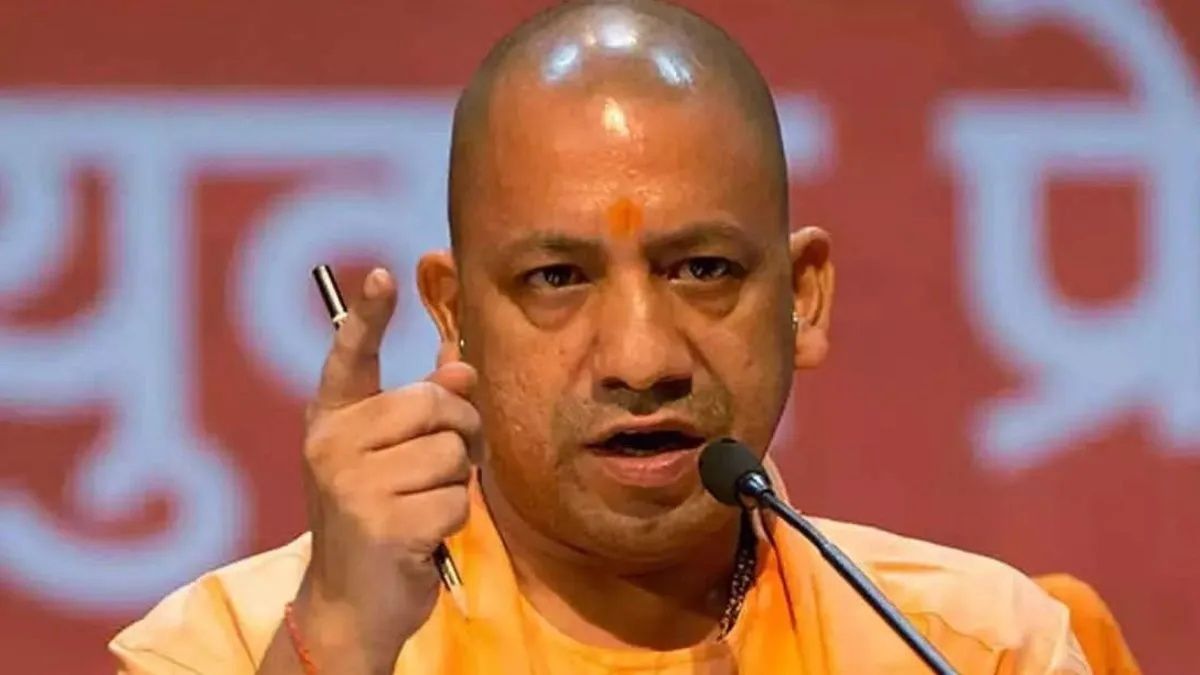
Uttar Pradesh Chief Minister Yogi Adityanath has declared that those who attempt to undermine public faith will face consequences, following the registration of a first information report in the Shri Ram Janmabhoomi Teerth Kshetra donation case. Speaking at a public gathering in Deoria on Friday while inaugurating development projects, the Chief Minister emphasised the government's commitment to investigating the matter thoroughly and maintaining the sanctity of what he described as a symbol of Indian spiritual heritage and national pride.
Addressing the controversy directly, Yogi stated that upon receiving recommendations from a Special Investigation Team, the administration immediately initiated appropriate action. He sought to assure devotees and the state's residents that the government would distinguish between factual findings and misinformation, pledging that anyone who seeks to compromise the reverence that people hold for their faith would be held accountable. The Chief Minister's language suggested a zero-tolerance approach, emphasising that no individual or group would receive preferential treatment or exemption from scrutiny.
During his remarks, Yogi recalled a June 19 visit to Ayodhya, during which he had already signalled that the administration would act decisively once investigation reports became available. He characterised Ayodhya as emblematic of collective Indian faith and the broader spiritual traditions of Hinduism, framing any disrespectful treatment of the site as incompatible with national values. His framing of the issue transcended the specific donation case, positioning it within a larger narrative about the protection of religious heritage and public sentiment.
The Chief Minister launched a pointed critique of opposition parties, specifically targeting the Congress and the Samajwadi Party. He alleged that these organisations have historically demonstrated hostility toward Hindu religious narratives and observances, citing what he characterised as their previous denial of Ram's historical significance and their legal opposition to the temple's construction. Yogi contended that such parties lack credibility in claiming concern for the integrity of faith, given their past track record in governance.
Yogi levelled broader accusations against the Samajwadi Party's administration, claiming that it had suppressed public religious expression through measures including restrictions on pilgrimages such as the Kanwar Yatra and bans on celebrations like Shri Krishna Janmotsav. He referenced communal incidents including the Lar riot, attributing responsibility to previous governments for allowing conditions that led to such violence. In his assessment, these parties have consistently prioritised suppressing religious expression over protecting communal harmony, making them unsuitable judges of faith-related matters.
Regarding Congress, Yogi expanded his critique beyond the immediate donation case, alleging systemic corruption and national mismanagement during its tenure in power. He suggested that the party's current criticism of the Ayodhya temple administration reflected a continuation of its historical pattern of undermining Hindu religious interests. The Chief Minister framed the present situation as another manifestation of opposition parties' inability to accept developments that resonate with large segments of India's population and the state's residents.
Yogi attributed the Samajwadi Party's recent allegations to frustration stemming from electoral losses and the cessation of what he described as systematic plunder under its previous governance. He argued that unable to regain political advantage through conventional means, the party had resorted to attacking the credibility of the temple administration and making unfounded allegations against Ram devotees. In his view, this represented a transparent attempt to deflect attention from its own governance failures and to manufacture controversy where none would organically exist.
The Chief Minister made a direct appeal to political opponents and the general public, urging restraint and respect for the sentiments of Ram devotees. Yogi warned against testing the patience of religious believers, suggesting that continued political agitation on the matter would prove counterproductive and potentially destabilising. He called for an end to what he characterised as baseless accusations and counter-accusations, framing such disputes as unproductive distractions from the investigation itself.
Yogi outlined two conditional pathways forward for opposition parties and other critics. Should they possess genuine evidence of wrongdoing, he invited them to present findings to the Special Investigation Team and cooperate in establishing facts. Conversely, if concrete evidence did not exist, he demanded that they cease making allegations and allow the investigation to proceed without political interference. This framing positioned the government as open to accountability while simultaneously challenging the substantive basis of criticism.
The Chief Minister's remarks underscored the government's position that the investigation remains under way and that political commentary should pause during the inquiry's pendency. He noted that senior administrative officers are directing the investigation and that political statements risk complicating their work. This assertion reflected the government's desire to shield the investigation from what it perceives as partisan distortion while maintaining its own political narrative regarding the case's implications.
The donation controversy at Shri Ram Janmabhoomi Teerth Kshetra represents a significant challenge to the temple administration's credibility, particularly given the structure's religious importance and the enormous public and state investment in its construction and operation. The case intersects religious sentiment with questions of institutional accountability, making it a politically sensitive matter across India's religious and political landscape. Yogi's forceful statement signals that the state administration intends to manage the investigation actively while maintaining strict control over the narrative surrounding it.
For Malaysian and Southeast Asian observers, the case illustrates how religious sentiment and political competition intersect in India's federal states, particularly in the Hindi heartland. The framing of opposition to corruption investigations as anti-religious demonstrates how administrative accountability becomes entangled with identity politics in India's polarised environment. The investigation's outcome will likely have implications for inter-communal relations in Uttar Pradesh and could influence the state's political dynamics leading toward future electoral contests.

