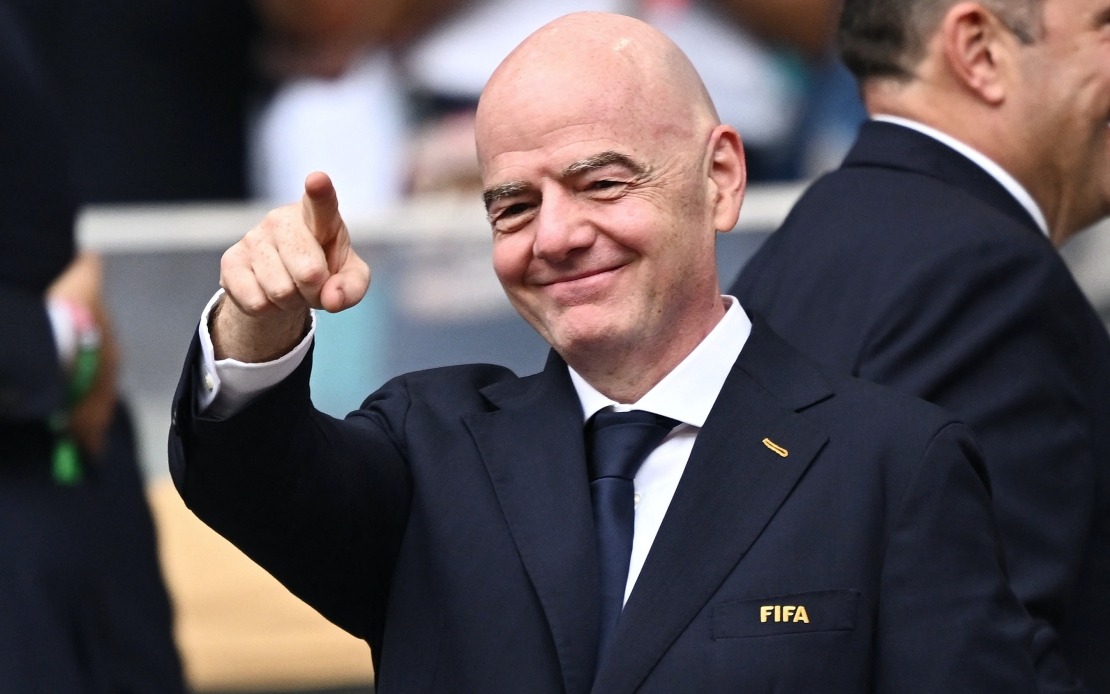
The Football Association of Wales has pulled its endorsement of FIFA president Gianni Infantino's bid for re-election, marking a significant erosion of support for the embattled leader following his controversial proposal to privatise World Cup assets. The decision came after Infantino's widely-criticised plan to establish FIFA Forward Enterprise (FFE)—designed to attract private investment into the organisation's flagship tournament—encountered fierce opposition from multiple continental confederations and was ultimately shelved last week.
Infantino's decade at the helm of world football's governing body now faces mounting pressure from key stakeholders across Europe and North America. The FAW statement released on Monday cited "failures in good governance, processes, leadership, values, stakeholder management, communications and sound judgement" as reasons for its loss of confidence in the FIFA president. The language represents an unusually direct rebuke from a national association that had previously indicated willingness to back his re-election campaign, underscoring the speed with which political sentiment has shifted against him within football's international hierarchy.
The withdrawal of Welsh support reflects broader disquiet among European and North American football authorities. The English Football Association, which has not yet formally announced a change in stance, is understood to have sent communications to FIFA signalling its withdrawal of support. Similarly, CONCACAF—the confederation representing associations from North America, Central America, and the Caribbean—issued a statement demanding a comprehensive review of Infantino's leadership over the weekend. These moves are particularly significant given that UEFA and CONCACAF collectively represent 96 national associations with substantial voting influence within FIFA's 211-member structure.
The political mathematics surrounding potential action against Infantino remain complex but increasingly precarious for his position. Under FIFA's constitutional framework, just 43 national associations possess the power to trigger a vote of no confidence that would force an Extraordinary Congress. However, observers note that such a motion would only gain traction if proponents believed they could muster majority support among FIFA's full membership to actually unseat the president at the subsequent Congress. The threshold for triggering the mechanism is therefore much lower than the threshold for success, creating a delicate tactical situation.
European political figures have entered the fray with unusual directness. Prime Minister Andy Burnham stated on Friday that Infantino represents "the wrong man" to lead FIFA, while the English Football Association formally called for a "full and robust review" of his leadership. This level of political intervention from a major democratic nation underscores the extent to which the FFE proposal has damaged Infantino's credibility beyond football circles and raised questions about institutional governance at FIFA's highest levels.
Infantino's attempt to sell stakes in the World Cup to private investors was rejected by three continental confederations before being formally abandoned. The proposal had been designed to generate additional revenue streams for FIFA and its member associations, but critics argued it fundamentally compromised the sport's democratic character by allowing commercial interests greater influence over the world's largest sporting event. The governance missteps surrounding the initiative—including insufficient stakeholder consultation and apparent miscalculation of political opposition—appear to have convinced the FAW that Infantino lacks the judgment and strategic acumen necessary to navigate FIFA's complex institutional landscape.
Some African and Asian associations have moved in the opposite direction, issuing statements of support for Infantino over the weekend. Nations including Morocco, Egypt, and Qatar have publicly backed the FIFA president, suggesting that opposition to him remains geographically concentrated in Europe and North America rather than truly universal. This regional split could prove consequential should formal action be contemplated, as it indicates that Infantino retains sufficient support in other continents to potentially survive a confidence vote, provided the motion actually reaches that stage.
VICTOR MONTAGLIANI, the current FIFA vice-president and president of CONCACAF, has been identified by sources as a potential alternative candidate should a competitive election for the presidency materialise. Montagliani's positioning within international football politics—leading a confederation spanning 41 nations and possessing an influential seat on FIFA's executive apparatus—suggests he could mount a credible challenge to Infantino if circumstances warrant it. His apparent willingness to consider running, as indicated through conversations with journalists, signals that alternative leadership candidates are preparing contingency scenarios.
The implications for Malaysian and Southeast Asian football authorities warrant consideration. The AFC, which encompasses the region, has not yet issued a formal statement regarding Infantino's position, leaving Southeast Asian voting patterns uncertain. However, the gathering momentum among European, North American, and some African confederations suggests that FIFA's power structure is undergoing meaningful realignment. Any formal challenge to Infantino would create opportunities for Asian associations, including those in Southeast Asia, to exercise meaningful influence over FIFA's future direction and potentially negotiate enhanced support for regional football development initiatives.
The FAW's decision carries symbolic weight extending beyond voting mathematics. Wales represents a smaller European nation with limited FIFA influence compared to England, Germany, or France, yet it has chosen to break with earlier conditional support for Infantino. This suggests that even less prominent associations feel empowered—or compelled by domestic political pressure—to withdraw backing from the FIFA president. The cascading nature of these withdrawals indicates that Infantino's position may continue deteriorating unless he undertakes significant remedial action to rebuild institutional trust.
Infantino has not yet issued a formal response to the accumulating criticism and withdrawal of support. His ability to survive this crisis may depend less on defending the FFE proposal itself—now abandoned—and more on his capacity to convince wavering confederations that he represents the best available steward for world football's governance. The outcome remains uncertain, but the scale and speed of opposition development suggests that FIFA's institutional dynamics have fundamentally shifted against the incumbent president.

