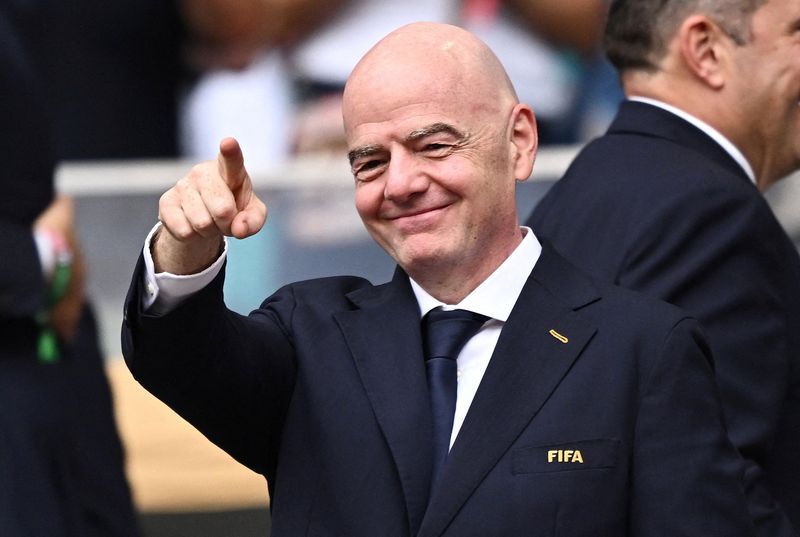
Wales has become the first national football federation to formally withdraw its endorsement of FIFA President Gianni Infantino ahead of his anticipated re-election campaign for the 2027–2031 term, marking a significant blow to the Swiss administrator's previously unchallenged grip on world football governance. The Football Association of Wales issued a terse statement on Friday declaring that it no longer had confidence in Infantino's leadership, citing what it described as systemic failures in governance, decision-making processes, stakeholder management, and core values within the global football body.
The timing of Wales's withdrawal is directly tied to the spectacular unraveling of one of Infantino's signature initiatives: an ambitious scheme to unlock approximately $4.2 billion in fresh capital by selling roughly a 20% stake in a newly created commercial entity that would oversee major FIFA competitions, including the World Cup. The proposal, which Infantino had championed as a transformative solution to FIFA's financial challenges and investment needs, faced unexpectedly fierce resistance from multiple stakeholder groups and ultimately collapsed on Friday after mounting pressure from regional confederations and member associations unwilling to countenance such a fundamental restructuring of the organisation's commercial architecture.
Infantino's failed privatisation gambit has exposed deep fractures within FIFA's stakeholder ecosystem, suggesting that his previously assured position as the organisation's leader may be far less secure than recent years had suggested. Having taken the helm from Sepp Blatter in 2016, Infantino had consolidated power remarkably quickly, running unopposed in two previous re-election cycles and appearing to command the support necessary to secure whatever position he sought. His announcement in April that he intended to contest a fourth term as FIFA president had seemed a foregone conclusion, with observers treating his re-election as an administrative formality rather than a genuine competitive contest.
Yet the collapse of the World Cup stake sale has fundamentally altered this landscape. The abrupt retreat from the proposal, forced by the intensity of external opposition, has handed opponents a concrete symbol of Infantino's alleged mismanagement and poor judgment in leadership. The Welsh FA's statement pointedly emphasised that putting the best interests of football first is fundamental to the role, and that Infantino's conduct in championing and then abandoning the scheme demonstrated a failure to meet this basic standard.
Infantino now faces unprecedented criticism from the sport's most powerful regional confederation. UEFA, the European governing body, spearheaded the resistance to the privatisation plan and has welcomed its abandonment. More significantly, UEFA and CONCACAF, which governs football in North and Central America and the Caribbean, both publicly declared on Saturday that they had lost confidence in Infantino's capacity to lead FIFA. While UEFA stopped short of confirming media reports that it was preparing formal legal action against FIFA over the stake sale initiative, the confederation did send a document preservation order instructing FIFA to safeguard all relevant electronic communications, files, and data—a procedural step that typically signals serious legal consideration and investigation.
The scale of institutional opposition arrayed against Infantino is striking. Beyond UEFA and CONCACAF's formal statements, and Wales's withdrawal of support, the failed proposal has mobilised a coalition of member associations and regional bodies united by the conviction that the privatisation plan represented a dangerous concentration of commercial power and a departure from football's core governance principles. The fact that Infantino's initiative collapsed under the weight of this resistance underscores the limits of his unilateral authority within FIFA, despite his control of the bureaucratic apparatus.
Looking ahead to March's FIFA Congress in Morocco, observers and football governance experts have suggested that Infantino's path to re-election may prove considerably more complicated than previously assumed. While he still commands significant institutional resources and the backing of numerous member associations, the backlash against the World Cup stake plan has revealed latent dissatisfaction within FIFA's membership base and demonstrated that organised coalitions of member federations can successfully oppose his signature initiatives. This dynamic could reshape the dynamics of the March congress, introducing genuine contestation into a process that had appeared settled.
For Malaysian observers and Southeast Asian football stakeholders, the implications of this institutional turmoil at FIFA merit close attention. Malaysia's football development and international standing partly depend on FIFA's governance stability and the direction of the organisation's priorities. A FIFA president facing domestic political challenges may have less capacity to respond to the concerns and aspirations of smaller footballing nations. Additionally, if the World Cup commercial structure undergoes further transformation in the coming years—whether in the direction Infantino originally proposed or in alternative forms—the outcome could affect how revenue from major tournaments flows to developing football nations and confederations.
The broader significance of Wales's withdrawal and UEFA's public loss of confidence in Infantino extends beyond the immediate question of his re-election prospects. It signals that FIFA's membership, despite decades of centralised presidential authority, retains the capacity to mobilise institutional resistance when leadership priorities clash fundamentally with their interests. The failed privatisation gambit may thus prove to be a watershed moment in FIFA governance, establishing a precedent that even the organisation's most powerful figures must genuinely account for stakeholder views rather than assuming rubber-stamp approval for their strategic initiatives.
Infantino's response to this unprecedented challenge remains to be seen. FIFA declined to comment when approached by media, suggesting the organisation is still calibrating its communication strategy in the face of mounting pressure. Whether Infantino will attempt to salvage his re-election bid by substantially altering his governance approach, or whether regional confederations and national associations will coalesce around an alternative candidate, will become clear in the months ahead as the March Congress approaches.

