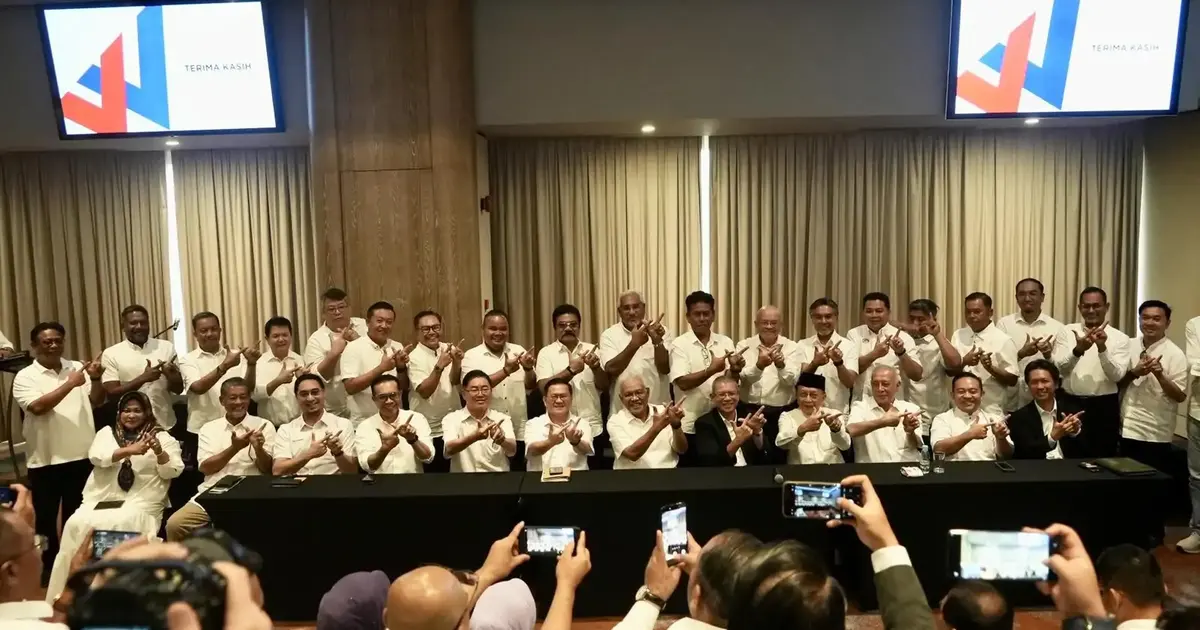
The admission of Wawasan party into Perikatan Nasional has been formally settled through a democratic vote at the coalition's highest decision-making body, according to PN election director Sanusi. His statement puts to rest ongoing uncertainty about the party's status within the bloc and reinforces that the coalition's established procedures were followed in incorporating the new political entity.
Sanusi's clarification addresses the procedural legitimacy of Wawasan's entry, emphasizing that the decision emerged from a properly convened Supreme Council meeting where members exercised their voting rights. This framing underscores that the process was not unilateral or imposed by a single faction, but rather reflected the collective will of the coalition's leadership. The explicit mention of a majority vote signals that the decision, while apparently not unanimous, carried sufficient weight behind it to be considered binding.
The backdrop to this announcement involves objections lodged by Bersatu, Perikatan Nasional's largest single component party. Bersatu's leadership had expressed reservations about welcoming Wawasan into the coalition, citing concerns that ranged from the new party's political orientation to questions about its electoral viability and compatibility with PN's strategic direction. These concerns represented a formal dissent from within the coalition's ranks, making Sanusi's acknowledgment of them a significant gesture toward transparency.
Yet while Sanusi noted that Bersatu's objections were "noted," the phrasing carries an important implication: being heard is not the same as being heeded. The Supreme Council proceeded with its decision despite the reservations, suggesting that other major coalition partners—likely PAS and potentially smaller component parties—held sufficient collective support for Wawasan's admission to overcome Bersatu's opposition. This dynamic reflects the tension inherent in any multi-party coalition, where no single member, regardless of size, wields outright veto power.
Wawasan's integration into Perikatan Nasional carries wider ramifications for Malaysia's political landscape. The party represents an additional player in a political bloc that has been positioning itself as an alternative to Pakatan Harapan. Its admission suggests PN intends to broaden its electoral appeal and organizational reach ahead of key political contests at both state and federal levels. For Malaysian voters, this means the coalition's character and policy platform could evolve as Wawasan's priorities become embedded within PN's structures.
The internal friction over Wawasan's admission also highlights existing fault lines within Perikatan Nasional. Bersatu, despite being the party of former Prime Minister Mahathir Mohamad and historically significant in PN's formation, found itself outvoted on a major membership decision. This outcome may embolden other coalition members to pursue their strategic preferences without fear of automatic deference to Bersatu's position, potentially shifting the internal power balance within PN over time.
For Southeast Asian political observers, the episode illustrates how coalition management remains a persistent challenge even when formal democratic procedures exist. Voting mechanisms can resolve disputes, but they do not eliminate underlying disagreements about direction and identity. Bersatu's vocal objections, even though they did not block Wawasan's entry, signal that cooperation within PN continues to require ongoing negotiation and accommodation rather than automatic alignment.
The Supreme Council's decision also raises questions about Wawasan's own political trajectory and bargaining position within the coalition. As a newly admitted party, Wawasan enters PN without the historical weight or organizational infrastructure of established component parties. This circumstance could affect the influence it wields in coalition decision-making and its ability to secure favorable allocation of electoral constituencies and ministerial opportunities should PN advance to government.
Sanusi's public reaffirmation of the decision's legitimacy serves a dual purpose: it reassures coalition members that proper procedures are being observed, and it signals to external observers that PN operates with institutional coherence despite internal disagreements. By grounding his statement in the formal machinery of the Supreme Council and majority voting, Sanusi frames the outcome as procedurally sound and therefore beyond legitimate challenge, even if not everyone remains satisfied.
Looking ahead, Bersatu's response to being overruled will bear watching. Coalition partners that experience repeated defeats in internal votes may eventually reassess their membership, particularly if they perceive their interests as systematically disregarded. However, for a party of Bersatu's scale and political relevance, withdrawal from PN would carry steep costs, including loss of influence and potential electoral consequences in constituencies where PN branding carries weight.
The resolution of Wawasan's admission status brings clarity to an unsettled question, but it also underscores that Perikatan Nasional remains a coalition marked by genuine internal competition. This messiness, while occasionally visible to the public, may ultimately reflect a healthier institutional dynamic than wholesale suppression of dissenting views. Nevertheless, Malaysian political observers will continue monitoring whether these internal dynamics strengthen or weaken PN's cohesion as it navigates the electoral and governance challenges ahead.

