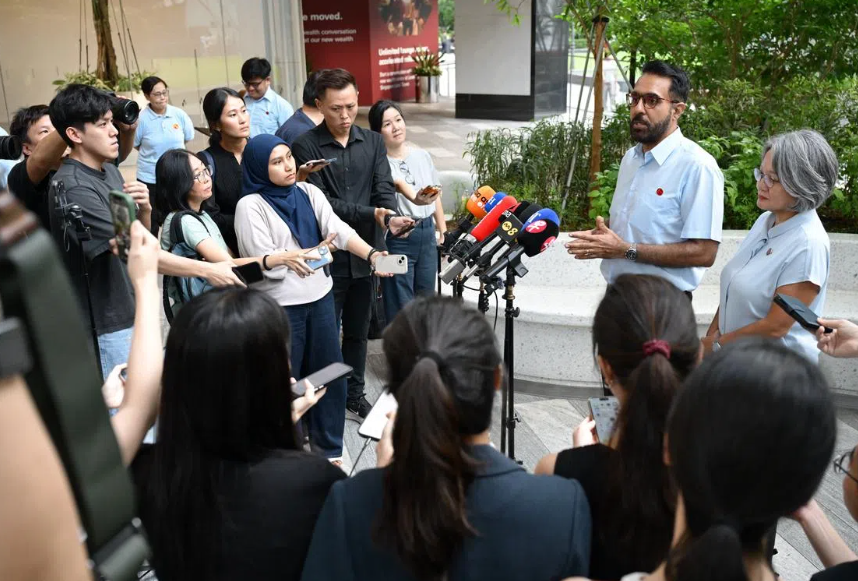
After weathering the most serious leadership challenge since his election in 2018, Pritam Singh emerged from a marathon six-hour session of meetings on 28 June with his grip on the Workers Party firmly intact. The opposition chief's composed demeanour as he addressed waiting journalists—a relaxed smile and confident responses—signalled that internal turbulence had subsided, at least for now. When asked about party unity, Singh pointed to the voting results as validation: "Based on the vote of the special cadre members conference, I would say the party is pretty united." The cadre vote told the story starkly: 82 of the 106 members present backed him remaining as party leader, clearing away months of uncertainty that had shadowed Singapore's main opposition force.
The challenge Singh faced was far from routine party politics. A faction of dissatisfied cadres had triggered the extraordinary conference specifically to hold their leader accountable for his conviction over misleading Parliament—a charge that had been upheld by the High Court in December 2025 on appeal. The roots ran deeper still, tracing back to the 2021 revelations that former Sengkang GRC MP Raeesah Khan had fabricated an account of police misconduct during a parliamentary statement. Singh's involvement in Khan's decision to prolong her false narrative eventually landed him in court. Unlike previous party elections where Singh had returned unopposed, this time dissenters hoped to extract genuine accountability through a public process. Some imagined a proper interrogation of his conduct; others reportedly lobbied for a challenger to step forward and contest the leadership position outright.
Yet the rebellious coalition found itself unable to translate discontent into structural change. While Singh was indeed questioned during the meetings, the inquisition lacked the teeth opponents apparently envisioned. Remarkably, some cadres who spoke up actually defended their leader, fracturing the opposition's cohesion. More significantly, despite efforts to encourage a rival candidate to run right up until the week of the conference, no one materialised to challenge Singh directly. Without a visible alternative, the vote became a binary choice: support the incumbent or back an empty slate. The absence of competition essentially predetermined the outcome, revealing the limits of internal dissent when a party's talented MPs lack either the ambition or the party support necessary to mount a leadership bid.
The Workers Party's disciplinary machinery had already signalled its intent to protect Singh. Although an internal inquiry found that he had breached party constitutional provisions, the leadership body issued only a formal letter of reprimand—a measure many analysts characterised as remarkably lenient given the gravity of misleading Parliament. This lenience proved consequential: when a parliamentary motion deemed Singh unsuitable to remain as Leader of the Opposition following his conviction, Prime Minister Lawrence Wong moved to remove him from that ceremonial post. Notably, the Workers Party refused to nominate a replacement, signalling to the government and the public alike that the party stood by its leader even as his credibility lay in tatters.
The show of solidarity extended to the party's elder statesman, Low Thia Khiang, the architect of modern Workers Party politics. When asked by reporters before the 28 June meetings, Low stated unequivocally that he still supported Singh. His endorsement carried weight within the organisation, lending legitimacy to the decision to retain the leader among cadres who might have harboured doubts. That the party's foundational figure did not distance himself from Singh—despite the potential reputational damage—demonstrated the depth of institutional backing. For opposition parties, such displays of unity matter enormously: several rival opposition movements across the region have been crippled by public infighting and leadership instability that eroded voter confidence far more than individual scandals.
With the internal crisis apparently contained, the Workers Party now faces the practical challenge of rehabilitating its standing among middle-ground voters—precisely the constituency that any growing opposition party must win to break the People's Action Party's three-decade dominance. The May 2025 general election, held after Singh's initial conviction but before the High Court upheld his guilty verdict, offered some encouraging signs. The party not only held its existing constituencies but expanded, securing two Non-Constituency MP seats. Supporters view these results as evidence that public opinion has moved beyond the parliamentary lying saga, validating the decision to stand by their leader. Yet the election was held under specific timing circumstances that may not recur, and voters' full reckoning with Singh's conviction remained incomplete.
The party's internal dynamics also point toward organisational transition. Sylvia Lim, the party chair for 23 years, hinted at planned leadership renewal, suggesting that the Workers Party recognises the need to develop fresh faces and distribute power more widely. Singh's re-election, however, exposed a harsh reality: the party currently lacks anyone with sufficient parliamentary experience and public standing to credibly challenge him. This talent gap matters because it suggests the Workers Party, despite growth, remains relatively thin in senior leadership depth compared to the ruling coalition. Building a bench of capable alternatives would strengthen the party's long-term prospects, even if it complicates current succession planning.
Critically, the decision to back Singh, while internally unifying, raises uncomfortable questions about whether institutional survival has superseded principled governance. When asked at the doorstop interview how he would respond to critics calling him a "convicted liar," Singh deflected to his website and asserted that his parliamentary position remained unchanged. The non-answer was telling: the Workers Party had opted for political pragmatism over a direct confrontation with the ethical dimensions of the conviction. For voters genuinely concerned about parliamentary integrity and honesty in politics, this response may register as evasive and troubling.
The Workers Party's current advantage is that it remains less scrutinised by Singapore's electorate than the ruling People's Action Party, affording it greater latitude to weather internal scandals. Many supporters appear willing to view Singh's legal troubles primarily through a partisan lens—as a political persecution rather than a fundamental character question. Yet this tolerance has limits. As the opposition party grows and its ambitions expand, voter expectations for transparency and accountability will intensify. The middle-ground voters the Workers Party needs to win next election are precisely those least inclined to forgive perceived hypocrisy or institutional self-protection masquerading as solidarity. Singh's survival as leader may have bought time and stability, but it has not resolved whether the party can convincingly position itself as a principled alternative to the establishment.

