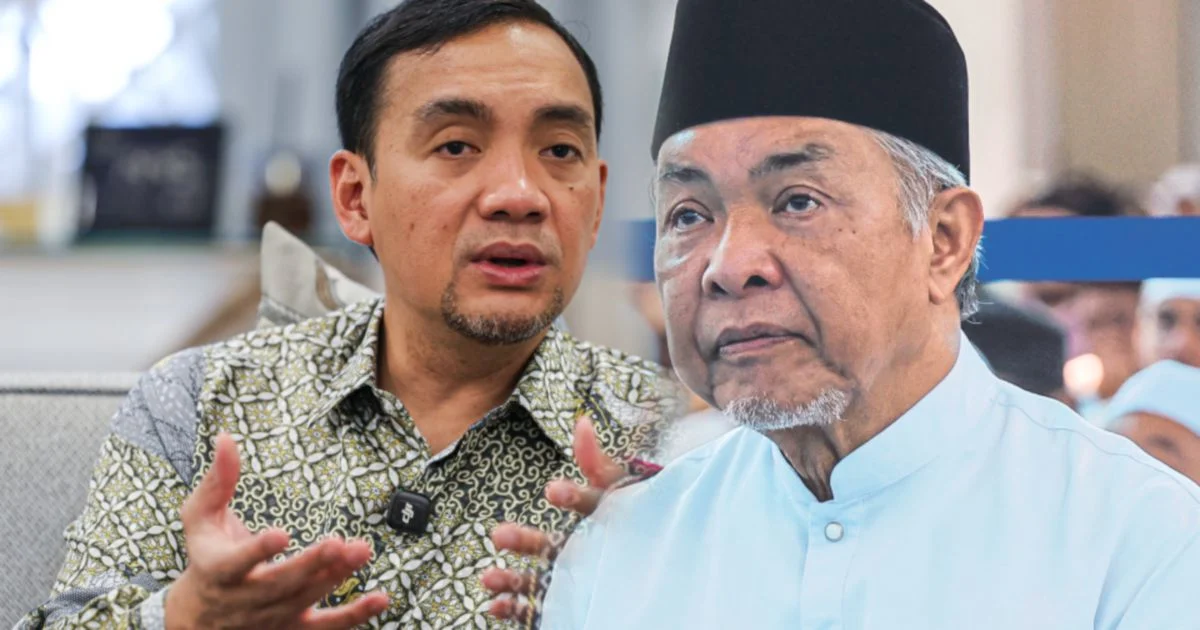
Deputy Prime Minister Datuk Seri Zahid Hamidi has publicly refuted claims that any formal directive exists restricting caretaker Johor Menteri Besar Datuk Onn Hafiz Ghazi's access to Federal Land Development Authority (Felda) settlements across the state. His statement comes amid ongoing political maneuvering in the crucial lead-up to the Johor state elections, where control over agricultural constituencies represents a significant electoral battleground.
The clarification addresses earlier speculation about whether political tensions within the ruling coalition had translated into concrete barriers preventing the caretaker chief minister from campaigning or conducting official duties in communities historically tied to Felda. These settlements, home to tens of thousands of smallholder farmers and their families, represent a bloc of traditionally influential voters whose support remains pivotal for both Barisan Nasional and Opposition parties pursuing state-level majorities.
Felda settlements have long served as crucial political arenas in Johor politics. The cooperative's land schemes, concentrated primarily in the interior regions of the state, encompass numerous constituencies and voting districts. Access to these communities during election periods allows political figures to directly address farmer concerns, distribute campaign materials, and reinforce party messaging among this traditionally conservative and organized voter demographic. The settlements function almost as distinct political ecosystems, with established leadership structures and communication networks that amplify or constrain campaign effectiveness.
Zahid's denial becomes particularly significant given the complex factional dynamics within the United Malays National Organisation and the broader Barisan Nasional coalition currently managing Johor's administration through caretaker protocols. Political observers have noted that restrictions on ministerial access to specific constituencies, while officially uncommon, occasionally emerge as subtle power plays during periods of government transition or factional jostling. By publicly denying such instructions, Zahid has attempted to forestall narratives suggesting internal party discord that might undermine coalition unity messaging.
Onn Hafiz's position as caretaker Menteri Besar places him in a constitutionally constrained role, limiting his ability to exercise full executive authority during the inter-election period. Simultaneously, this transitional status does not explicitly prevent him from conducting legitimate administrative functions or engaging with constituents. Any perceived restriction would thus operate more through informal political channels than formal governmental mechanisms, making Zahid's public statement an effort to clarify that no institutional barriers exist.
The Felda question reflects broader strategic interests across competing political forces in Johor. The Federal Land Development Authority, established decades ago as a cornerstone of rural development policy, maintains significant institutional autonomy and cultural influence within its settlements. Leadership elections, cooperative governance decisions, and policy advocacy from Felda community representatives can materially affect state-level political calculations. Both ruling and opposition coalitions therefore invest considerable effort in cultivating relationships within these communities and ensuring access during critical electoral periods.
Zahid's intervention also addresses potential concerns among Felda constituents themselves, who might worry that political disputes at higher levels could translate into disrupted government services or neglected development needs in their areas. By explicitly denying restrictions on the caretaker Menteri Besar's access, Zahid signals that administrative normalcy continues and that factional tensions, if they exist elsewhere within the coalition, should not affect rural communities' expectations of responsive governance.
The timing of this clarification matters considerably. As Johor moves closer to state elections, the campaign infrastructure gradually mobilizes across constituencies, and political actors position themselves for maximum advantage. Caretaker Menteri Besar Onn Hafiz must balance his diminished executive authority against the opportunity to maintain political presence and relationships ahead of potential candidacy in the forthcoming elections. Any successful restrictions on his access to Felda areas would have substantially weakened his campaign positioning.
Regionally, developments in Johor politics carry implications for Peninsula-wide coalition dynamics. Johor's size, resources, and political weight within Barisan Nasional make state-level disputes there consequential for federal political calculations. Zahid's role as both Deputy Prime Minister and a central figure in Johor's political ecosystem means his public statements carry particular weight in reassuring various stakeholders about coalition stability and institutional propriety during this sensitive period.
The denial also implicitly reassures Felda leadership and settlement administrators that they should provide unrestricted facilitation for official visits from the caretaker Menteri Besar and his government representatives. Felda cooperative leadership, while politically sophisticated, typically prefers explicit clarity from senior coalition figures regarding their operational space, rather than navigating ambiguity about access and protocol during electoral periods.

