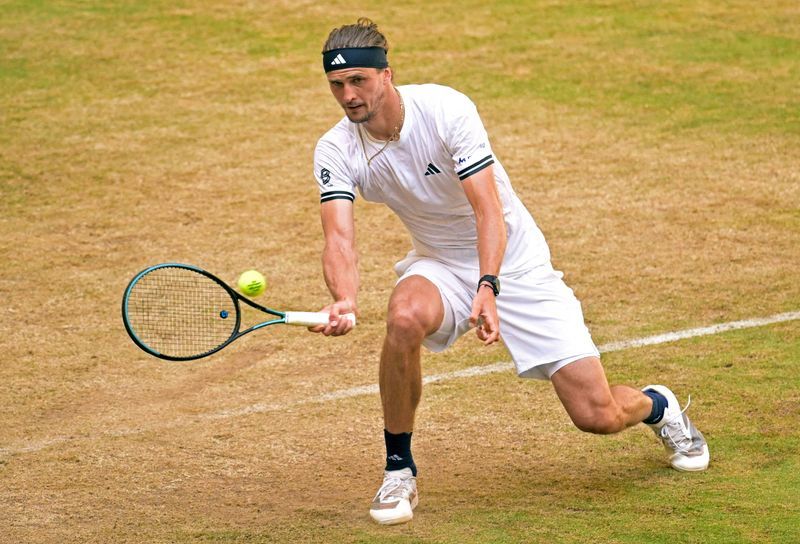
Alexander Zverev's pursuit of another title at the Halle Open ended in disappointment on Saturday when he fell to American Taylor Fritz 6-7(4) 6-4 7-5 in the semi-finals, but the German world number three has attributed much of his poor performance to a critical malfunction in the medical technology he relies on daily. The match, stretching two hours and 39 minutes, proved especially taxing because Zverev's glucose sensor—a device integral to his diabetes management—delivered dangerously misleading information at a crucial moment in his athletic career.
Zverev, who claimed the French Open title this season, approached the Halle encounter already facing headwinds. His recent history against Fritz showed five consecutive losses before Saturday's semi-final, establishing a pattern of vulnerability against the American that may have contributed to the pressure surrounding the contest. The accumulated difficulties culminated in a straightforward defeat that the German acknowledges his opponent earned through superior play, despite the medical complications that hampered his own performance throughout the encounter.
The core problem emerged from Zverev's reliance on glucose monitoring technology, which gave inverted readings that bore no resemblance to his actual blood sugar levels. When his sensor indicated dangerously high values, his actual glucose was critically low—a reversal that forced him to self-administer far more insulin than his body genuinely required. This miscalculation triggered a cascade of physiological problems during the opening stages of his match, leaving him feeling acutely unwell and struggling to maintain the intensity necessary for competitive tennis at the highest level.
The immediate consequence proved severe. During the first 45 minutes of play, Zverev consumed approximately 350 grams of sugar in an attempt to counteract the effects of his miscalculated insulin injection. Despite this aggressive supplementation, he remained unwell throughout this critical period, describing the physical sensation as absolutely terrible. For an athlete whose career depends on peak physical and mental sharpness, such a sustained period of distress represented a significant competitive disadvantage that no amount of determination could fully overcome.
Zverev has managed Type 1 diabetes since early childhood, diagnosed at just four years old, and has built his professional tennis career around sophisticated medical management. He employs Medtronic technology—glucose sensors and monitoring systems—to maintain stable blood sugar levels both during training and competition. This framework has enabled him to compete at the sport's highest level for years, allowing him to schedule meals, calculate insulin doses, and anticipate glucose fluctuations with considerable precision. The reliability of this system has been fundamental to his success on the ATP tour.
What makes this particular malfunction especially striking is its rarity in Zverev's experience. He has been using glucose sensors since approximately 2016 or 2017, meaning he has depended on this technology for roughly nine years of professional competition. Over that substantial period, he had never encountered such a significant error in the sensor's readings, underscoring how unusual and unexpected this Saturday's technical failure proved to be. The incident represents a rare breach in the medical infrastructure that has consistently supported his athletic ambitions.
Yet Zverev's response to the situation revealed both his acceptance of his opponent's superiority and his own professionalism in defeat. Rather than dwelling on the medical circumstances that undermined his performance, he straightforwardly acknowledged that Taylor Fritz played the better tennis on the day and deserved to advance. This magnanimity is characteristic of mature athletes who understand that excuses, however legitimate, ultimately carry less weight than competitive results. Fritz's victory stands regardless of the complications Zverev faced, and the German's candour about his technical difficulties did not diminish his recognition of his opponent's merit.
For Malaysian and Southeast Asian sports followers, Zverev's experience offers insight into the medical complexities that elite athletes managing chronic conditions navigate routinely. Many readers will appreciate the discipline required to maintain world-class competitive standards while managing a lifelong condition that demands constant vigilance. The incident also highlights how dependent modern professional sport has become on reliable technology, whether monitoring systems for athletes with medical needs or broader performance tracking tools.
Zverev's concern about the upcoming Wimbledon Championships, beginning June 29 and running through July 12, provides context for the urgency surrounding the sensor malfunction. Rather than permitting anxiety about technological failure to cloud his preparation, he has already signalled that he does not view the Halle incident as a reason for concern heading into grass-court season. This forward-looking perspective suggests confidence in both the device's general reliability and his own capacity to identify and address such issues should they recur.
The immediate question now centres on whether Medtronic and Zverev's medical team will investigate the root cause of Saturday's sensor error, and whether any adjustments might be necessary before Wimbledon. His departure from Halle, while disappointing, comes with valuable warning that a previously foolproof system briefly malfunctioned—information that could prove crucial for ensuring nothing similar disrupts his grass-court campaign. The loss itself, while stinging, may ultimately deliver an important safety lesson that improves his medical management heading into the year's third Grand Slam.

