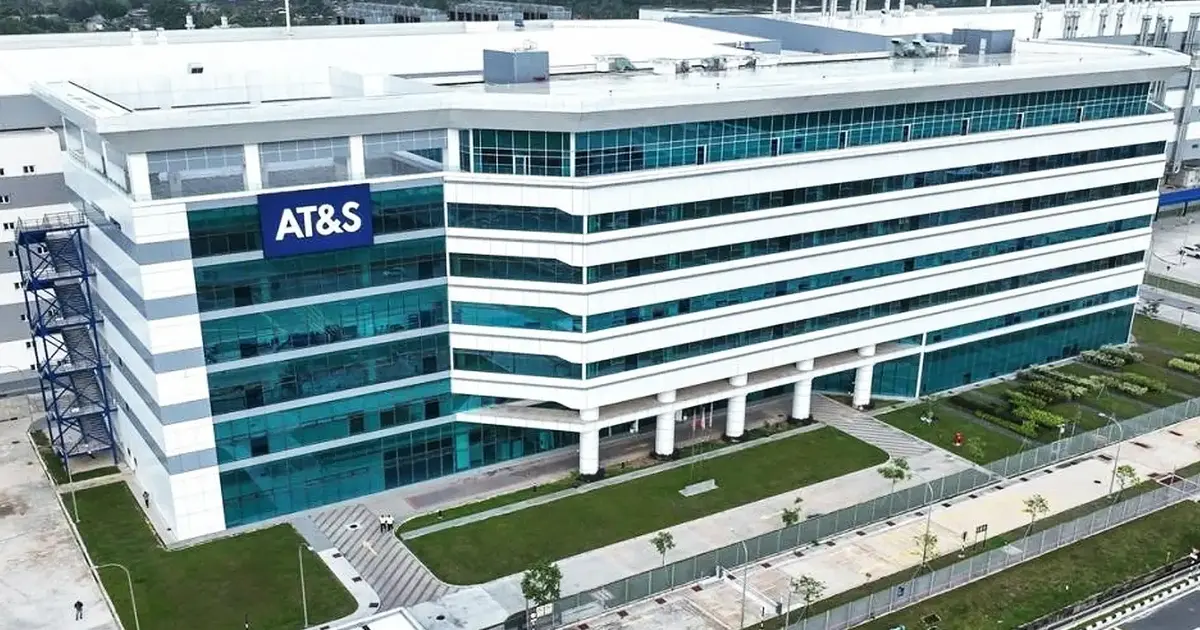
Austria-based semiconductor manufacturer AT&S has announced a RM9.4 billion investment in Kulim, Kedah, reinforcing Malaysia's position as a competitive destination for high-tech manufacturing in Southeast Asia. Prime Minister Anwar Ibrahim characterised the commitment as validation of the country's economic fundamentals and institutional stability, underscoring how international capital flows increasingly favour nations perceived as well-governed and economically transparent.
The scale of AT&S's investment reflects the substantial capital requirements embedded in modern semiconductor production, where fabrication plants demand cutting-edge infrastructure, skilled labour, and reliable supply chains. By establishing operations in Kulim, the Austrian group gains proximity to existing semiconductor clusters in the region whilst tapping Malaysia's established ecosystem of component manufacturers and logistics networks. This clustering effect creates spillover benefits—local suppliers expand, service providers multiply, and technology transfer accelerates through workforce mobility and partnership arrangements.
Anwar's emphasis on governance and investor confidence carries particular resonance in the current geopolitical climate. Semiconductor supply chains have become strategically significant following global disruptions over the past decade, prompting major manufacturers to diversify their geographic footprint away from concentration in Taiwan and South Korea. Countries demonstrating institutional reliability, transparent regulatory frameworks, and predictable policy environments have emerged as preferred alternatives. Malaysia's track record of political stability under successive administrations, combined with established intellectual property protections and labour regulations, positions it advantageously against competitors across Southeast Asia.
The timing of AT&S's commitment also reflects broader industry trends toward backward integration and localised production. Rather than relying exclusively on offshore assembly, semiconductor firms increasingly establish comprehensive manufacturing capabilities within target markets, capturing higher margins and reducing logistics costs. AT&S's Kulim facility likely represents a multi-purpose operation encompassing design, testing, and assembly functions—activities that generate substantial employment across skill tiers and support ancillary industries including packaging materials, quality assurance, and technical consulting.
For Malaysia's immediate economic outlook, the RM9.4 billion capital injection translates into direct infrastructure development, employment generation during construction phases, and ongoing operational spending across multiple sectors. Beyond direct effects, the announcement sends powerful signals to competing investors in electronics, advanced manufacturing, and technology services that Malaysia remains open for substantial long-term commitments. Such confidence cascades through investment decisions as other multinationals evaluate market entry or expansion strategies, potentially unlocking additional capital inflows within related industries.
The semiconductor sector's strategic importance extends beyond immediate financial metrics. Malaysia has historically maintained strong participation in the global semiconductor value chain, though primarily in assembly and testing rather than design and fabrication. AT&S's investment in Kulim therefore represents an opportunity to upgrade Malaysia's position within this hierarchy, attracting higher-value-added activities and developing domestic technical expertise in process technology, materials science, and equipment engineering. Such capability building creates durable competitive advantages that compound over decades as institutional knowledge accumulates.
From a regional perspective, AT&S's decision carries implications for Southeast Asian competition in attracting semiconductor investment. Thailand, Vietnam, and Indonesia pursue similar strategies, but Malaysia's combination of established infrastructure, relatively mature workforce, and proven governance frameworks provides distinctive advantages. The Kulim location specifically benefits from proximity to the Port of Penang and existing industrial zones, minimising development timescales and operational disruption. Other ASEAN nations would need to demonstrate comparable infrastructure maturity and institutional reliability to capture comparable investments.
Anwar's framing of the investment as evidence of effective governance reflects substantive policy priorities his administration has pursued—tackling corruption through institutional reforms, enhancing business transparency, and streamlining regulatory approvals for foreign investors. These structural reforms create measurable benefits: reduced bribery risks, faster licencing processes, and greater certainty regarding contract enforcement. International investors increasingly employ sophisticated governance assessment frameworks when evaluating market entry, examining factors including judicial independence, regulatory consistency, and political predictability. Malaysia's performance on these metrics directly influences capital allocation decisions among firms managing billions in investment globally.
The Kulim investment also merits examination within Malaysia's broader industrial transformation agenda. The nation has pursued deliberate strategies to transition away from commodity dependence toward higher-technology manufacturing and services. Semiconductor facilities anchor such transitions by establishing production ecosystems that demand complementary sectors—software development, logistics optimisation, advanced training institutions, and research partnerships. AT&S's presence in Kulim therefore catalyses broader economic diversification beyond the immediate semiconductor value chain.
Looking forward, AT&S's commitment implies substantial long-term confidence regarding Malaysia's economic trajectory. The semiconductor manufacturing sector operates under multi-year planning horizons, with facilities locked into decades-long operational cycles once construction concludes. Investors undertaking such commitments conduct exhaustive due diligence regarding currency stability, labour availability, energy reliability, and political consistency. AT&S's investment decision consequently encompasses implicit validation of Malaysia's macroeconomic management and institutional trajectory under current leadership. For policymakers, sustaining investor confidence requires continuous reinforcement of these governance improvements through transparent administration, predictable regulation, and institutional strengthening across relevant agencies.