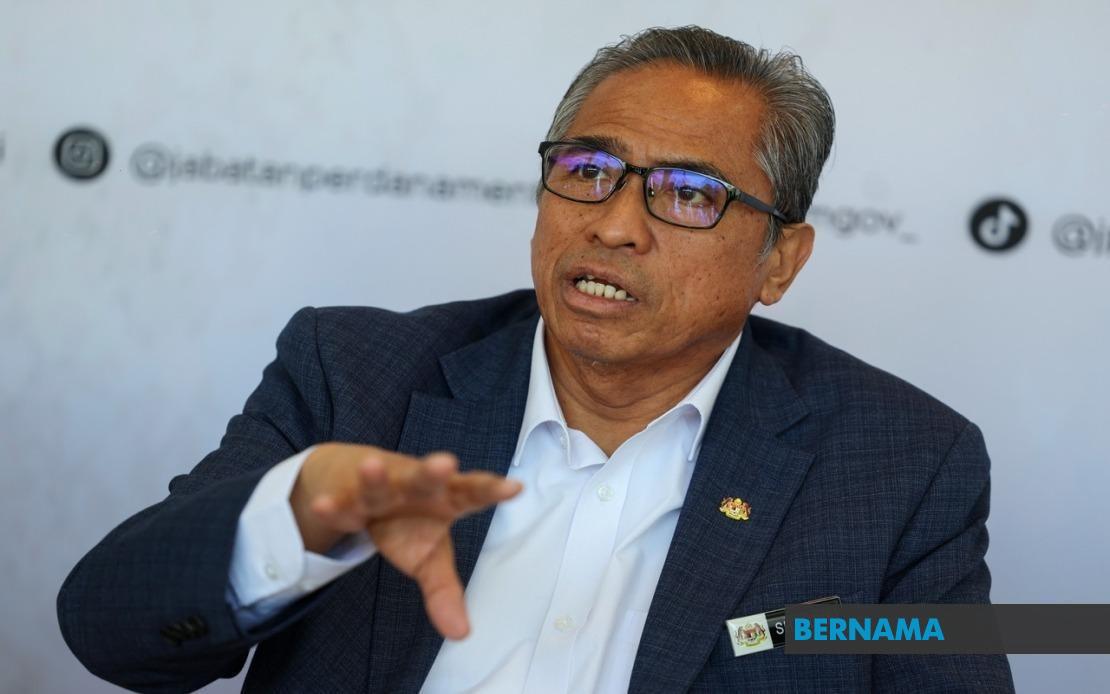
The machinery of government must work in concert to leverage Malaysia's emerging position in global affairs, according to Tan Sri Shamsul Azri Abu Bakar, the Chief Secretary to the Government. Speaking in Kuala Lumpur on June 24, Shamsul Azri emphasized that recent diplomatic efforts by Prime Minister Datuk Seri Anwar Ibrahim—particularly his working visits to Russia and Turkmenistan—represent more than symbolic foreign policy achievements. These missions have positioned the nation strategically within an evolving geopolitical landscape while opening new commercial pathways and deepening ties with established trading partners. However, he cautioned, securing these gains requires the public sector to mobilize comprehensively.
The Chief Secretary framed the civil service as the nation's foundational infrastructure, responsible for converting high-level diplomatic successes into measurable outcomes that benefit ordinary Malaysians. He stressed that foreign policy triumphs remain incomplete without corresponding domestic execution. This means that government officials—particularly those in economic regulation, trade promotion, and investment facilitation—must demonstrate heightened operational readiness and strategic foresight. The competence and speed with which bureaucrats act will ultimately determine whether Malaysia capitalizes on the openings created through its renewed diplomatic engagement.
Shamsul Azri's message reflects a broader recognition within Malaysia's leadership that the country's international standing depends heavily on institutional capacity. The gap between diplomatic promise and economic realization often lies not in negotiation rooms but in the ability of government systems to implement agreements swiftly and efficiently. He called for public servants to develop what he termed a "global mindset," enabling them to function as sophisticated international partners capable of identifying and seizing economic opportunities that arise from Malaysia's expanded diplomatic footprint. This requires continuous professional development and a willingness to operate beyond traditional administrative frameworks.
The Chief Secretary highlighted the importance of the MADANI Diplomacy framework and the Whole-of-Government approach in reshaping how ministries and departments function. MADANI Diplomacy, which centers on Malaysia's advancement through dignified and principled engagement, should inform not just foreign policy but also domestic governance practices. By adopting this philosophy across the civil service, officials can better align their daily work with the nation's overarching strategic objectives. This holistic approach ensures that economic ministries, investment boards, and trade agencies work toward shared goals rather than operating in silos.
A key focus area identified by Shamsul Azri is the enhancement of Malaysia's Ease of Doing Business initiatives. The country has invested considerable effort in creating regulatory environments that attract foreign investment, but these frameworks remain theoretical without effective implementation. Government officials must act as facilitators who understand investor needs, respond promptly to inquiries, and remove bureaucratic obstacles swiftly. This operational excellence directly translates into competitive advantage in attracting multinational corporations and venture capital seeking Southeast Asian bases. The civil service's performance in this domain will significantly influence whether Malaysia's diplomatic outreach translates into sustained foreign direct investment.
The Chief Secretary underscored that every international agreement secured through diplomatic channels must be rapidly realized through domestic action. This principle has particular relevance for Malaysia, which has positioned itself as a bridge nation between developed and developing economies, and between different geopolitical blocs. The credibility of Malaysia's commitments depends on demonstrating that the country can deliver on its undertakings. When foreign partners witness efficient, professional implementation of trade deals and investment frameworks, they gain confidence in Malaysia as a reliable counterparty. Conversely, delays or bureaucratic friction undermine the diplomatic progress achieved at the highest levels.
Shamsul Azri's emphasis on creating "high-income job opportunities for locals" reflects the government's commitment to ensuring that foreign investment benefits extend throughout Malaysian society rather than concentrating among elites or foreign stakeholders. The civil service must facilitate skill development, technology transfer, and local entrepreneurship within frameworks created by international partnerships. This requires officials to think beyond immediate transactional efficiency toward broader development outcomes. Public servants in trade and investment sectors must cultivate relationships with private companies, educational institutions, and civil society to ensure that foreign capital flows support Malaysian workforce advancement.
The reference to commodity supply security reveals another layer of the government's strategic thinking. Malaysia's prosperity depends partly on its ability to secure stable sources of critical materials and energy resources. Recent geopolitical shifts have disrupted traditional supply chains, creating both risks and opportunities. The civil service must leverage Malaysia's diplomatic relationships—particularly with Russia and Central Asian nations—to diversify supply sources and negotiate favorable terms. This requires officials with technical knowledge of commodity markets, negotiation skills, and the authority to act decisively when opportunities arise.
Shamsul Azri's invocation of the Public Service Reform Agenda's "internationalisation" enabler signals that Malaysia's government recognizes reform as an ongoing necessity rather than a completed project. Building a high-capacity civil service capable of supporting the nation's development agenda demands sustained investment in training, technology, and organizational restructuring. Officials must be equipped with analytical tools to monitor global economic trends, understand emerging markets, and anticipate shifts in international commerce. This forward-looking capability enables Malaysia to position itself proactively rather than reactively within evolving economic orders.
The Chief Secretary's message carries particular significance for Southeast Asia's broader development trajectory. As regional nations compete for foreign investment and seek to diversify trading relationships beyond traditional Western partners, institutional capacity becomes a differentiating factor. Malaysia's willingness to strengthen its civil service while pursuing assertive diplomacy suggests a sophisticated approach to development that combines traditional state capacity-building with contemporary diplomatic flexibility. Other regional governments may observe Malaysia's experience to understand how public service excellence can amplify diplomatic achievements.
For Malaysia specifically, Shamsul Azri's remarks establish clear expectations for bureaucratic performance linked to national strategic objectives. Officials are being asked to view their work not as routine administration but as participation in a coordinated national project aimed at elevating Malaysia's position globally. This reframing of the civil service's role—from implementer of policy to strategic partner in national advancement—implies both opportunity and accountability. Government employees who embrace this vision gain prominence and resources; those who cling to conventional practices risk being sidelined as Malaysia modernizes.
The practical implications extend to recruitment, promotion, and resource allocation within the civil service. Agencies responsible for trade, investment, and economic development will likely receive enhanced budgets and personnel. Officials demonstrating international experience, language skills, and strategic acumen will find accelerated career pathways. Conversely, departments unable to demonstrate contribution to the government's global agenda may face scrutiny. This incentive structure should drive performance improvement across the public sector while creating visible consequences for institutional inertia.
Ultimately, Shamsul Azri's message addresses a fundamental challenge facing middle-income countries seeking to advance: translating political will and diplomatic skill into sustained economic growth. Malaysia's recent diplomatic initiatives suggest strategic ambition at the highest levels, but realizing that ambition requires an efficient, capable, and globally-minded bureaucracy capable of executing complex international agreements and facilitating large-scale investment flows. The Chief Secretary's call to action signals that Malaysia's leadership recognizes this challenge and is mobilizing the civil service to meet it.

