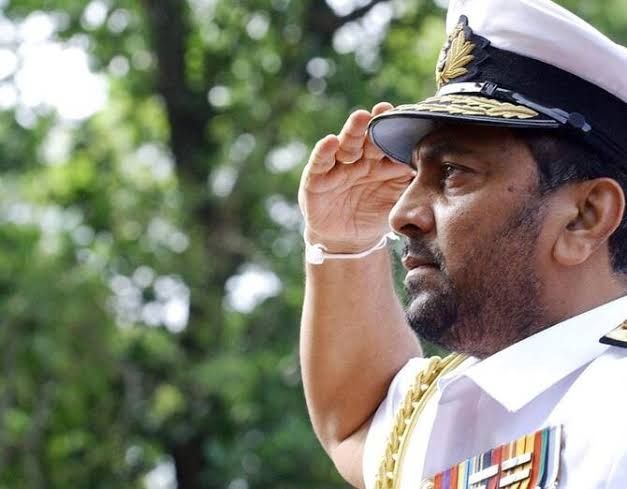
Sri Lanka's anti-corruption authorities took into custody Admiral of the Fleet Wasantha Karannagoda on Friday in connection with what the nation's Bribery Commission describes as illicit assistance in the military enlistment of Yoshitha Rajapaksa, the son of former president Mahinda Rajapaksa. The 73-year-old retired naval officer stands accused of overseeing Rajapaksa's 2006 entry into the navy despite the younger Rajapaksa's failure to meet mandatory qualification requirements. This development represents the latest in a series of legal actions targeting prominent members of the Rajapaksa political dynasty, whose influence over Sri Lankan governance has come under intense scrutiny since last September's presidential election.
Karannagoda held the position of navy commander during a pivotal moment in Sri Lanka's modern history, overseeing the military during the final stages of the nation's protracted civil conflict with Tamil separatists, which concluded in 2009. He was subsequently elevated to the distinguished rank of admiral of the fleet in 2019, a ceremonial position he retained until his removal from active service. The Bribery Commission's formal statement characterised his actions as constituting corruption in connection with both Rajapaksa's initial recruitment and his subsequent overseas military training.
Yoshitha Rajapaksa, now 38 years old, faces separate legal proceedings related to allegations that he misappropriated state resources to fund training at Britannia Royal Naval College in Dartmouth, one of Britain's most prestigious military institutions. He was arrested in connection with this matter last month and remains free on bail pending trial. The circumstances surrounding his naval education have become emblematic of broader accusations that the Rajapaksa family utilised their political connections to bypass normal institutional procedures and secure unwarranted privileges for family members.
Beyond the corruption allegations, Karannagoda confronts far more serious accusations of wartime misconduct. The retired admiral has faced international sanctions, most recently imposed by the British government in March 2025, based on findings that he bore responsibility for grave human rights violations and extrajudicial killings during his tenure as naval commander. These sanctions reflect growing international concern about accountability for alleged atrocities committed during Sri Lanka's final stages of its conflict with the separatist Liberation Tigers of Tamil Eelam.
The investigation into Karannagoda has also resurrected conspiracy to murder charges stemming from the deaths of eleven young men between 2008 and 2009. These charges had been formally discontinued in October 2021 during the presidency of Gotabaya Rajapaksa, Mahinda's younger brother, a period when the Rajapaksa family maintained substantial political authority. The decision to revive these dormant charges under the current administration signals a fundamental shift in Sri Lanka's approach to prosecuting alleged crimes by military and political figures.
President Anura Kumara Dissanayake, who assumed office in September 2024 following a decisive electoral victory, made investigating and prosecuting corruption and unresolved high-profile crimes central to his campaign platform. His administration has systematically reopened cases that had stalled or been abandoned during the Rajapaksa administrations, reflecting broader public sentiment demanding accountability for questionable decisions made during those years. This change in political direction has created space for prosecutors to pursue individuals previously protected by political influence.
The Rajapaksa family's legal entanglements extend well beyond Karannagoda's arrest and Yoshitha's predicaments. Multiple family members and their close associates have accumulated criminal charges encompassing various offences, with proceedings continuing through the court system. The renewed legal momentum against the family contrasts sharply with the impunity they enjoyed during their period in power, which lasted from 2005 until 2015 under Mahinda Rajapaksa's presidency, followed by Gotabaya's tenure from 2019 to 2022.
Yoshitha Rajapaksa's personal financial affairs have attracted particular prosecutorial attention. He faces criminal charges related to his inability to adequately document the sources of funds used to purchase residential property during his father's presidency. In interviews with investigators, Yoshitha claimed he had acquired the purchase money through the sale of gemstones purportedly gifted to him by his paternal grandmother. However, the grandmother herself could not provide coherent explanations regarding how she had originally obtained these valuable stones, undermining the credibility of his account. This murky financial history exemplifies the opacity surrounding Rajapaksa family wealth accumulation during their years controlling state apparatus.
The broader political context extends to Gotabaya Rajapaksa, Mahinda's brother who served as president from 2019 until his resignation and flight from Sri Lanka in 2022. He recently received a travel ban preventing him from leaving the country, based on investigative findings linking him to security failures preceding the 2019 Easter Sunday bombings. That attack, perpetrated by Islamist extremists, resulted in the deaths of 279 people and represented one of modern Sri Lanka's deadliest incidents. The ban signals that even high-ranking political figures previously insulated from accountability now face restrictions.
For Malaysian observers and readers throughout Southeast Asia, the unfolding Sri Lankan prosecutions offer lessons about the challenges democracies face in investigating powerful political families and the military officers who served them. The revival of charges after political transitions, combined with selective enforcement patterns, raises questions about the rule of law and institutional impartiality that resonate across the region. Sri Lanka's experience demonstrates both the possibilities and pitfalls of transitional justice mechanisms when newly elected governments attempt to address alleged crimes committed by predecessors.

