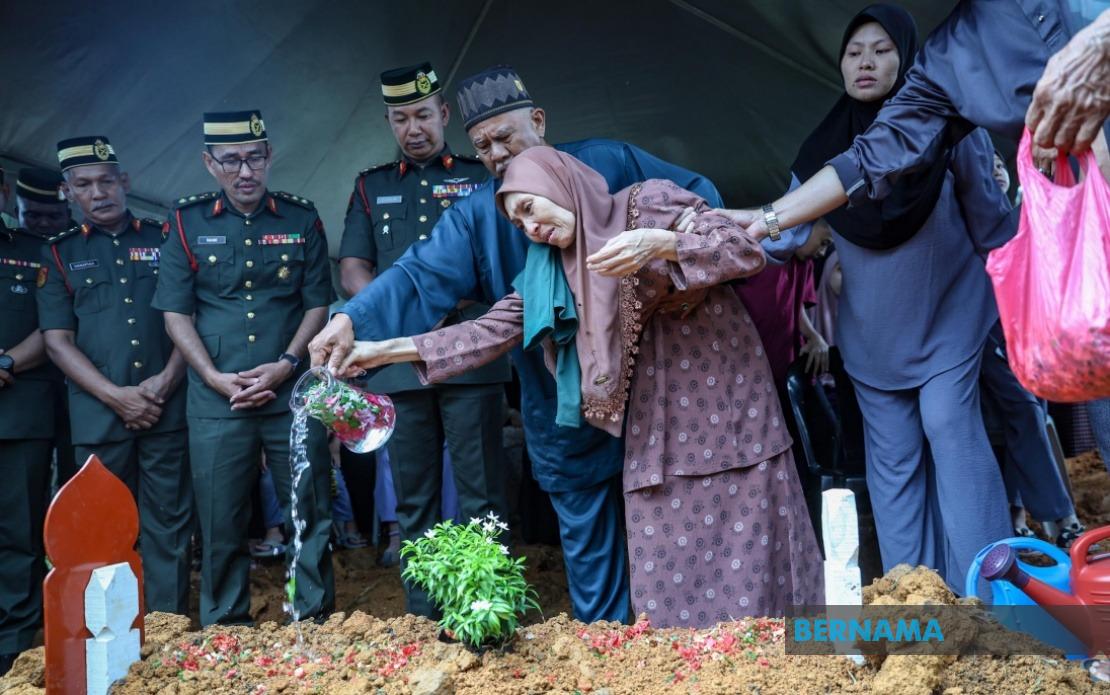
The Malaysian Army bade farewell to Private Siti Khadijah Sungip, a 24-year-old soldier from the First Squadron of the Royal Engineer Regiment, at a solemn ceremony in Kluang on June 17. She succumbed to injuries sustained during a grenade-throwing exercise at Hobart Camp in Gurun, Kedah, when an explosive device detonated unexpectedly. The funeral service drew military colleagues, extended family, friends, and community members who gathered at Taman Sri Lambak Muslim Cemetery to honour her memory and support those left behind.
The tragic incident unfolded at 10.57 am on June 16 during routine training at the target range facility. Private Siti Khadijah and Corporal Norazmi Abu Bakar, attached to the Sixth Battalion of the Royal Malay Regiment, were conducting grenade-throwing exercises when the explosion occurred. Both personnel sustained life-threatening injuries and were rushed towards Sultan Abdul Halim Hospital in Sungai Petani but succumbed to their wounds en route, making this one of the military's deadliest training accidents in recent memory.
The formal military funeral began when Private Siti Khadijah's body was transported from Sultanah Bahiyah Hospital in Alor Setar, where post-mortem examinations were completed around 2.30 am. Her remains, escorted by Lieutenant Muhammad Lutfil Hadi Osman and four members of the Royal Engineer Regiment from Sangro Camp in Perak, arrived at her family residence in Taman Sri Lambak shortly after midday. The cortège proceeded to Darul Iman Mosque for funeral prayers, which were solemnly conducted by Major Mohd Azlan Shah Abdul Razak, representing the TDM Field Engineering Institute.
The graveside ceremony carried particular poignancy as Brigadier General Datuk Zulhelmy Masdar, Commander of the 7th Brigade headquartered at Mahkota Camp, formally presented the Jalur Gemilang to Private Siti Khadijah's father, Sungip Jais, 65. This symbolic gesture underscored the nation's recognition of her sacrifice and commitment to military service. The presentation of the national flag to bereaved families remains one of the military's most dignified tributes, acknowledging the profound loss experienced by those who serve and their dependents.
Private Siti Khadijah's death raises significant questions about training protocols and safety procedures at Malaysian military installations. Grenade-throwing exercises, while essential for soldier competency, carry inherent risks that demand rigorous oversight and adherence to established safety standards. The simultaneous death of two personnel suggests the explosion may have been more severe than typical training accidents, prompting inevitable scrutiny of whether proper precautions were implemented and whether equipment was in appropriate condition.
The incident reflects a broader concern within Southeast Asian militaries regarding occupational safety during field training. Malaysia's armed forces, like their regional counterparts, regularly conduct live-fire and explosive-handling exercises that are fundamental to combat readiness. However, such operations require meticulous attention to detail, proper spacing between trainees, qualified supervision, and functioning safety equipment. Each fatality in training scenarios triggers mandatory investigations to identify procedural or equipment failures that may have contributed to the tragedy.
For Private Siti Khadijah's family in Kluang, the loss represents not merely the death of a beloved daughter but the end of a young military career filled with unfulfilled potential. Female participation in the Malaysian armed forces has expanded considerably in recent decades, with women serving across various combat and non-combat roles. Her presence in the Royal Engineer Regiment exemplified this professional advancement, yet her untimely death serves as a stark reminder of the dangers inherent in military service, regardless of gender.
The military community mourning Private Siti Khadijah and Corporal Norazmi Abu Bakar comprises thousands of servicemen and women who accept occupational hazards as part of their professional commitment to national defence. Training accidents, while statistically rare given the volume of exercises conducted annually, exact a profound emotional toll on unit cohesion and morale. The loss of peers creates ripples of grief throughout regiments and brigades, affecting colleagues who trained alongside the deceased and reinforcing the serious stakes of military preparedness.
Investigations into the Hobart Camp incident will likely examine multiple factors: the condition and specifications of the training grenades used, spacing and positioning of personnel during the exercise, weather conditions that might have affected visibility or communications, qualifications and experience of supervising officers, and adherence to published standard operating procedures. Such investigations often take weeks or months to complete, requiring technical analysis of explosive residue, witness statements from survivors and observers, and comprehensive review of training records and safety logs maintained at the facility.
The tragedy underscores the human dimension of military service that often escapes public consciousness. While soldiers are trained to accept risk as part of their professional identity, training deaths—particularly those involving equipment malfunction or procedural lapses rather than combat engagement—generate debate about whether all reasonable precautions were implemented. Families must reconcile their pride in their loved one's service with the knowledge that their death occurred during routine preparation rather than in defence of national interests.
As Private Siti Khadijah was laid to rest in her hometown cemetery, the Malaysian military would have begun the sobering task of reviewing the circumstances of her death and that of Corporal Norazmi Abu Bakar. Such incidents inevitably prompt modifications to training protocols, enhanced safety briefings, and renewed emphasis on risk management across military installations. For her family, friends, and comrades, her memory will endure as a testament to the sacrifices made by those who serve in uniform, even in moments far removed from actual conflict.